
Peekamoose Blue Hole: A Photographic Study
“We came to a blue pool where the waters of the Rondout, the clearest of all waters, had caught the secret of the skies screened from them. It was in some such pool that the old-world goddesses used to bathe. If Pan ever comes to America, he will love the Blue Hole most of all, and its rocky ledges crowned with the fine-textured beech are certainly the place for him to sit and make his music in. Even to us, drooping with exhaustion, there was still a prayer of admiration possible.” - The Catskills, T. Morris Longstreth.
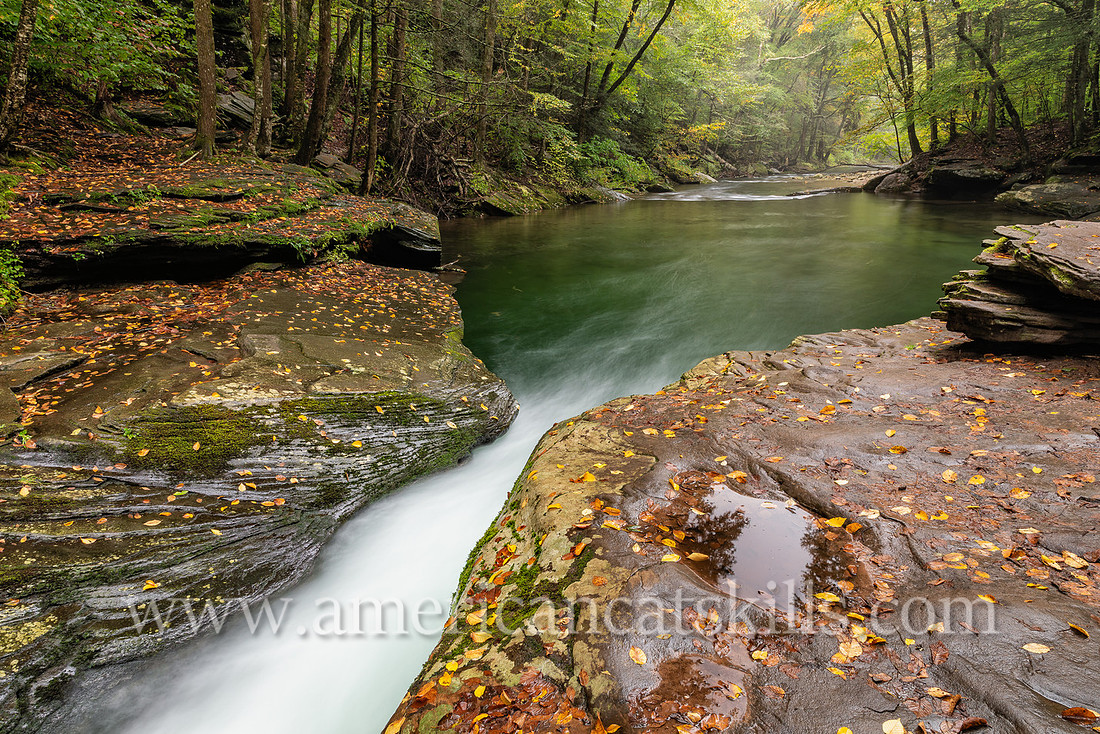

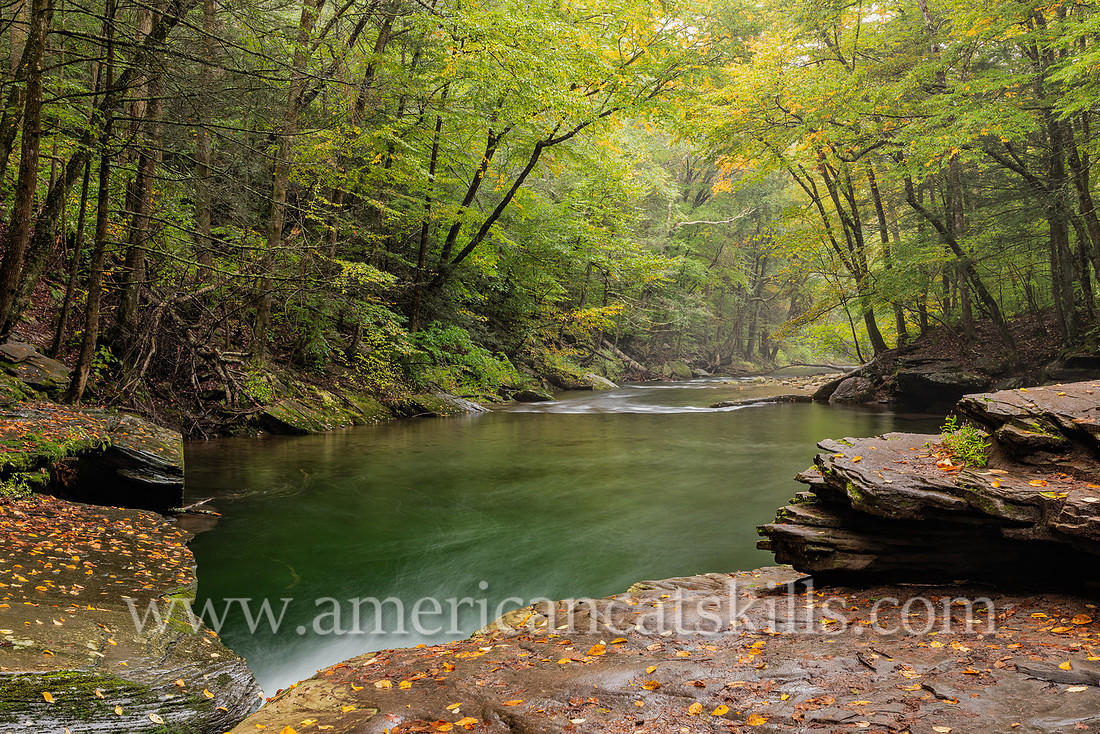
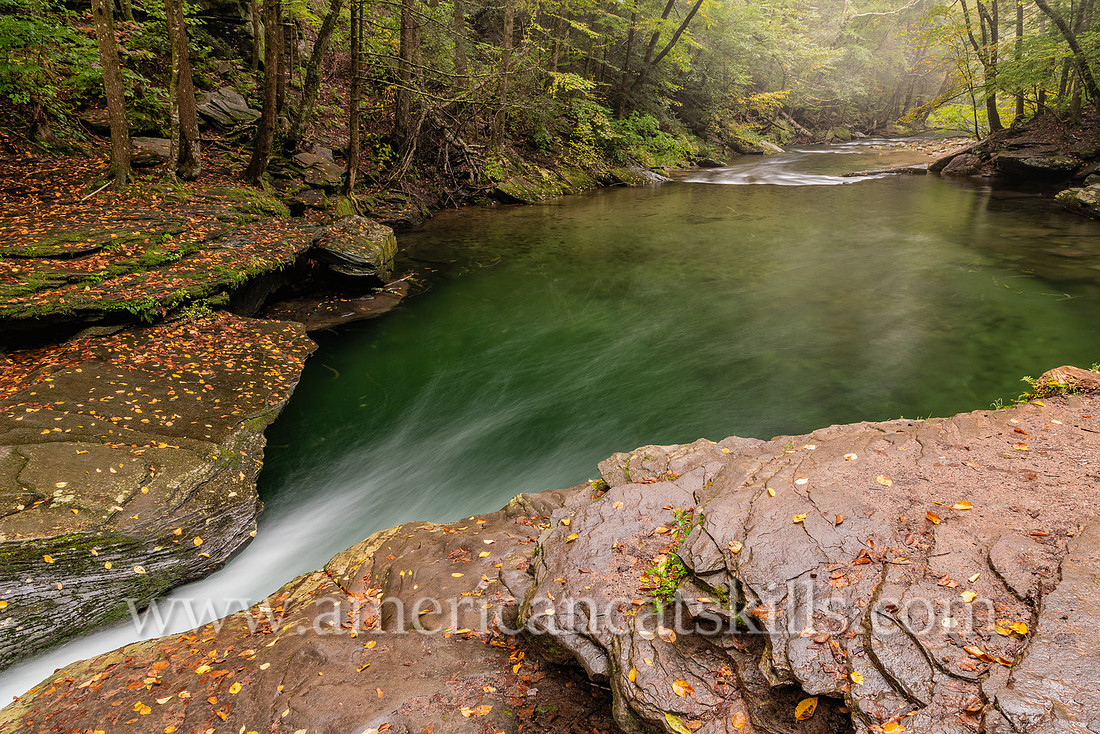
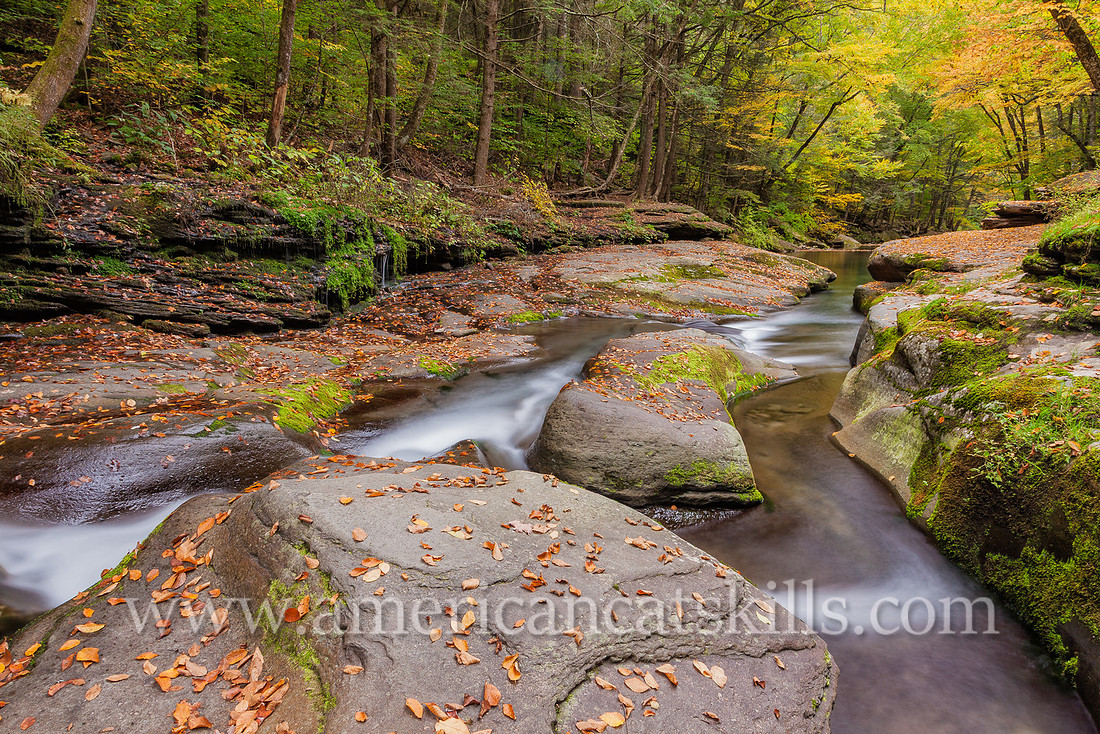
The Peekamoose Blue Hole is a popular natural swimming hole located on the Rondout Creek in the Peekamoose Valley of the Sundown Wild Forest in the Catskill Forest Preserve.
The Peekamoose Valley is a beautiful destination complete with river scenery, fishing spots, swimming holes, waterfalls and a popular state campground. The scenic drive along Route 42 begins at the hamlet of West Shokan, runs along the Bush Kill and through Watson Hollow, becomes Peekamoose Road (formerly known as Gulf Road), passes Peekamoose Lake, follows the Rondout Creek, allows access to Buttermilk Falls, passes the Blue Hole, and then quickly runs by Bull Run and the hamlet of Sundown, before ending at the Rondout Reservoir.
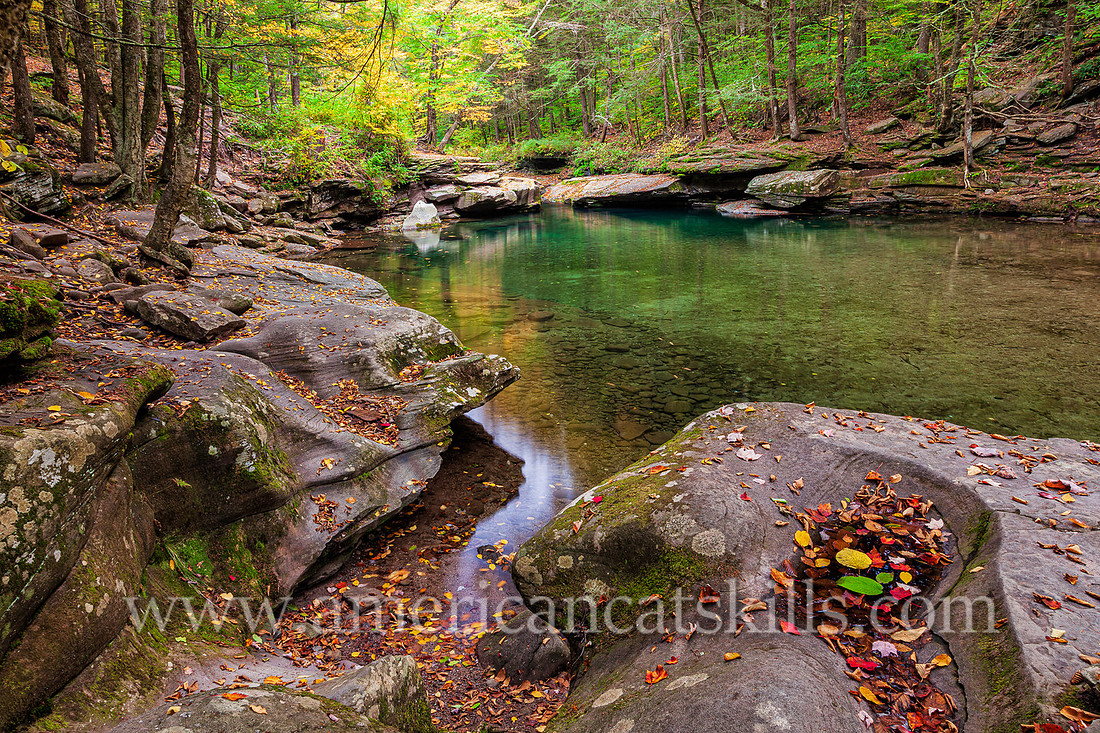
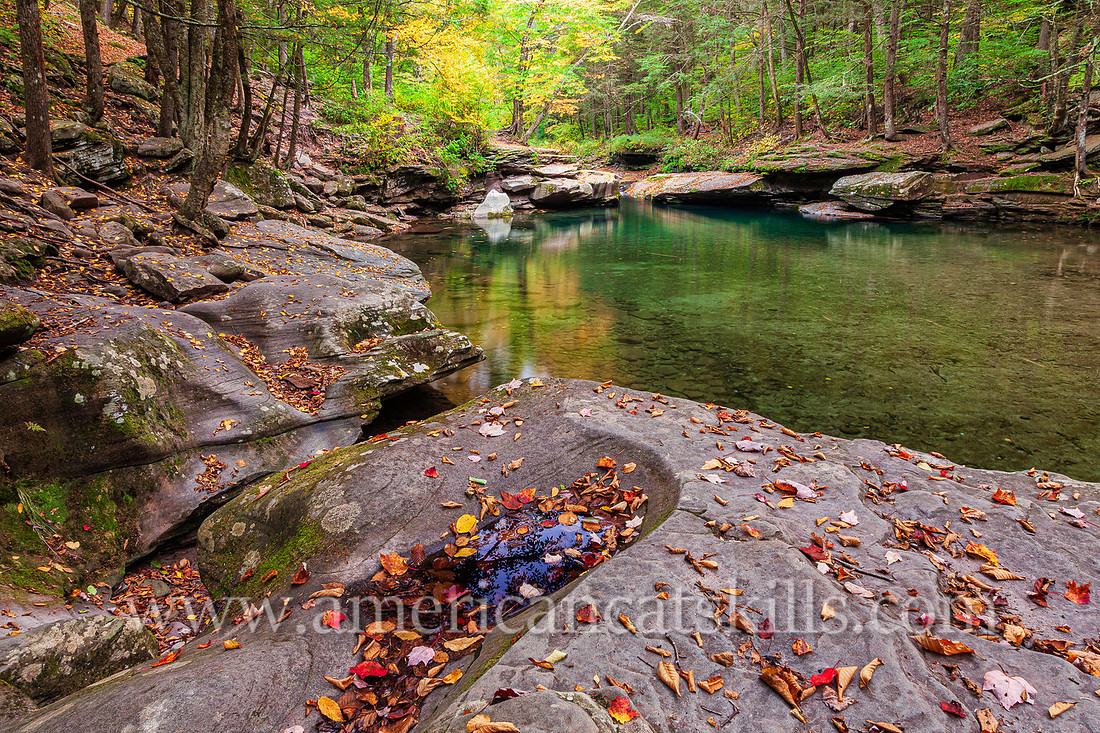
The Blue Hole is a natural depression in the streambed rock of the Rondout Creek, formed over centuries by a powerful whirlpool that swirled sand and gravel. The area is lined with shale ledges, and the "blue" color of the water comes from the combination of its depth and spring-fed, frigid temperatures.
John Burroughs, the famous author and naturalist, noted during a 1910s visit to fisherman A. W. Dimock, who lived in the region, that “It is forty years since I last saw the Blue Hole, but I can go through the woods straight to it today.” Upon his revisit, Burroughs “called the pool the loveliest spot in the Catskills.”
The Peekamoose Blue Hole was for many years a relatively local secret, popular with campers and hikers visiting the Peekamoose Valley. During these years, the Blue Hole was certainly one of the best and most attractive swimming holes in all the Catskills. It was one of those spots that you visited for a communal feeling with nature.
However, that has all changed, and the Peekamoose Blue Hole is certainly not a secret anymore. In fact, it’s been overrun. It is difficult to say exactly when it changed, but perhaps it was the year 2014 after Travel+Leisure, a travel magazine, highlighted it as one of America’s best swimming holes. After this, the Peekamoose Blue Hole began to appear in other national media, and its popularity took off across the internet, including social media, news outlets and internet guides.
With significantly larger visitation, the area was quickly spoiled by large groups of people with barbeques, radios and coolers descending on the Blue Hole every hot summer day. Crowds treated the isolated Blue Hole like a day at the public beach. Human waste and broken glass could frequently be found along the creekside. Alcohol use was widespread, trash could often be found throughout the area and inconsiderate visitors often ruined an otherwise peaceful setting.
In response, and to better manage the site, local and state officials began implementing changes, including a new day-use permit. The permit is now $10 and is required seven days a week from May 15 to September 15, with the number of daily permits being limited. Large garbage dumpsters and portable restrooms were added nearby. Parking was better organized. Stewards are now present throughout the summer season to better educate visitors on how to act responsibly while also having fun.
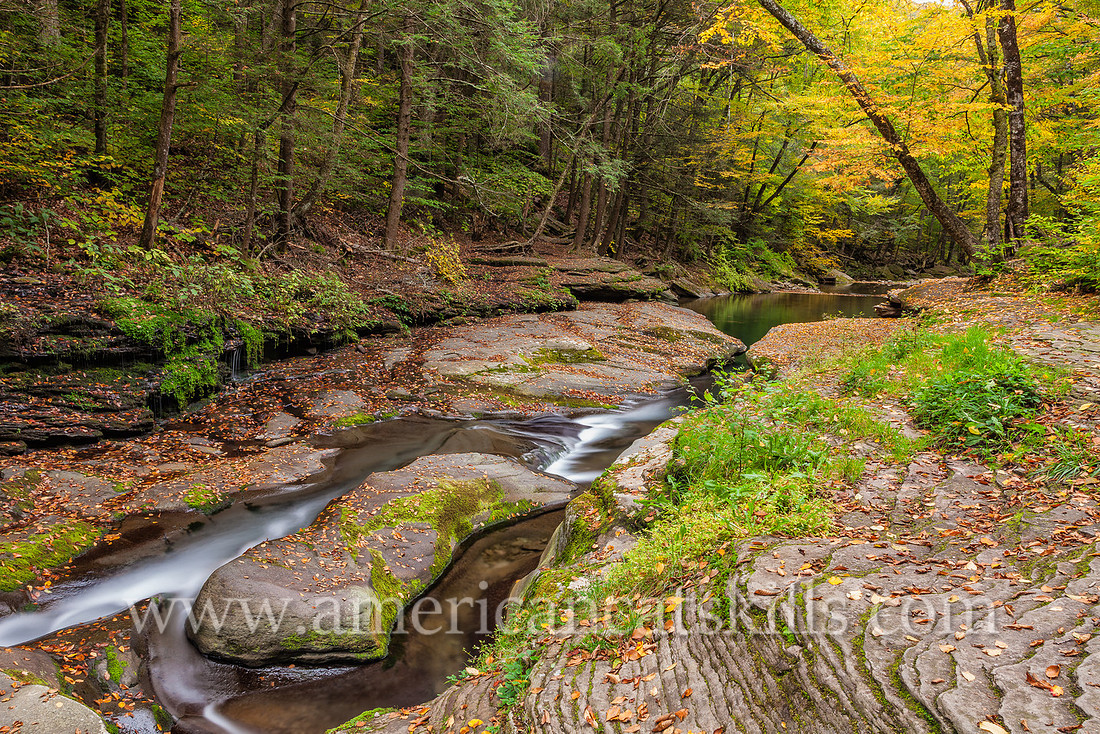
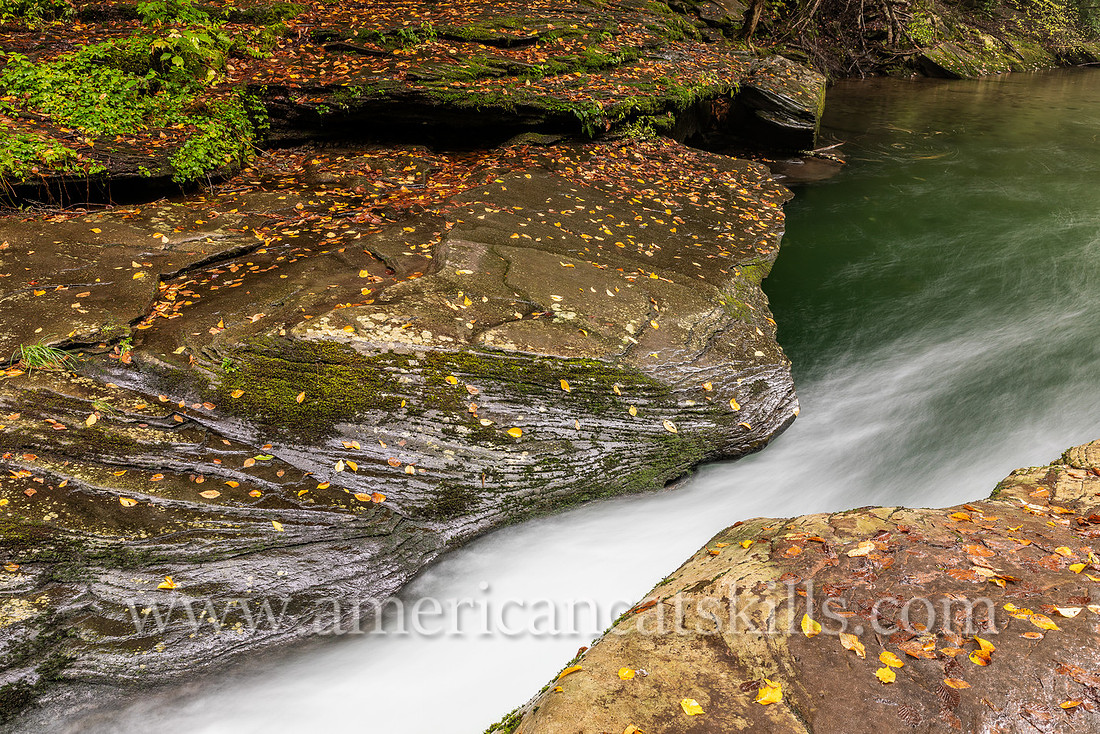
Despite all these changes, for a truly peaceful experience at the Peekamoose Blue Hole, visit outside the summer season, as can be seen in the photographs in this blog post. Visit during the cool weather in the spring and fall, or visit at any time that would not be popular for swimming. At these times you will often find the place to yourself, and you will then be able to truly enjoy the rushing waters of the Rondout and the surrounding scenery of the famous Blue Hole.
A Fishing Story at the Blue Hole
Noted inventor, author and sport fisherman Edward Ringwood Hewitt (1866-1957) is closely associated with the sport of fishing. In 1918, he established a fishing camp, called the “Big Bend Club,” on 2,700 acres in the Catskill Mountains. He was a pioneer in stream reconstruction and habitat improvement for trout and was the creator of several innovative flies such as the Neversink Skater and the Bi-Visible.
Hewitt authored many books on fishing, including Secrets of the Salmon (1922), Telling on the Trout (1926), Better Trout Streams (1931), Hewitt's Handbook of Fly Fishing (1933), Hewitt's Handbook of Stream Improvement (1934), Hewitt's Nymph Fly Fishing (1934), Hewitt's Handbook of Trout Raising and Stocking (1935), Those Were the Days (1943), A Trout and Salmon Fisherman for 75 Years (1948) and Days From Seventy-five to Ninety.
Hewitt’s 1926 book titled Telling on the Trout beautifully detailed one of his fishing adventures at the Blue Hole.
“My old friend Mr. Dimmock lived in a camp on the Peekamoose stream, about fifteen miles from my camp on the Neversink. One afternoon a pleasant drive brought me over to tea. As I arose to leave at about five o'clock Mr. Dimmock asked me if I would do him a favor. He said that in the thirty years he had lived in this camp no one of his guests had ever taken a trout out of the Blue Hole in clear low water, and he would very much like to see if it could be done. I had my rod and boots in the car, as usual, and we walked up the stream.
The Blue Hole is a round pool about seventy feet across and rather deep, perhaps ten or fifteen feet in the center. The water enters the pool between two large broken rocks at the top and flows out of the tail at the far corner, the lowest side of the pool being a bar of gravel and small stones.
I had fished this place on several occasions previously, and knew perfectly well that no trout could be caught in the ordinary way in clear water, but had worked out a plan which had taken fish the last time I was there.
We stopped about fifty feet from the bar at the lower end, and I explained to Mr. Dimmock that the trout would be frightened by any line and leader if cast in the center of this clear pool.
The plan was, therefore, to cast the line and leader across the bar and let them rest on the stones, with the fly about a foot within the pool in the shallow water near the bar. When the fly had rested there a few seconds it was pulled a little to make it move like a live insect. A trout at once swam up out of the deep water and slowly took the fly. A little steady pull hauled him over the bar, and I unhooked him and threw him into the stream.
In this way fifteen fish were taken in succession without alarming the others. They were not large fish, only about eight to ten inches long, as there are very few large trout in this stream, probably owing to the very cold water and great freshets, but this experience showed how such a pool might be fished under the most difficult conditions.
A single cast in the center of the pool ended the fishing by alarming all the trout, and they promptly went into hiding.”
John Burroughs on the Rondout
Naturalist John Burroughs explored the upper headwaters of the Rondout with a friend in the early 1900s. He wrote of this tramp through the woods in his 1910 essay titled "A Bed of Boughs," and described the beauty and purity of the stream's waters.
“If there ever was a stream cradled in the rocks, detained lovingly by them, held and fondled in a rocky lap or tossed in rocky arms, that stream is the Rondout. Its course for several miles from its head is over the stratified rock, and into this it has worn a channel that presents most striking and peculiar features.
Now it comes silently along on the top of the rock, spread out and flowing over that thick dark-green moss that is found only in the coldest streams; then drawn into a narrow canal only four or five feet wide, through which it shoots, black and rigid, to be presently caught in a deep basin with shelving, overhanging rocks, beneath which the phoebe-bird builds in security and upon which the fisherman stands and casts his twenty or thirty feet of line with- out fear of being thwarted by the brush; then into a black, well-like pool, ten or fifteen feet deep, with a smooth, circular wall of rock on one side worn by the water through long ages, or else into a deep, oblong pocket, into which and out of which the water glides without a ripple.
The surface rock is a coarse sandstone superincumbent upon a lighter-colored conglomerate that looked like Shawangunk grits, and when this latter is reached by the water it seems to be rapidly disintegrated by it, thus forming the deep excavations alluded to.
My eyes had never before beheld such beauty in a mountain stream. The water was almost as transparent as the air-was indeed like liquid air; and as it lay in these wells and pits enveloped in shadow, or lit up by a chance ray of the vertical sun, it was a perpetual feast to the eye, - so cool, so deep, so pure; every reach and pool like a vast spring. You lay down and drank or dipped the water up in your cup and found it just the right degree of refreshing coldness.
One is never prepared for the clearness of the water in these streams. It is always a surprise. See them every year for a dozen years, and yet, when you first come upon one, you will utter an exclamation; I saw nothing like it in the Adirondacks, nor in Canada. Absolutely without stain or hint of impurity, it seems to magnify like a lens, so that the bed of the stream and the fish in it appear deceptively near. It is rare to find even a trout-stream that is not a little "off color," as they say of diamonds, but the waters in the section of which I am writing have the genuine ray; it is the undimmed and untarnished diamond.
If I were a trout, I should ascend every stream till I found the Rondout. It is the ideal brook. What homes these fish have, what retreats under the rocks, what paved or flagged courts and areas, what crystal depths where no net or snare can reach them! -no mud, no sediment, but here and there in the clefts and seams of the rock patches of white gravel, -spawning-beds ready-made.
The finishing touch is given by the moss with which the rock is everywhere carpeted. Even in the narrow grooves or channels where the water runs the swiftest, the green lining is unbroken. It sweeps down under the stream and up again on the other side like some firmly-woven texture. It softens every outline and cushions every stone. At a certain depth in the great basins and wells it of course ceases, and only the smooth, swept flagging of the place-rock is visible.
The trees are kept well back from the margin of the stream by the want of soil, and the large ones unite their branches far above it, thus forming a high winding gallery, along which the fisherman passes and makes his long casts with scarcely an interruption from branch or twig. In a few places he makes no cast, but sees from his rocky perch the water twenty feet below him, and drops his hook into it as into a well.”
Poetic Tribute to the Blue Hole
American poet Elaine Goodale Eastman (1863-1953) visited A. W. Dimock at his camp on the Peekamoose, and upon visiting the nearby Blue Hole, wrote the following poetic tribute.
"Wild Nature's gem of changeful luster bright,
Now turquoise pure, now shadowy malachite,
From its rude setting gleams with elfin light.
Say rather, as the inner vision clears,
A well of dreams, a bowl of happy tears
Reflecting heaven – the mirror of the years!
How oft in pensive or in prayerful mood,
My fancy turns to that high solitude,
Above its mystic blue-green depths to brood.
And as the lonely crag above it towers,
Its hoar brow chapleted with autumn flowers,
So memory wreathes those unforgotten hours!"
Potholes In Rondout Gorge
An article titled “Potholes in Rondout Gorge” was published in the August 21, 1925 issue of the New York Evening Post.
“Dr. B. T. Butler of the College of the City of New York, who leads his geology class on field trips throughout the nearby hills and acts as guide on similar excursions for several of the hiking clubs, told me the other day about a feature of the Rondout Gorge in the Catskills that I missed when I went through it. I came off Peekamoose in the dark, found shelter at the caretaker's house on the Dimock
place and went on next morning over Samson Mountain to Vernooy Falls, so I did not see this feature, which a more leisurely examination would have shown.
This is a collection of potholes, some of unusual size, in the bed of Rondout Creek. Some of the best, Dr. Butler says, are in the stream just north of the Dimock House, where it comes out of the valley east of Peekamoose. They run from the size of a waterfall to great cauldrons 10 feet across and 30 feet deep. They must have been cut in the Catskill sandstone by a stream bigger than now flows there, probably from a stream that rose underneath a tongue of ice lying in this valley during the ice age, when the Catskills had their local glaciers.
But the biggest of these potholes is a mile or so downstream, west in the gorge, toward Shady, known as the blue hole, 20 feet across and 40 feet deep. It must have taken a good deal of grinding, with the help of some hard old boulders from the Adirondacks to have gouged that hole.”
Perfect Example of a Trout Stream
Bill Demond wrote an article about a fishing trip to the Blue Hole in 1976. The article, titled “Perfect example of a trout stream,” was published in the July 20, 1976 issue of The Journal-News.
“A young friend, Doug Flackman of Ramsey, N.J. joined me for two days of fishing last week, and on the
second morning I took him to the state water on the Rondout above Sundown. This water is the perfect example of what a trout stream should be, with its crystal-clear, ice-cold water tumbling over moss-covered rocks.
It begins high on Peekamoose Mountain and cascades down into rock-ledge pools before finally entering the Reservoir at Lowe’s Corners. Included in the new state water is the famous Blue Hole, for many years the envy of law-abiding fishermen but a paradise for poachers. The name comes from its baby-blue appearance as one looks down at it from the ledges above. Perhaps the color comes from its great depth, 20 feet or more, or from minerals in the rocks. At any rate the pool and rest of the stream in this
area are well-worth the trip for those who enjoy the real beauty of nature.
Flackman had never been there before and thoroughly enjoyed the setting and commented that the water and surrounding country reminded him of trips to Montana and Idaho. I strongly doubt that there are any more “lunkers” in the Blue Hole or the nice pools below. For the most part we caught and released small brook trout before I finally caught an 11-inch native on the former Ash stretch below.”
