“As a token of admiration for the grandeur and mysteries of nature and the beauty of the Catskill Mountains, Emile Brunel, a native of France, chose these sites for the Chalet Indien in 1920. He conceived, designed, sculpted and erected these statues and monuments in memory of the Indian tribes who sojourned on these grounds, once upon a time.”
Introduction
Beginning in the early 1980s my family would take our summer vacations in the Catskills at some rustic cabins located on the Esopus Creek near Phoenicia, New York. Leaving Long Island to head north, the excitement would build as we approached the Kingston exit for Route 28, which would then take us into the mountains. As we made our way west on Route 28, my two brothers and I would beg our parents to stop at the Indian Trading Post (now Brunel Park), which at the time was home to a great little gift shop and a small museum. Our parents would always oblige us, and they would always wind up buying us some small souvenirs and other trinkets, some of which I still have. For us young boys, the stop at the Trading Post always seemed to mark the real start of the vacation.
Although the gift shop is long gone, Brunel Park remains a great stop for any traveler along Route 28. It is a peaceful park that is home to over a dozen statues, sculptures, bas reliefs and totem poles created by Emile Brunel, a French immigrant who would become a noted painter, photographer, filmmaker, sculptor and resort owner. I continue to stop by every couple of years during my Catskills trips, sometimes just for memories sake, sometimes to sit quietly for a few minutes, sometimes to take photographs. No matter the reason, I am always glad that I stopped.
With all these memories near at hand, this blog post feels even more personal than most, and was thoroughly enjoyable to research, write and photograph. With that, here is the life story of the always interesting Emile Brunel, the history of the property and a detailed photographic study of Brunel Park.
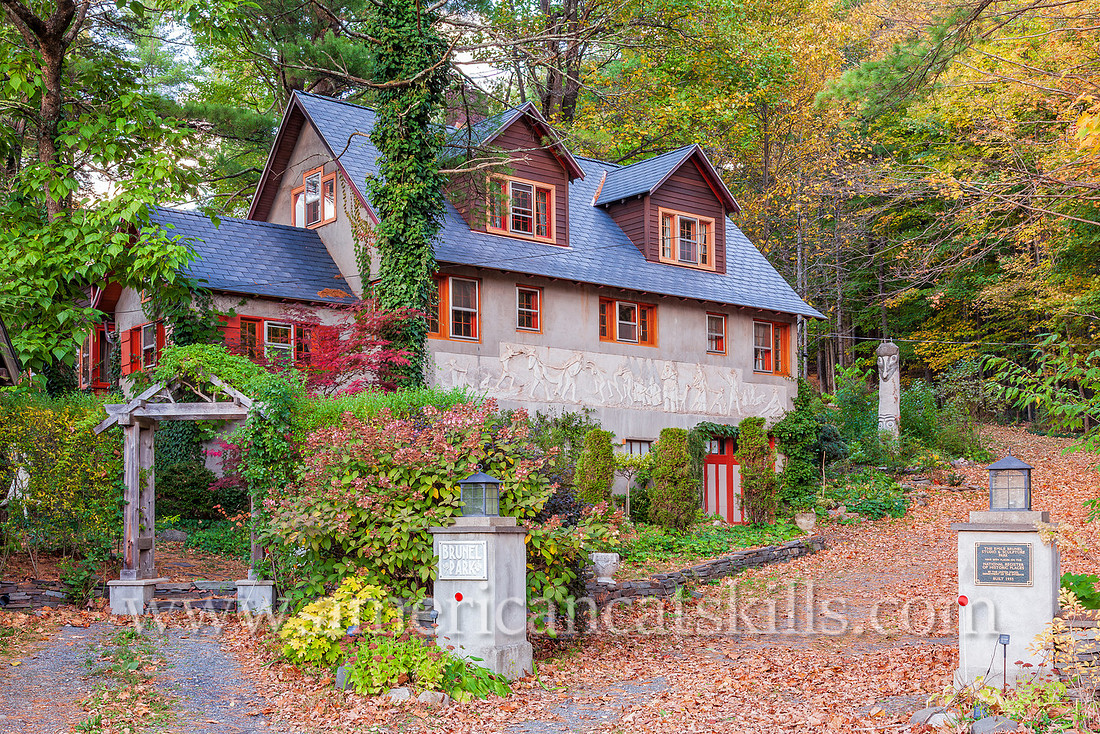 Emile Brunel's StudioEmile Brunel Studio and Sculpture Garden, also known as Brunel Park, is situated just off Route 28 in the hamlet of Boiceville, New York on a section of what was Brunel’s Chalet Indien resort property.
After Brunel’s death in 1944, and with the redesign and realignment of Route 28 through the hotel property in 1947, the hotel closed and the sculptures were moved to their current location and much of the remaining property was sold. Brunel’s wife and later his daughter would operate a trading post and museum on the property until the 1980s.
Brunel Park contains his Brunel’s studio, three large scale sculptures, two sculpted totem poles and several small-scale sculptures.
The Emile Brunel Studio and Sculpture Garden is listed on the National Register of Historic Places as “an unusual and unique regional collection of folk-art dating from the early twentieth century” and “is a rare surviving example of roadside art and architecture in the upper Hudson Valley.”
Today, Brunel Park is operated by the non-profit organization Friends of Brunel Park, which was founded in 2018. The organization seeks to preserve the unique landmark in perpetuity and celebrate the legacy of Emile Brunel.
The park is open daily year-round for self-guided tours from 1pm to 5pm from March to November and from 12pm to 4pm from December to February. The address is 4008 State Route 28, at Desilva Road, in Boiceville, New York. Visit their website at www.brunelpark.org for more information.
Emile Brunel
Emile Brunel (1874-1944) was born in Chateauneuf, France in 1874. Brunel can trace his ancestors to the days of the French Revolution and Napoleon the Great. His grandfather served in the armies of the Second Republic and afterwards as a professor.
Brunel was educated in a Jesuit College, and was “drawing maps and covers for books and programs, and did wonders with the camera at the age of twelve. He was called “The Artist” among his classmates.” He was then a graduate of the art schools in Paris.
During the time of the Dreyfus Affair in Paris, Brunel was a full-fledged art student in the Quarter Latin, and about this time, he went to London, painting portraits in the studios of Regent Street and in the clubs of the West End. He visited all the large cities on the continent, studying the Dutch School of Dusseldorf, and in Brussels, Antwerp, Amsterdam and the Italian schools in Florence, Rome, Venice and Naples, and the old masters in London.
In 1902, at the age of 28, Brunel came to the United States “on a bet.” “The first question asked of E. Brunel some sixteen years ago [in 1902] before leaving the steamer, when entering the harbor of New York City, was: Are you a professional?” E. Brunel answered, “Yes,” to the Federal Inspector, who tapped him on the shoulder, saying ‘We want you.’”
Upon his arrival, Brunel took an extended trip through the western United States where he sought to see the continually shrinking western frontier of the country. His goal was to capture remnants of the “wild west” on canvas. During his travels, he supported himself as an itinerant artist. He designed signs and posted broadsides for circuses and whiskey companies.
After Brunel’s time traveling the west, he returned east and became a New Yorker. He turned his artistic skills from painting to photography. For a time, Brunel worked as a photojournalist for the New York Times Magazine and would go on to develop a certain degree of fame as a portrait photographer.
In 1906, he started his own photographic studio on 42nd Street, near Broadway. “From the first day his gallery was stormed by prominent patrons. The second year the patronage became so great that he could not accommodate his followers, and opened, successfully, several branches in the best districts of the metropolis.” (Long Beach Life. July 18, 1931.)
Brunel’s studios were patronized by a who’s who of New York society, including such people as businessman W. K. Vanderbilt and family, the Gould family, actress Lillian Gish, the Grand Duke Alexander, financier Bernard Baruch, newspaper publisher Adolph S. Ochs of the New York Times and family, the Lefcourt family, director Cecil B. DeMille, producer Adolph Zukor, actor and playwright George M. Cohan, producer David Belesco, opera singer Enrico Caruso, author Irvin Cobb, President of the National Baseball League John Heydler, illustrator Charles Dana Gibson, writer Mark Twain and “thousands of others prominent in social and business life.”
With his early and ongoing success and reputation forming a base for his photographic business, Brunel would go on to open dozens of portrait studios throughout the United States, including branches at New York, Chicago, Boston, Philadelphia, Detroit and Pittsburgh. By circa the eary-1910s, it was advertised that the Brunel studios employed over 100 men and women and produced more than 100,000 photographs each year.
In 1910, Brunel founded the E. Brunel School of Photography, which later became the New York Institute of Photography (NYIP). The school started as a retail operation that taught its customers how use the photography equipment they bought. The school quickly expanded into teaching photo engraving, retouching, and cinematography, and began to publish its lessons in book form. In 1914, Brunel registered the school as the New York Institute of Photography. That same year, Brunel published the following advertisement for the school in local newspapers.
“LEARN PHOTOGRAPHY and earn $30 to $50 and more weekly as a studio operator; motion-picture photographer or newspaper photographer, war photographer, government, city, or state photographer, commercial photographer, or start your own business practically without capital; we teach you quickly all branches of photograph; easy terms; $10 starts you; amateurs perfected in their work. Write or call New York Institute of Photography, 1269 Broadway, near 32d St., New York. Founded by E. Brunel, now operating ten successful studios.” (New York Times. May 17, 1914.)
The method and program of instruction at the school to become a professional photographer covered all aspects of the industry. Each lesson in the course was demonstrated by a professional photographer and students were required to take and finish photographs, and mount the same in an album, so that there was a photograph to correspond with every lesson. Each album was inspected and criticized by Brunel and directors at the school.
Topics for instruction at the school included cameras; stands, tripods, plate holders and accessories; lenses; chemicals; photographic materials; studio portraiture lighting, posing and composition; commercial photography; retouching and etching; printing; enlarging; mountain and embellishing; tinting and coloring; and salesmanship.
By 1920, Brunel had left the school and passed control over to Samuel Fortune Falk. The NYIP continues to train photographers today.
Brunel developed a one-hour film development process, a process that was unique and well ahead of its time. He would frequently advertise that “Photos taken at one, at two are done.”
During the mid-1910s, in addition to his photography work, Brunel began to work in cinematography. He worked with a young Cecil B. DeMille and soon found himself a part of the fledgling moving picture industry. Brunel is known to have worked with DeMille on several of his early films. By the end of 1915, DeMille had already directed 20 films and established himself as one of the most prolific and successful directors of the silent era. DeMille would go on to become a legendary motion-picture director and producer, having produced or directed over 160 movies, having served as one of the founders of the Academy of Motion Picture Arts and Sciences and being awarded two Academy Awards.
Brunel would himself produce and direct one film, The Hand of God, which was advertised as “a fantastic production in 100 episodes – depicting biblical and mythological traditions and historical events, scientific, educational and highly artistic.” The film was released in October 1916. The sole surviving print of this early epic film is located at the New York Museum of Modern Art.
In 1917, Brunel founded the Brunel Film Corporation in New York City with the objective “to exhibit and deal in motion picture films.” The corporation had an initial capital of $500. Directors of the company included Charles W. Reynolds, Louis G. Duquet and Brunel. The company was located at 587 Riverside Drive in New York City. The corporation only lasted a couple of years, and by around 1918 or 1919 the Brunel Film Corporation was dissolved.
In August 1911, Emile Brunel became a naturalized American citizen, as declared by the Supreme Court of New York. The process for earning citizenship at the time
“Began with the filing of a declaration of intention, which recorded the applicant’s oath to the clerk of the court that it was his or her bona fide intention to become a citizen of the United States, to reside permanently therein, and to renounce all allegiances to other nations.
Within a period of 2 to 7 years after filing the declaration, the applicant could petition the court for citizenship, presenting at this time the affidavits of two witnesses with personal knowledge of the applicant, stating that the applicant had resided in the United States for at least 5 years and possessed a good moral character.
The petition then became the subject of an investigation and hearing before a judge. Officials of the Bureau conducted preliminary examinations and submitted findings and recommendations to the court.
The hearing before a judge was the last step in the procedure, provided the judge found the findings and recommendation of naturalization officials favorable and satisfactory. If so, the applicant would take an oath of allegiance to the U.S. Constitution and laws and renounce all foreign allegiances, and the judge would issue an order of admission to citizenship and grant the applicant a certificate of citizenship.”
Around 1918, Brunel began to purchase land in the Catskills, including a parcel in Boiceville that already had an operating hotel on the grounds. He renamed the place Chalet Indien, and modernized the hotel and property. The 77-acre complex included a two-story hotel, a bungalow colony, tennis courts, bridal paths, a croquet court, a game room, horseback riding and an Olympic sized swimming pool.
Brunel’s resort was a huge success due to its convenient location, modernized facilities and its flamboyant French proprietor. During its heyday, the guest register was a who’s who of American society. According to the Brunel Park website, noteworthy guests of the resort included King Edward and Mrs. Wallace Simpson, actor Jimmy Cagney, painters Jimmy and father Max Ernst, famed Broadway producer Harold Prince, architect Frederick Kiesler, the composer Karol Rathaus, the poet Richard Beer-Hofmann, composer and songwriter Irving Berlin, art dealer Sydney Janis and his wife Harriet Grossman, famed poster designer Joseph Binder and many members of the Roosevelt family.
While operating Chalet Indien, Brunel began to work as a sculptor, creating a series of works for his property. In preparing for his sculpture work, Brunel made an exhaustive study of Indian lore, habits and artistry, including Alaskan totem poles. In a pictorial album that he maintained about his career, Brunel stated that “the statues and monuments on the Brunel farm, Boiceville . . . are dedicated to the grandeur and mysteries of nature and as a token of admiration for the Catskill mountains.” (Kingston Daily Freeman. September 18, 1847.)
The sculptures “were created by molding wire mesh filled with rocks into rough forms. Next multiple layers of concrete were applied and shaped by hand. Originally, steel pipes driven up to thirty feet into the ground anchored the statues. These supports were cut free from the works when they were relocated in 1947. The current anchoring system is not known. The smaller works were created in much the same fashion with layers of concrete being built up on the wire mesh frames or armatures.”
Brunel was assisted in his sculpture work by Larry P. Bishop, a Boiceville neighbor and local farmer. Bishop helped make “stone and concrete bases for the statues, then erected wooden scaffolds around masses of the pipe and wire first shaped into the figures. After the desired form was satisfactory, they put on the concrete. They used tons of it.” Bishop served as the model for the Moon Haw Haw sculpture.
Bishop once commented on Brunel that “he had a fine disposition. His hand was always extended in a manner of welcome, and his smile bespoke the sincerity of his action. I always loved to work with him.” (Kingston Daily Freeman. September 18, 1947.)
Of his sculpture works, Brunel wrote in a poem that:
“In the open air of the Catskills,
As entertainment I made,
These Indian monuments, these statues,
These totems.
The passer-by stops and asks,
Is it a cemetery,
Or an advertisement for tobacco or wine.
No, like it or not; it is a legend,
An old man told me once
And that I wanted to illustrate with these statues.
Without purpose of gain or to please you,
I built these for my own amusement.”
Brunel’s art “was not originally intended to serve as an advertisement for his resort. His work was intended to represent his own deep personal connection [to] native American culture he had witnessed. However, his personal artistic expressions due to their size and locations quickly became synonymous with his commercial venture. This connection would be strengthened after his death when the gigantic works would be assembled in a “park” as part of the family’s commercial Trading Post. Throughout the 1940s, 50s and 60s the sculptures of Emile Brunel and his Native American collection would serve as one of the region’s premier tourist destinations.”
Circa 1940, along with his sculpting and overseeing Chalet Indien, Brunel worked as a real estate broker. One advertisement stated that “Emile Brunel, for 25 years, has surveyed every corner of the Catskills, from Roscoe to Cairo. He has sculpted, for his pleasure and pastime, on his estate in Boiceville, the well known statues of Indians and Totem Poles. He has now settled in a Futuristic Home in Boiceville and will promote Real Estate in the beautiful and healthful sites of the Catskill Mountains. There is a constant demand for private estates, farms, camp sites, summer homes, bungalows, boarding houses, road stands, etc. List your property for sale or rent. E. Brunel, Licensed Real Estate Broker, Boiceville, Ulster Co., N.Y. (Catskill Park).”
After a long, successful and much varied career, Emile Brunel died on Friday, November 10, 1944 at his estate in Boiceville as the result of a heart ailment. A private funeral service was held at his home three days later on Monday, November 13, 1944.
After the funeral, Brunel’s ashes were placed in an urn which was then placed at the top of his Great White Spirit sculpture. In 1947, three years after his death, it was reported that Brunel’s ashes were removed from the sculpture as the state of New York realigned Route 28 through the hotel property, which caused the Great White Spirit sculpture to be moved away from the road construction to its current location in Brunel Park. It is not clear if the urn and ashes were later returned to the top of the sculpture once the move was complete.
Emile Brunel was survived by his wife Gladyse, a daughter Gladyse and two grandchildren, Gladyse and Anne.
Brunel Park
Brunel Park, also known as the Emile Brunel Studio and Sculpture Garden, is situated just off Route 28 in the hamlet of Boiceville, New York on a small section of what was Brunel’s Chalet Indien resort property.
After Brunel’s death in 1944, and with the redesign and realignment of Route 28 through the hotel property in 1947, the hotel closed and the sculptures were moved to their current location and much of the remaining property was sold. In October 1947, during the Route 28 construction project, it was reported that “two of the Brunel Indian statues at Boiceville have been moved to new bases farther up the slope of Snyder’s Hill. One of the statues broke in two when a derrick cable snapped but this damage was repaired satisfactorily.” (Kingston Daily Freeman. October 16, 1947.) The article is not clear which of the three large sculptures was broken.
The totem poles were re-erected next to Route 28 and the three large statues were re-erected on a plateau of land north of the studio. The area would be renamed Brunel Park.
Brunel’s wife, later his daughter, and then his granddaughter would operate a trading post and museum on the property for over 50 more years until the mid-1990s. The museum housed Brunel’s significant Native American artifact collection and the trading post sold both fine Native American crafts and jewelry as well as other inexpensive gifts and souvenirs. A 1976 photograph by famous photographer John Margolies shows signs in front of the trading post advertising Quoddy moccasins and “Genuine Cherokee Indian Made Moccasins and Indian Crafts” for sale.
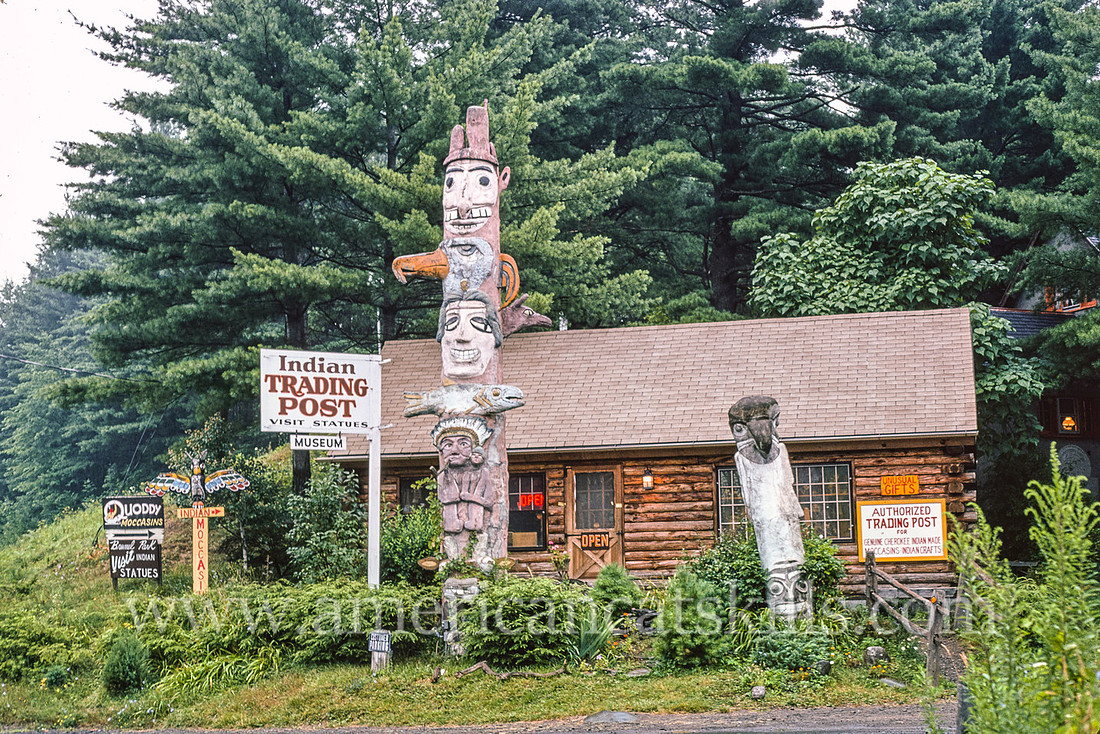 Totem Pole, Trading Post, Route 6, Boiceville, New YorkJohn Margolies, Library of Congress.
The Indian Trading Post was closed on August 1, 1995 by Brunel’s granddaughter Anne, who planned to move to Florida. In September 1995, Anne, via auctioneer George Cole, offered the complete contents of the Indian Trading Post and Museum for sale. The auction was held in Red Hook, New York. There were over 350 lots available for sale, including a pre-historic Shaman stone, Dick Chrisjohn (1921-1991) wood carvings, jewelry from the George C. Wallace collection, Brunel’s artwork, false face masks, beaded clothing, headdresses, totems, kachina dolls, spear heads, weapons, pottery, Navajo rugs, baskets and much more.
Perhaps the most widely watched item at the auction was a mysterious Native American “shaman stone” that was formerly owned by Brunel. Reportedly, the 9 1/2-inch, hollow sandstone artifact was turned up by a farmer’s plow in Cornwallville, near Windham Mountain, in the 1800s “at a site where Henry Hudson reported Native Americans convened once a year to placate a demon spirit.” On the front of the stone was a face carving and on the back was a hand’s shape. The stone also included a map of all the continents, a halo and markings that could be writing. The history and description of the stone seem a bit fanciful, but nonetheless a local amateur anthropologist estimated that it could sell for as much as $100,000. There were no further news reports on the auction, so it is unclear who bought the stone, or how much it sold for, or where the mysterious stone is today. (“Native American artifact at auction.” Poughkeepsie Journal. September 10, 1995.)
Brunel Park contains a log cabin, Brunel’s studio building, three large scale sculptures known as Moon Haw Haw, Natache and The Great White Spirit, two sculpted totem poles and several small-scale sculptures. All the sculptures are beautifully set on several acres of landscaped grounds.
The Emile Brunel Studio and Sculpture Garden is listed on the National Register of Historic Places as “an unusual and unique regional collection of folk-art dating from the early twentieth century” and as “a rare surviving example of roadside art and architecture in the upper Hudson Valley.”
The home and property were purchased by private owners in 1997 and listed on the National Register of Historic Places in 1999.
Today, Brunel Park is operated by the non-profit organization Friends of Brunel Park, which was founded in 2018 by Cynthia Nikitin and her husband Evgeny Nikitin. The organization seeks to serve as a community destination and artistic and education center, to preserve the site as a unique landmark in perpetuity and to celebrate the legacy of Emile Brunel.
In June 2023, the process began to restore the sculptures and totems at Brunel Park. The work was completed by AM Masonry, and included the cleaning, sandblasting, power washing, patching, fixing, sculpting and protecting of the major totems.
Brunel Park is open daily year-round for self-guided tours from 1pm to 5pm from March to November and from 12pm to 4pm from December to February. The address is 4008 State Route 28, at Desilva Road, in Boiceville, New York. Visit their website at www.brunelpark.org for more information.
Studio
The Emile Brunel two-story studio building was constructed in 1929 using the “craftsman” architectural style yet was “strongly influenced by French country design.”
“The most significant aspect of the house are the works of art carved by Brunel into the concrete stucco exterior finish. A relief carving spans the south elevation of the studio. Located between the exposed basement level and first floor the frieze measures about three feet in height. It depicts a Native American village scene. The scene includes hunters returning from a successful hunt, a tribal Shaman, Indian scouts in canoes, a Squaw with her two children, and two scouts keeping a vigilant lookout. Also in the piece is the image of Brunel.
Located on the south elevation of the west wing of the house is a large relief medallion. The carving includes the profiles of Emile Brunel and his wife, Glasyse. Below is partially completed inscription which reads, “Le don de Dieu.” The phrase translates from French as Gift of God or God Given.”
Emile Brunel's StudioEmile Brunel Studio and Sculpture Garden, also known as Brunel Park, is situated just off Route 28 in the hamlet of Boiceville, New York on a section of what was Brunel’s Chalet Indien resort property.
After Brunel’s death in 1944, and with the redesign and realignment of Route 28 through the hotel property in 1947, the hotel closed and the sculptures were moved to their current location and much of the remaining property was sold. Brunel’s wife and later his daughter would operate a trading post and museum on the property until the 1980s.
Brunel Park contains his Brunel’s studio, three large scale sculptures, two sculpted totem poles and several small-scale sculptures.
The Emile Brunel Studio and Sculpture Garden is listed on the National Register of Historic Places as “an unusual and unique regional collection of folk-art dating from the early twentieth century” and “is a rare surviving example of roadside art and architecture in the upper Hudson Valley.”
Today, Brunel Park is operated by the non-profit organization Friends of Brunel Park, which was founded in 2018. The organization seeks to preserve the unique landmark in perpetuity and celebrate the legacy of Emile Brunel.
The park is open daily year-round for self-guided tours from 1pm to 5pm from March to November and from 12pm to 4pm from December to February. The address is 4008 State Route 28, at Desilva Road, in Boiceville, New York. Visit their website at www.brunelpark.org for more information.
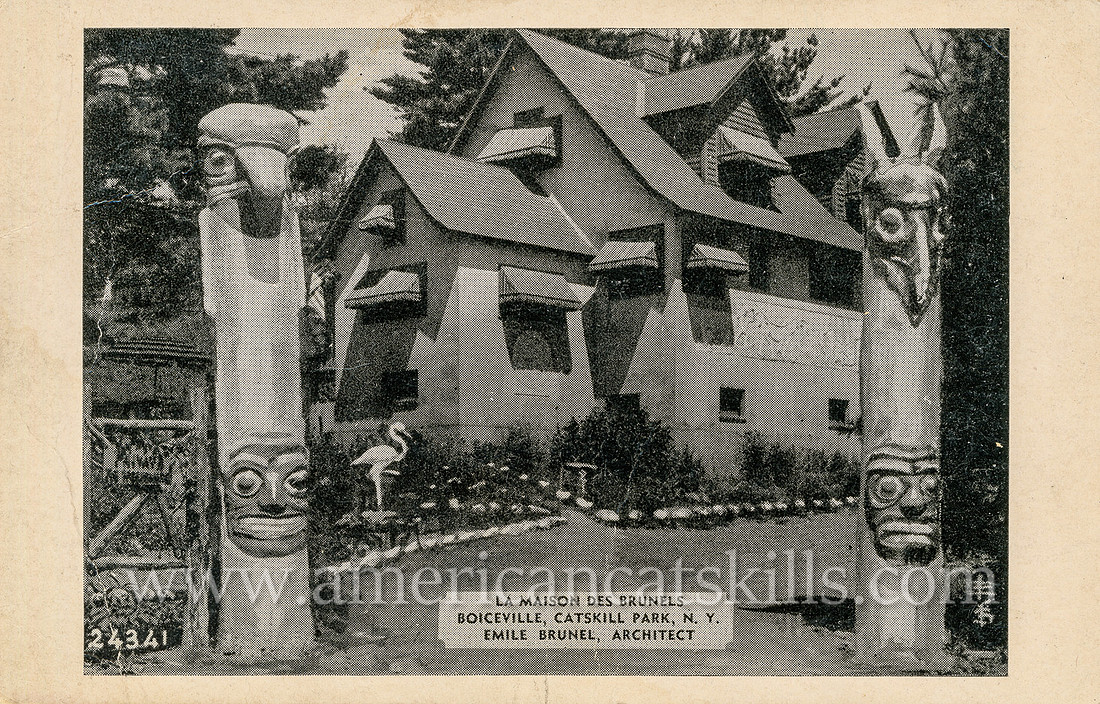 La Maison Des Brunels, Boiceville, Catskill Park, N.Y., Emile Brunel ArchitectAuthor's Collection.
The Cabin
The log cabin was built in 1960 to serve as a souvenir store. The cabin, now referred to as the Cranesbill Cabin, is currently used for artist residencies. The cabin, constructed of hand-hewn logs, is approximately 500 square feet and offers propane heat, a small loft space and a modern kitchen and bathroom.
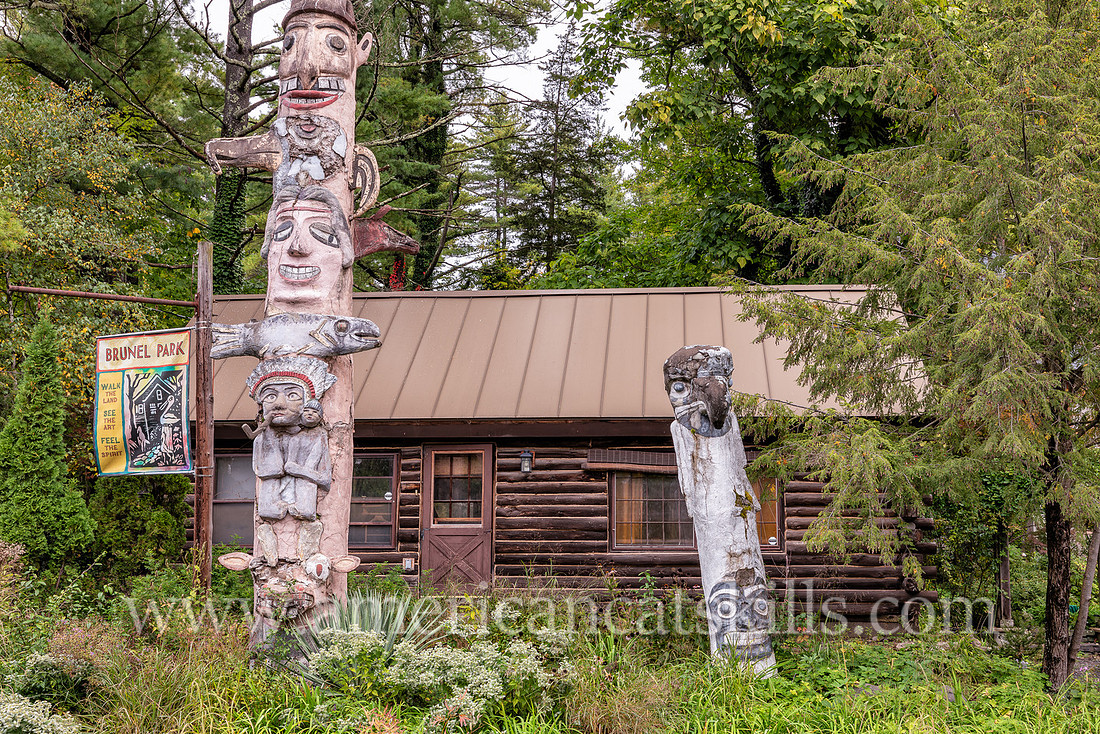 Brunel ParkEmile Brunel Studio and Sculpture Garden, also known as Brunel Park, is situated just off Route 28 in the hamlet of Boiceville, New York on a section of what was Brunel’s Chalet Indien resort property.
After Brunel’s death in 1944, and with the redesign and realignment of Route 28 through the hotel property in 1947, the hotel closed and the sculptures were moved to their current location and much of the remaining property was sold. Brunel’s wife and later his daughter would operate a trading post and museum on the property until the 1980s.
Brunel Park contains his Brunel’s studio, three large scale sculptures, two sculpted totem poles and several small-scale sculptures.
The Emile Brunel Studio and Sculpture Garden is listed on the National Register of Historic Places as “an unusual and unique regional collection of folk-art dating from the early twentieth century” and “is a rare surviving example of roadside art and architecture in the upper Hudson Valley.”
Today, Brunel Park is operated by the non-profit organization Friends of Brunel Park, which was founded in 2018. The organization seeks to preserve the unique landmark in perpetuity and celebrate the legacy of Emile Brunel.
The park is open daily year-round for self-guided tours from 1pm to 5pm from March to November and from 12pm to 4pm from December to February. The address is 4008 State Route 28, at Desilva Road, in Boiceville, New York. Visit their website at www.brunelpark.org for more information.
Cabin Totem Pole
Located in front of the log cabin, the 30-foot, hand carved, wooden totem pole was envisioned, sculpted and erected by Brunel, who stated that each carving represented a different event in his own life. From bottom to top, the totem pole includes a donkey, an Indian chief, a fish, an eagle and two smiling faces. The totem pole is titled “Statue de la Territoire,” which translate to Statue of the Territory.
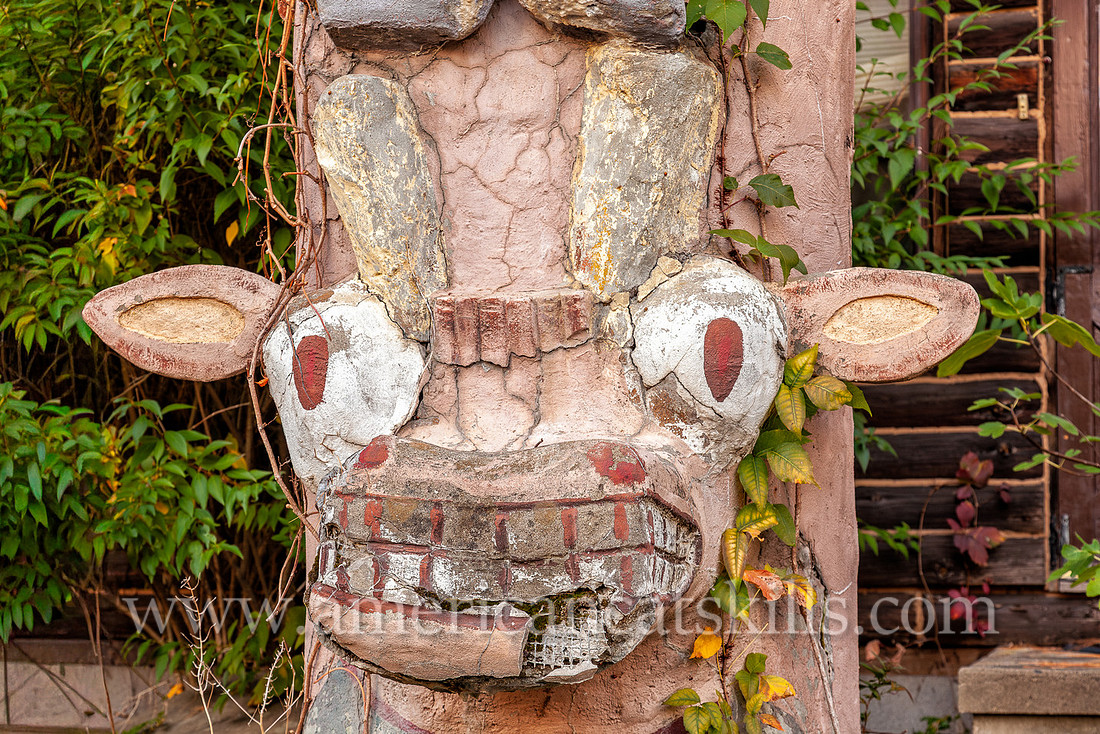 Smiling DonkeyEmile Brunel Studio and Sculpture Garden, also known as Brunel Park, is situated just off Route 28 in the hamlet of Boiceville, New York on a section of what was Brunel’s Chalet Indien resort property.
After Brunel’s death in 1944, and with the redesign and realignment of Route 28 through the hotel property in 1947, the hotel closed and the sculptures were moved to their current location and much of the remaining property was sold. Brunel’s wife and later his daughter would operate a trading post and museum on the property until the 1980s.
Brunel Park contains his Brunel’s studio, three large scale sculptures, two sculpted totem poles and several small-scale sculptures.
The Emile Brunel Studio and Sculpture Garden is listed on the National Register of Historic Places as “an unusual and unique regional collection of folk-art dating from the early twentieth century” and “is a rare surviving example of roadside art and architecture in the upper Hudson Valley.”
Today, Brunel Park is operated by the non-profit organization Friends of Brunel Park, which was founded in 2018. The organization seeks to preserve the unique landmark in perpetuity and celebrate the legacy of Emile Brunel.
The park is open daily year-round for self-guided tours from 1pm to 5pm from March to November and from 12pm to 4pm from December to February. The address is 4008 State Route 28, at Desilva Road, in Boiceville, New York. Visit their website at www.brunelpark.org for more information.
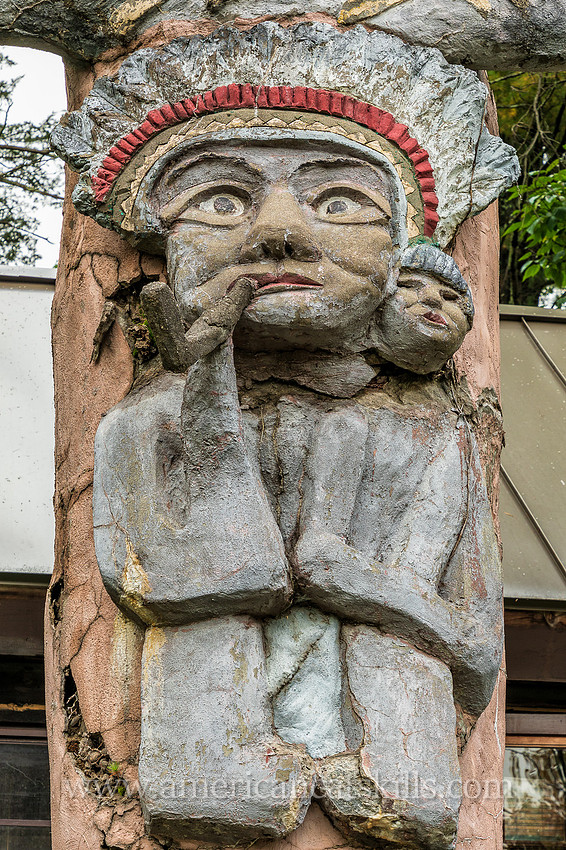 ChiefEmile Brunel Studio and Sculpture Garden, also known as Brunel Park, is situated just off Route 28 in the hamlet of Boiceville, New York on a section of what was Brunel’s Chalet Indien resort property.
After Brunel’s death in 1944, and with the redesign and realignment of Route 28 through the hotel property in 1947, the hotel closed and the sculptures were moved to their current location and much of the remaining property was sold. Brunel’s wife and later his daughter would operate a trading post and museum on the property until the 1980s.
Brunel Park contains his Brunel’s studio, three large scale sculptures, two sculpted totem poles and several small-scale sculptures.
The Emile Brunel Studio and Sculpture Garden is listed on the National Register of Historic Places as “an unusual and unique regional collection of folk-art dating from the early twentieth century” and “is a rare surviving example of roadside art and architecture in the upper Hudson Valley.”
Today, Brunel Park is operated by the non-profit organization Friends of Brunel Park, which was founded in 2018. The organization seeks to preserve the unique landmark in perpetuity and celebrate the legacy of Emile Brunel.
The park is open daily year-round for self-guided tours from 1pm to 5pm from March to November and from 12pm to 4pm from December to February. The address is 4008 State Route 28, at Desilva Road, in Boiceville, New York. Visit their website at www.brunelpark.org for more information.
Eagle Totem
The Eagle Totem was one of a pair of totems that once stood on each side of the driveway.
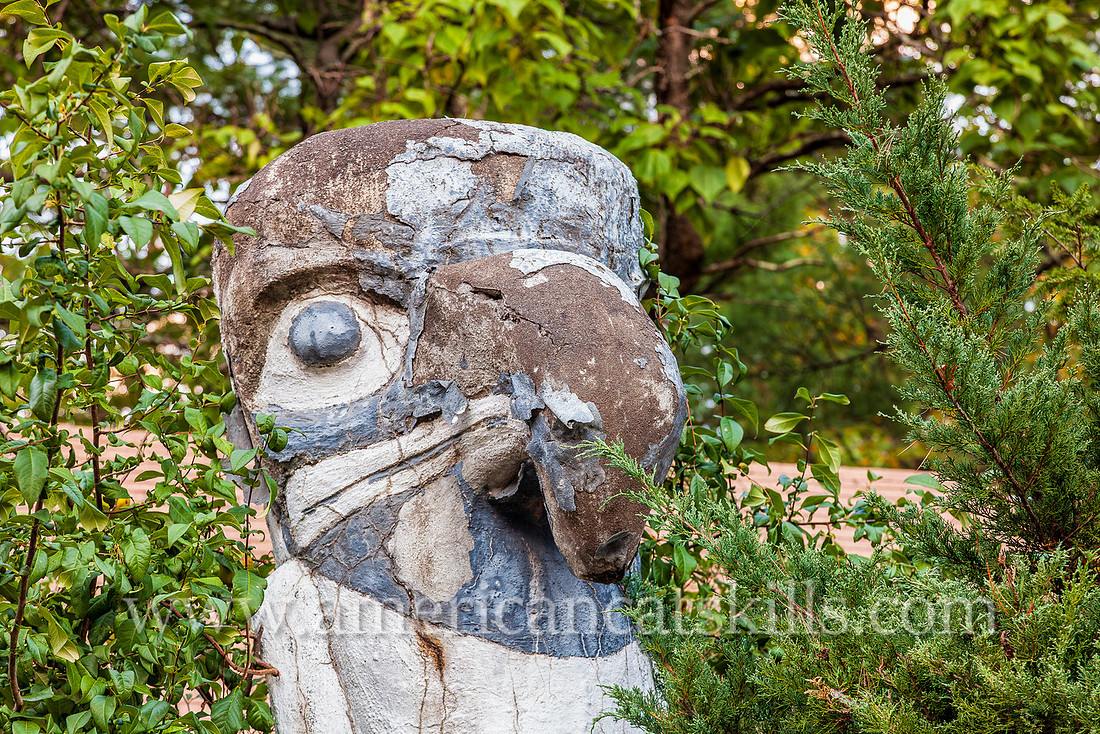 EagleEmile Brunel Studio and Sculpture Garden, also known as Brunel Park, is situated just off Route 28 in the hamlet of Boiceville, New York on a section of what was Brunel’s Chalet Indien resort property.
After Brunel’s death in 1944, and with the redesign and realignment of Route 28 through the hotel property in 1947, the hotel closed and the sculptures were moved to their current location and much of the remaining property was sold. Brunel’s wife and later his daughter would operate a trading post and museum on the property until the 1980s.
Brunel Park contains his Brunel’s studio, three large scale sculptures, two sculpted totem poles and several small-scale sculptures.
The Emile Brunel Studio and Sculpture Garden is listed on the National Register of Historic Places as “an unusual and unique regional collection of folk-art dating from the early twentieth century” and “is a rare surviving example of roadside art and architecture in the upper Hudson Valley.”
Today, Brunel Park is operated by the non-profit organization Friends of Brunel Park, which was founded in 2018. The organization seeks to preserve the unique landmark in perpetuity and celebrate the legacy of Emile Brunel.
The park is open daily year-round for self-guided tours from 1pm to 5pm from March to November and from 12pm to 4pm from December to February. The address is 4008 State Route 28, at Desilva Road, in Boiceville, New York. Visit their website at www.brunelpark.org for more information.
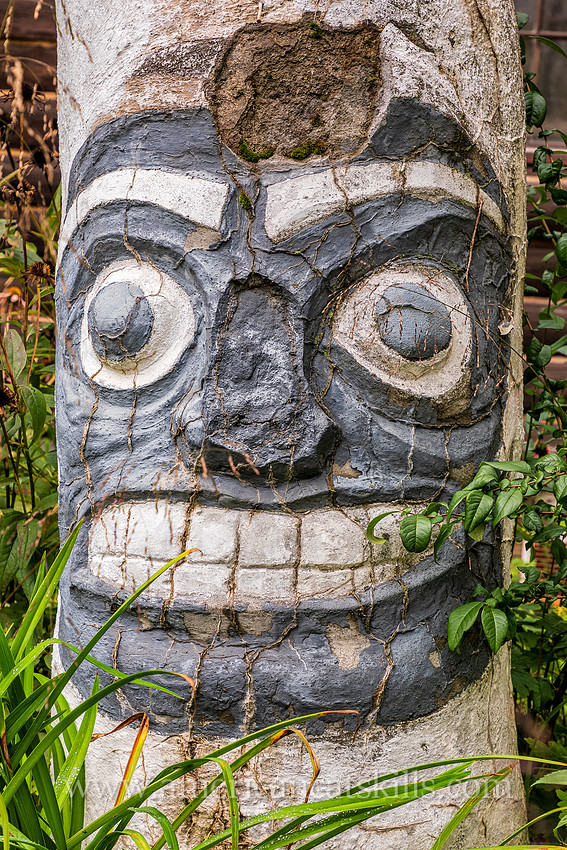 SmileEmile Brunel Studio and Sculpture Garden, also known as Brunel Park, is situated just off Route 28 in the hamlet of Boiceville, New York on a section of what was Brunel’s Chalet Indien resort property.
After Brunel’s death in 1944, and with the redesign and realignment of Route 28 through the hotel property in 1947, the hotel closed and the sculptures were moved to their current location and much of the remaining property was sold. Brunel’s wife and later his daughter would operate a trading post and museum on the property until the 1980s.
Brunel Park contains his Brunel’s studio, three large scale sculptures, two sculpted totem poles and several small-scale sculptures.
The Emile Brunel Studio and Sculpture Garden is listed on the National Register of Historic Places as “an unusual and unique regional collection of folk-art dating from the early twentieth century” and “is a rare surviving example of roadside art and architecture in the upper Hudson Valley.”
Today, Brunel Park is operated by the non-profit organization Friends of Brunel Park, which was founded in 2018. The organization seeks to preserve the unique landmark in perpetuity and celebrate the legacy of Emile Brunel.
The park is open daily year-round for self-guided tours from 1pm to 5pm from March to November and from 12pm to 4pm from December to February. The address is 4008 State Route 28, at Desilva Road, in Boiceville, New York. Visit their website at www.brunelpark.org for more information.
Moon Haw Haw
The 30-foot sculpture known as Moon Haw Haw depicts a male Native American figure with a single feather at the rear of his head as he looks skyward towards the Burroughs Range to the west, with both arms outstretched, palms facing upwards. The work, completed in 1929, is believed to be Brunel’s first work on the property.
While in its original location, before it was moved in 1947 due to the Route 28 realignment, at the base of the Moon Haw Haw sculpture was a small pool, constructed of rocks, into which flowed a stream of cold Catskill mountain water, piped from one of the five never-failing springs on the grounds of Chalet Indian. In 1933 “during the recent drought, this water supply was frequented by neighbors of the Brunel family, who were glad indeed to climb the steep slope leading up to the monument in order to secure good drinking water for their homes.
Moonhaw, “that picturesque sylvan retreat,” refers to the geographical area near Brunel Park at the base of the eastern slope of the Wittenberg Range, more commonly referred to as the Burroughs Range. The range is comprised of Wittenberg Mountain, Cornell Mountain and Slide Mountain.
Moon Haw Road and what locals call Moonhaw Hollow are modern place names in the hamlet of West Shokan in the town of Olive. Both the road and the hollow bear the name of an Esopus Indian leader identified as “Moonhaw, the right Ancrop,” who was among several Indian signatories who placed their marks on the Indian deed dated June 6, 1746 (as per Ulster County Records, Deed Book EE:61-64) that transferred their lands to settlers.
The Moonhaw Club, originally built by Charles Coutant, was an historic, rustic hunting camp located in the Moonhaw area.
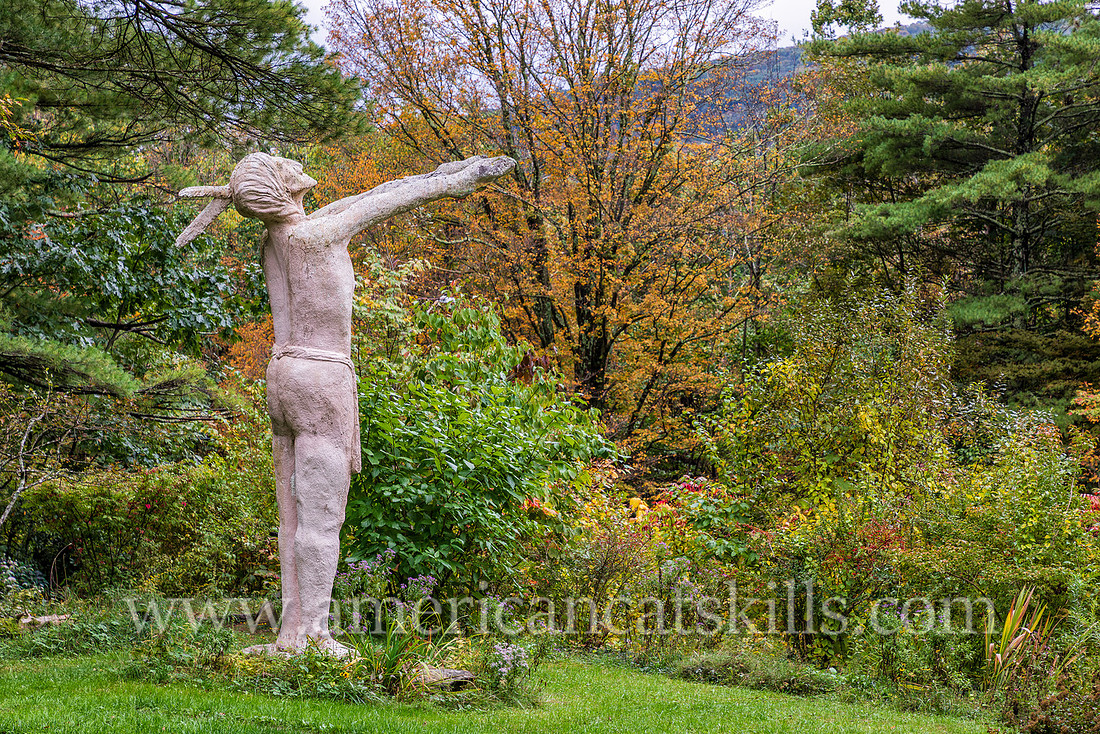 Moon Haw HawEmile Brunel Studio and Sculpture Garden, also known as Brunel Park, is situated just off Route 28 in the hamlet of Boiceville, New York on a section of what was Brunel’s Chalet Indien resort property.
After Brunel’s death in 1944, and with the redesign and realignment of Route 28 through the hotel property in 1947, the hotel closed and the sculptures were moved to their current location and much of the remaining property was sold. Brunel’s wife and later his daughter would operate a trading post and museum on the property until the 1980s.
Brunel Park contains his Brunel’s studio, three large scale sculptures, two sculpted totem poles and several small-scale sculptures.
The Emile Brunel Studio and Sculpture Garden is listed on the National Register of Historic Places as “an unusual and unique regional collection of folk-art dating from the early twentieth century” and “is a rare surviving example of roadside art and architecture in the upper Hudson Valley.”
Today, Brunel Park is operated by the non-profit organization Friends of Brunel Park, which was founded in 2018. The organization seeks to preserve the unique landmark in perpetuity and celebrate the legacy of Emile Brunel.
The park is open daily year-round for self-guided tours from 1pm to 5pm from March to November and from 12pm to 4pm from December to February. The address is 4008 State Route 28, at Desilva Road, in Boiceville, New York. Visit their website at www.brunelpark.org for more information.
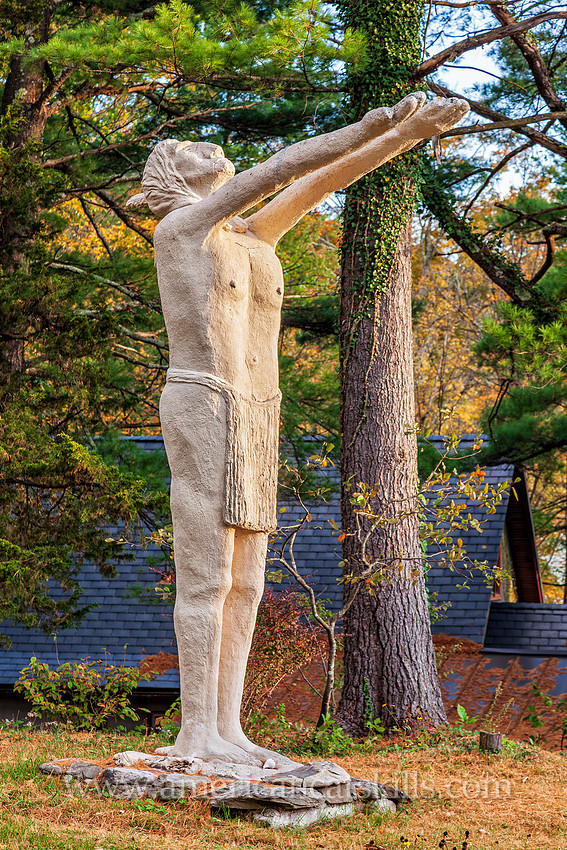 Moon Haw Haw, Brunel Park, Boiceville, NYEmile Brunel Studio and Sculpture Garden, also known as Brunel Park, is situated just off Route 28 in the hamlet of Boiceville, New York on a section of what was Brunel’s Chalet Indien resort property.
After Brunel’s death in 1944, and with the redesign and realignment of Route 28 through the hotel property in 1947, the hotel closed and the sculptures were moved to their current location and much of the remaining property was sold. Brunel’s wife and later his daughter would operate a trading post and museum on the property until the 1980s.
Brunel Park contains his Brunel’s studio, three large scale sculptures, two sculpted totem poles and several small-scale sculptures.
The Emile Brunel Studio and Sculpture Garden is listed on the National Register of Historic Places as “an unusual and unique regional collection of folk-art dating from the early twentieth century” and “is a rare surviving example of roadside art and architecture in the upper Hudson Valley.”
Today, Brunel Park is operated by the non-profit organization Friends of Brunel Park, which was founded in 2018. The organization seeks to preserve the unique landmark in perpetuity and celebrate the legacy of Emile Brunel.
The park is open daily year-round for self-guided tours from 1pm to 5pm from March to November and from 12pm to 4pm from December to February. The address is 4008 State Route 28, at Desilva Road, in Boiceville, New York. Visit their website at www.brunelpark.org for more information.
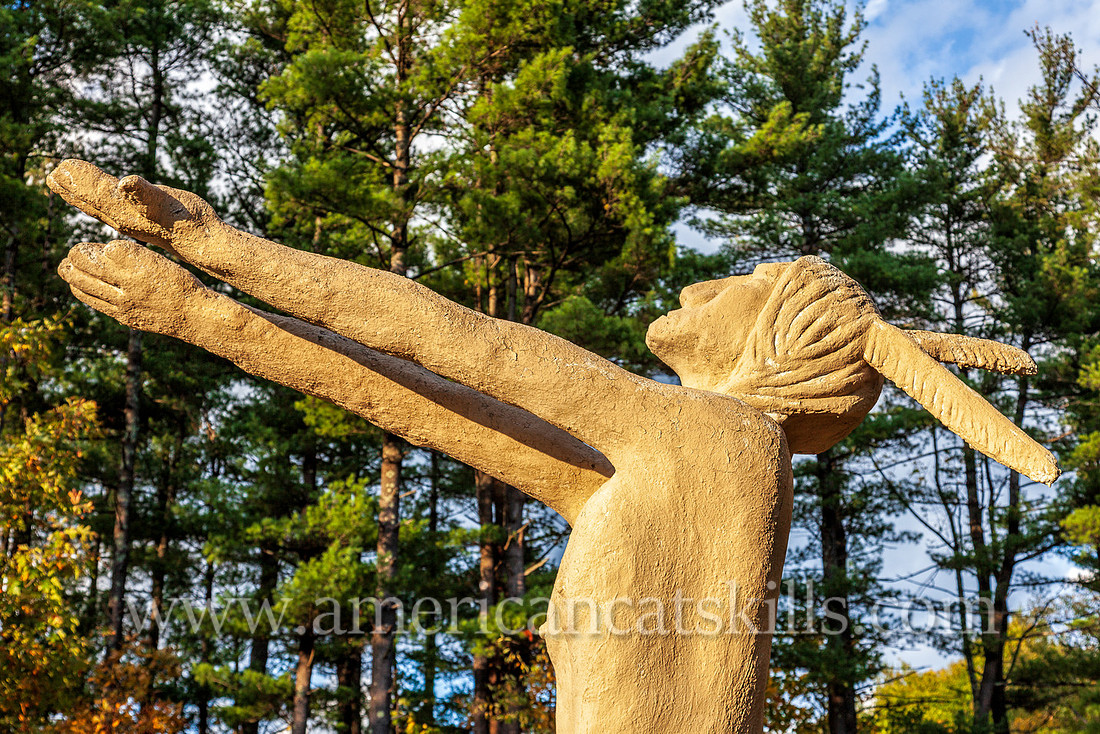 Moon Haw Haw, Brunel ParkEmile Brunel Studio and Sculpture Garden, also known as Brunel Park, is situated just off Route 28 in the hamlet of Boiceville, New York on a section of what was Brunel’s Chalet Indien resort property.
After Brunel’s death in 1944, and with the redesign and realignment of Route 28 through the hotel property in 1947, the hotel closed and the sculptures were moved to their current location and much of the remaining property was sold. Brunel’s wife and later his daughter would operate a trading post and museum on the property until the 1980s.
Brunel Park contains his Brunel’s studio, three large scale sculptures, two sculpted totem poles and several small-scale sculptures.
The Emile Brunel Studio and Sculpture Garden is listed on the National Register of Historic Places as “an unusual and unique regional collection of folk-art dating from the early twentieth century” and “is a rare surviving example of roadside art and architecture in the upper Hudson Valley.”
Today, Brunel Park is operated by the non-profit organization Friends of Brunel Park, which was founded in 2018. The organization seeks to preserve the unique landmark in perpetuity and celebrate the legacy of Emile Brunel.
The park is open daily year-round for self-guided tours from 1pm to 5pm from March to November and from 12pm to 4pm from December to February. The address is 4008 State Route 28, at Desilva Road, in Boiceville, New York. Visit their website at www.brunelpark.org for more information.
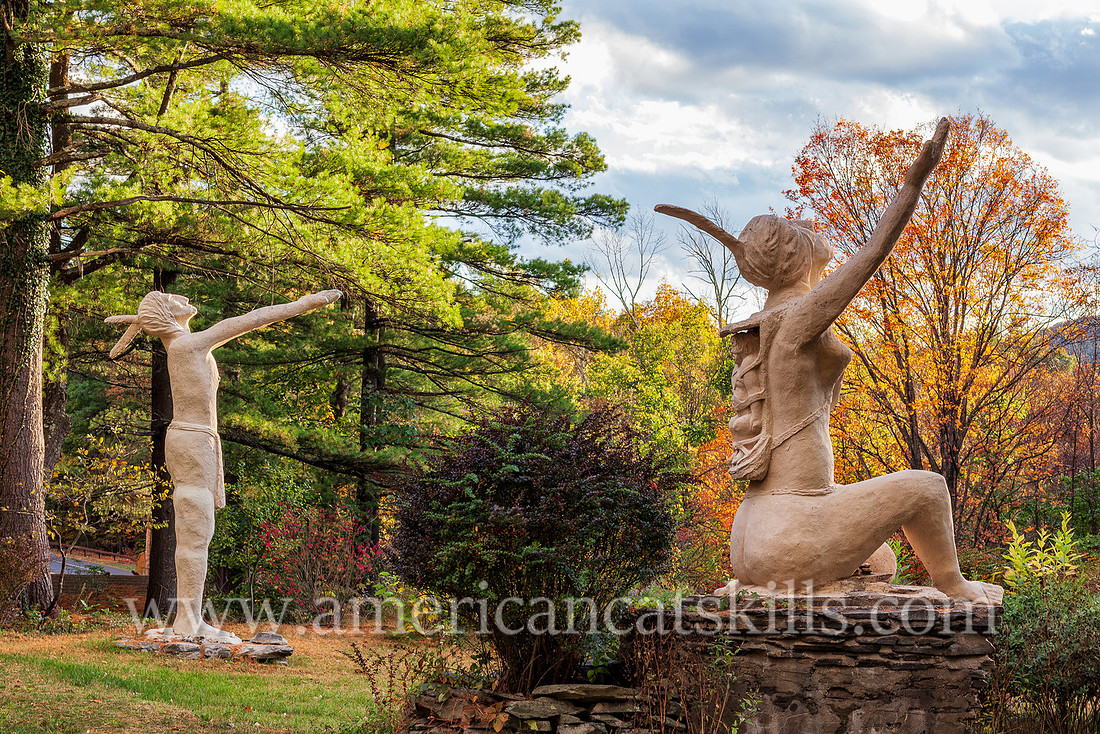 Natache and Moon Haw HawEmile Brunel Studio and Sculpture Garden, also known as Brunel Park, is situated just off Route 28 in the hamlet of Boiceville, New York on a section of what was Brunel’s Chalet Indien resort property.
After Brunel’s death in 1944, and with the redesign and realignment of Route 28 through the hotel property in 1947, the hotel closed and the sculptures were moved to their current location and much of the remaining property was sold. Brunel’s wife and later his daughter would operate a trading post and museum on the property until the 1980s.
Brunel Park contains his Brunel’s studio, three large scale sculptures, two sculpted totem poles and several small-scale sculptures.
The Emile Brunel Studio and Sculpture Garden is listed on the National Register of Historic Places as “an unusual and unique regional collection of folk-art dating from the early twentieth century” and “is a rare surviving example of roadside art and architecture in the upper Hudson Valley.”
Today, Brunel Park is operated by the non-profit organization Friends of Brunel Park, which was founded in 2018. The organization seeks to preserve the unique landmark in perpetuity and celebrate the legacy of Emile Brunel.
The park is open daily year-round for self-guided tours from 1pm to 5pm from March to November and from 12pm to 4pm from December to February. The address is 4008 State Route 28, at Desilva Road, in Boiceville, New York. Visit their website at www.brunelpark.org for more information.
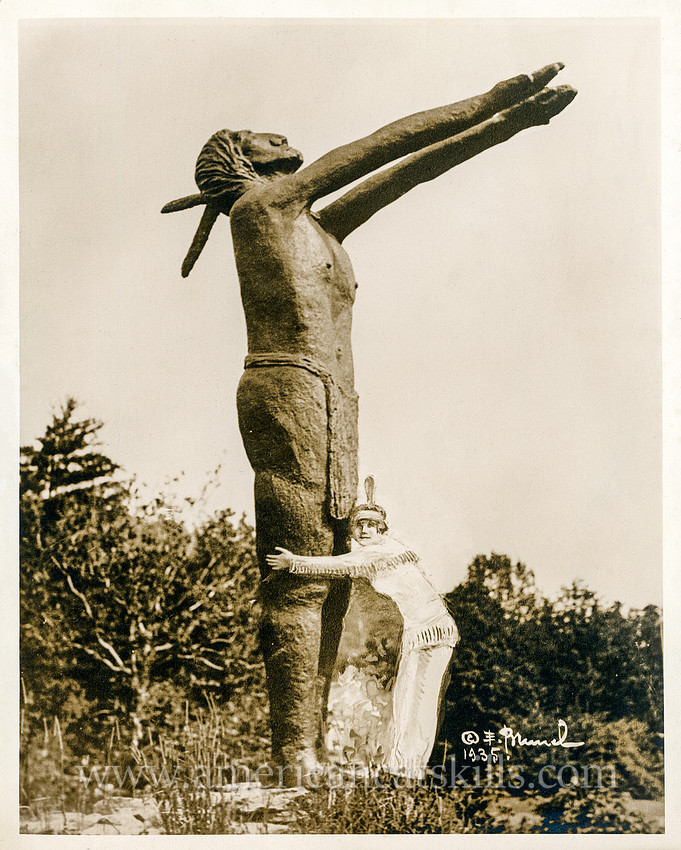 Moon Haw HawAuthor's Collection.
Natache
The sculpture known as Natache was conceived by Brunel in 1933. That year, Brunel sculpted an eight-inch clay model of his vision for the future statue. The sculpture is roughly twenty feet in height including her stone base. Natache depicts a Native American woman sitting with her right arm raised and her head tilted back. She carries a papoose with a child on her back.
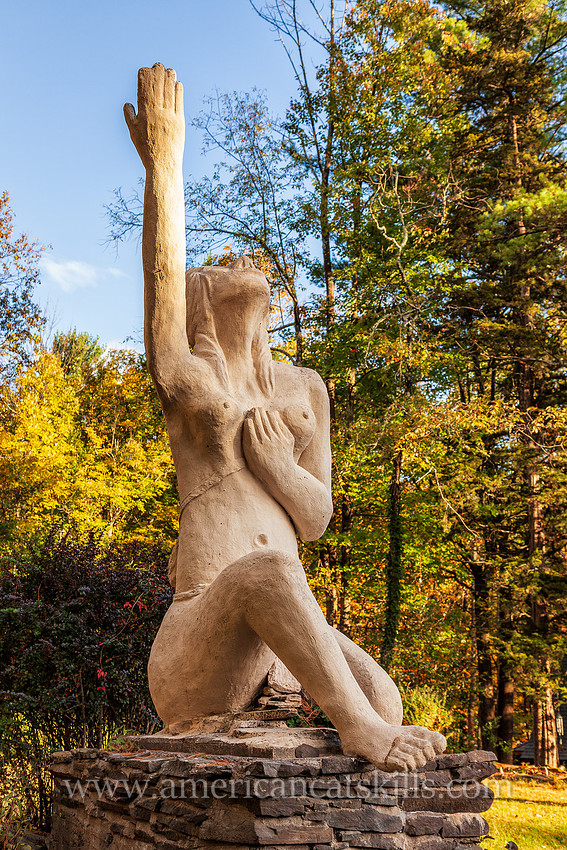 NatacheEmile Brunel Studio and Sculpture Garden, also known as Brunel Park, is situated just off Route 28 in the hamlet of Boiceville, New York on a section of what was Brunel’s Chalet Indien resort property.
After Brunel’s death in 1944, and with the redesign and realignment of Route 28 through the hotel property in 1947, the hotel closed and the sculptures were moved to their current location and much of the remaining property was sold. Brunel’s wife and later his daughter would operate a trading post and museum on the property until the 1980s.
Brunel Park contains his Brunel’s studio, three large scale sculptures, two sculpted totem poles and several small-scale sculptures.
The Emile Brunel Studio and Sculpture Garden is listed on the National Register of Historic Places as “an unusual and unique regional collection of folk-art dating from the early twentieth century” and “is a rare surviving example of roadside art and architecture in the upper Hudson Valley.”
Today, Brunel Park is operated by the non-profit organization Friends of Brunel Park, which was founded in 2018. The organization seeks to preserve the unique landmark in perpetuity and celebrate the legacy of Emile Brunel.
The park is open daily year-round for self-guided tours from 1pm to 5pm from March to November and from 12pm to 4pm from December to February. The address is 4008 State Route 28, at Desilva Road, in Boiceville, New York. Visit their website at www.brunelpark.org for more information.
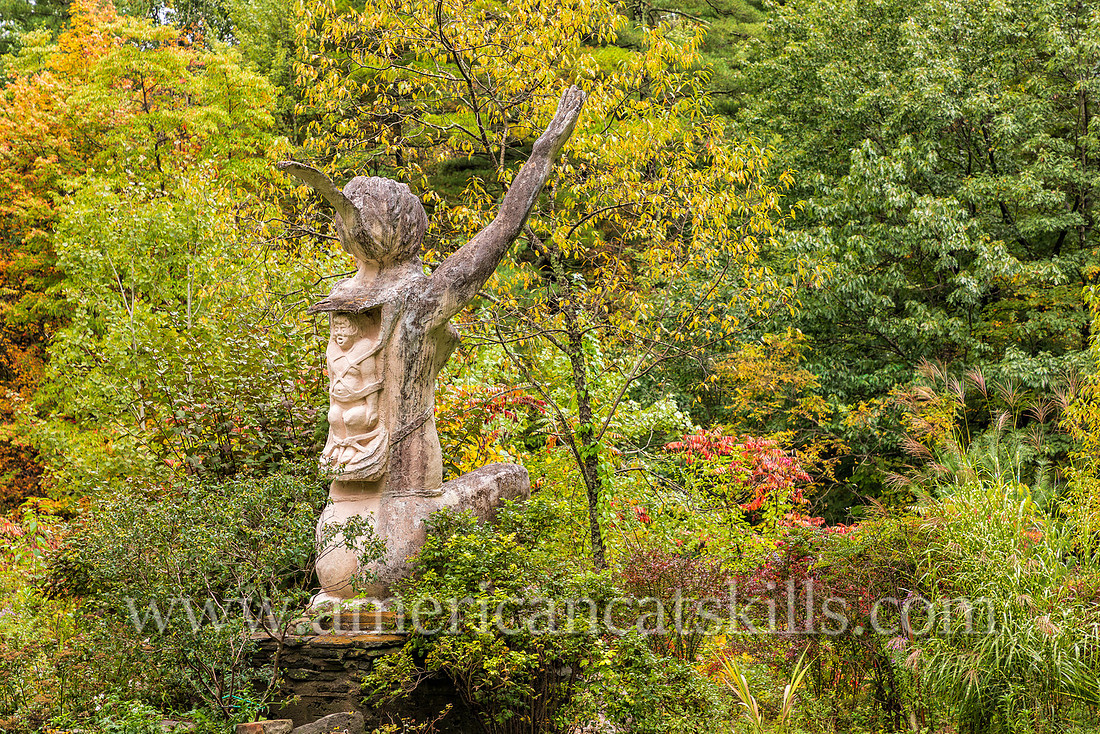 Natache, Brunel ParkEmile Brunel Studio and Sculpture Garden, also known as Brunel Park, is situated just off Route 28 in the hamlet of Boiceville, New York on a section of what was Brunel’s Chalet Indien resort property.
After Brunel’s death in 1944, and with the redesign and realignment of Route 28 through the hotel property in 1947, the hotel closed and the sculptures were moved to their current location and much of the remaining property was sold. Brunel’s wife and later his daughter would operate a trading post and museum on the property until the 1980s.
Brunel Park contains his Brunel’s studio, three large scale sculptures, two sculpted totem poles and several small-scale sculptures.
The Emile Brunel Studio and Sculpture Garden is listed on the National Register of Historic Places as “an unusual and unique regional collection of folk-art dating from the early twentieth century” and “is a rare surviving example of roadside art and architecture in the upper Hudson Valley.”
Today, Brunel Park is operated by the non-profit organization Friends of Brunel Park, which was founded in 2018. The organization seeks to preserve the unique landmark in perpetuity and celebrate the legacy of Emile Brunel.
The park is open daily year-round for self-guided tours from 1pm to 5pm from March to November and from 12pm to 4pm from December to February. The address is 4008 State Route 28, at Desilva Road, in Boiceville, New York. Visit their website at www.brunelpark.org for more information.
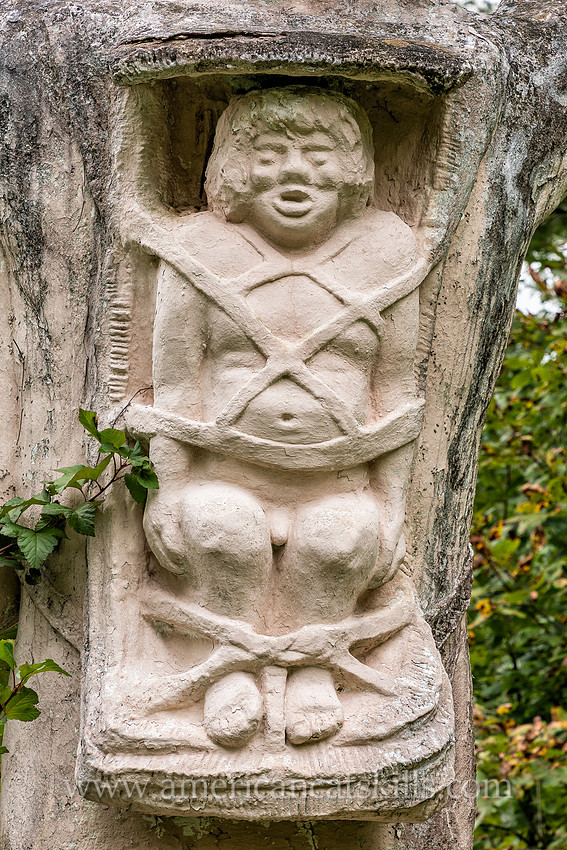 Natache, Baby in a PapooseEmile Brunel Studio and Sculpture Garden, also known as Brunel Park, is situated just off Route 28 in the hamlet of Boiceville, New York on a section of what was Brunel’s Chalet Indien resort property.
After Brunel’s death in 1944, and with the redesign and realignment of Route 28 through the hotel property in 1947, the hotel closed and the sculptures were moved to their current location and much of the remaining property was sold. Brunel’s wife and later his daughter would operate a trading post and museum on the property until the 1980s.
Brunel Park contains his Brunel’s studio, three large scale sculptures, two sculpted totem poles and several small-scale sculptures.
The Emile Brunel Studio and Sculpture Garden is listed on the National Register of Historic Places as “an unusual and unique regional collection of folk-art dating from the early twentieth century” and “is a rare surviving example of roadside art and architecture in the upper Hudson Valley.”
Today, Brunel Park is operated by the non-profit organization Friends of Brunel Park, which was founded in 2018. The organization seeks to preserve the unique landmark in perpetuity and celebrate the legacy of Emile Brunel.
The park is open daily year-round for self-guided tours from 1pm to 5pm from March to November and from 12pm to 4pm from December to February. The address is 4008 State Route 28, at Desilva Road, in Boiceville, New York. Visit their website at www.brunelpark.org for more information.
Great White Spirit
The sculpture known as the Great White Spirit “is thought to be Brunel’s last. It consists of a thirty-foot-tall tree trunk with spreading roots. At the top of the trunk, are four large faces (the faces of religion). These four images are intended to represent the world’s great faiths. Depicted are Christianity, Islam, Buddhism, and Judaism. Around the base of the tree are the four faces of vice. These include jealousy, hate, lust and greed. This work would also serve as Brunel’s own monument as his ashes are interred within its form.”
After completing the Great White Spirit, with a pool at the base, Brunel and L. P. Bishop, his assistant and neighbor, each made a footprint at the bottom as a seal of friendship to remain beyond the span of their lives for all the guests at the chalet to observe.
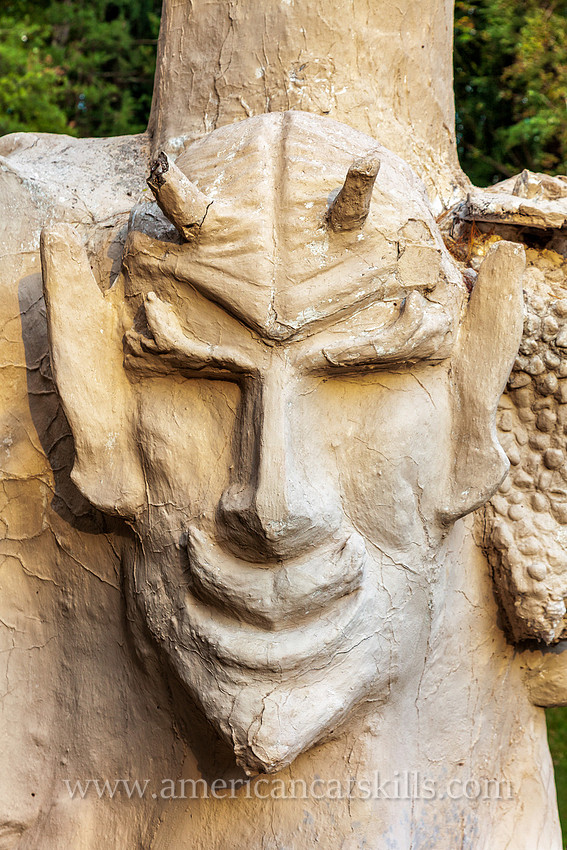 The Great White Spirit (2014)Emile Brunel Studio and Sculpture Garden, also known as Brunel Park, is situated just off Route 28 in the hamlet of Boiceville, New York on a section of what was Brunel’s Chalet Indien resort property.
After Brunel’s death in 1944, and with the redesign and realignment of Route 28 through the hotel property in 1947, the hotel closed and the sculptures were moved to their current location and much of the remaining property was sold. Brunel’s wife and later his daughter would operate a trading post and museum on the property until the 1980s.
Brunel Park contains his Brunel’s studio, three large scale sculptures, two sculpted totem poles and several small-scale sculptures.
The Emile Brunel Studio and Sculpture Garden is listed on the National Register of Historic Places as “an unusual and unique regional collection of folk-art dating from the early twentieth century” and “is a rare surviving example of roadside art and architecture in the upper Hudson Valley.”
Today, Brunel Park is operated by the non-profit organization Friends of Brunel Park, which was founded in 2018. The organization seeks to preserve the unique landmark in perpetuity and celebrate the legacy of Emile Brunel.
The park is open daily year-round for self-guided tours from 1pm to 5pm from March to November and from 12pm to 4pm from December to February. The address is 4008 State Route 28, at Desilva Road, in Boiceville, New York. Visit their website at www.brunelpark.org for more information.
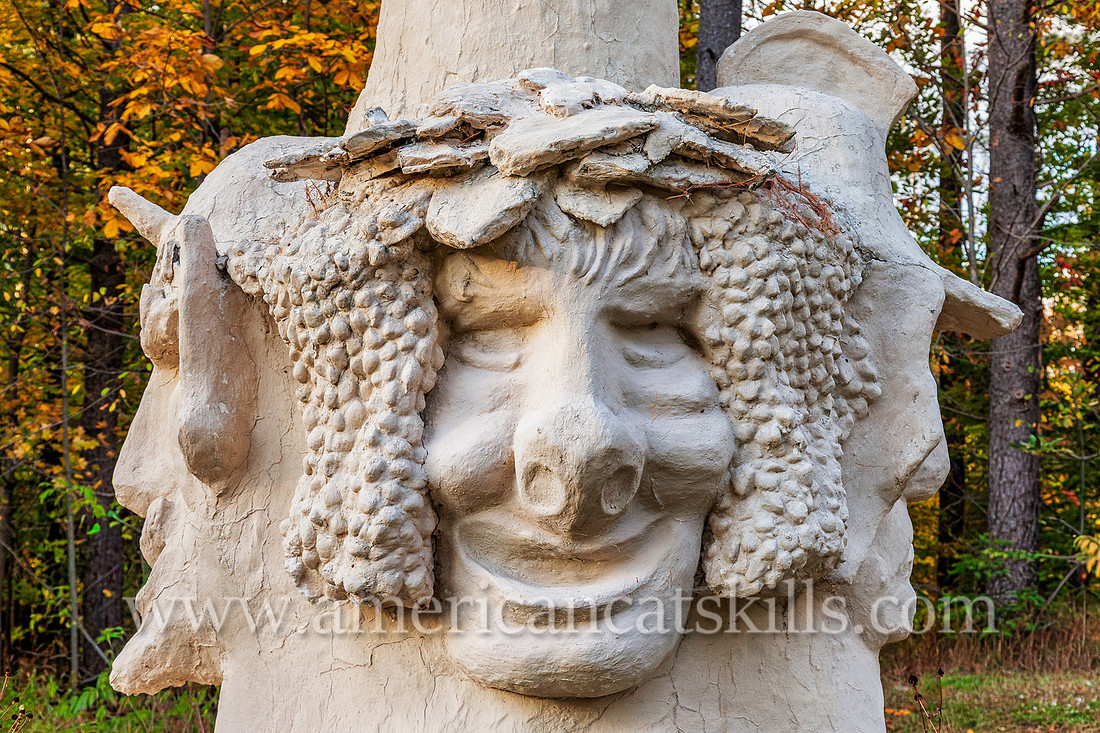 The Four Vices (2014)Emile Brunel Studio and Sculpture Garden, also known as Brunel Park, is situated just off Route 28 in the hamlet of Boiceville, New York on a section of what was Brunel’s Chalet Indien resort property.
After Brunel’s death in 1944, and with the redesign and realignment of Route 28 through the hotel property in 1947, the hotel closed and the sculptures were moved to their current location and much of the remaining property was sold. Brunel’s wife and later his daughter would operate a trading post and museum on the property until the 1980s.
Brunel Park contains his Brunel’s studio, three large scale sculptures, two sculpted totem poles and several small-scale sculptures.
The Emile Brunel Studio and Sculpture Garden is listed on the National Register of Historic Places as “an unusual and unique regional collection of folk-art dating from the early twentieth century” and “is a rare surviving example of roadside art and architecture in the upper Hudson Valley.”
Today, Brunel Park is operated by the non-profit organization Friends of Brunel Park, which was founded in 2018. The organization seeks to preserve the unique landmark in perpetuity and celebrate the legacy of Emile Brunel.
The park is open daily year-round for self-guided tours from 1pm to 5pm from March to November and from 12pm to 4pm from December to February. The address is 4008 State Route 28, at Desilva Road, in Boiceville, New York. Visit their website at www.brunelpark.org for more information.
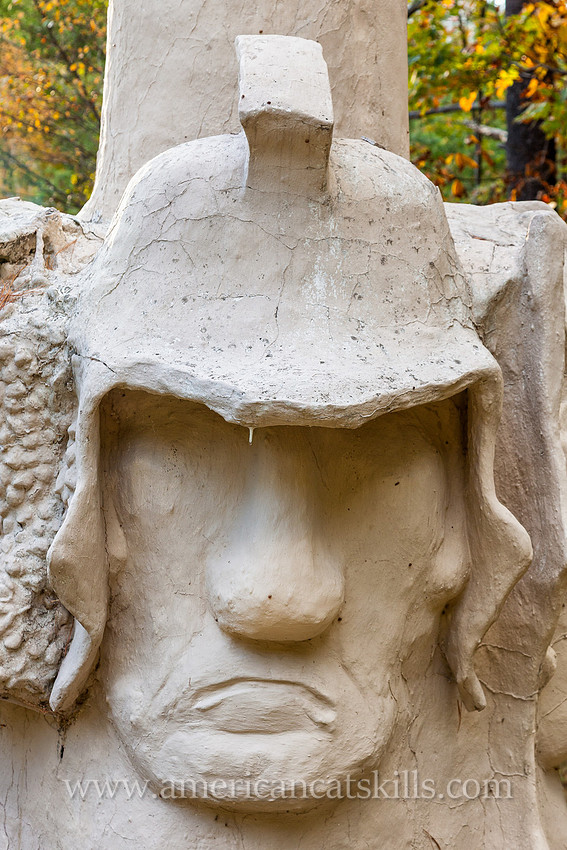 Jealousy, Hate, Lust and Greed (2014)Emile Brunel Studio and Sculpture Garden, also known as Brunel Park, is situated just off Route 28 in the hamlet of Boiceville, New York on a section of what was Brunel’s Chalet Indien resort property.
After Brunel’s death in 1944, and with the redesign and realignment of Route 28 through the hotel property in 1947, the hotel closed and the sculptures were moved to their current location and much of the remaining property was sold. Brunel’s wife and later his daughter would operate a trading post and museum on the property until the 1980s.
Brunel Park contains his Brunel’s studio, three large scale sculptures, two sculpted totem poles and several small-scale sculptures.
The Emile Brunel Studio and Sculpture Garden is listed on the National Register of Historic Places as “an unusual and unique regional collection of folk-art dating from the early twentieth century” and “is a rare surviving example of roadside art and architecture in the upper Hudson Valley.”
Today, Brunel Park is operated by the non-profit organization Friends of Brunel Park, which was founded in 2018. The organization seeks to preserve the unique landmark in perpetuity and celebrate the legacy of Emile Brunel.
The park is open daily year-round for self-guided tours from 1pm to 5pm from March to November and from 12pm to 4pm from December to February. The address is 4008 State Route 28, at Desilva Road, in Boiceville, New York. Visit their website at www.brunelpark.org for more information.
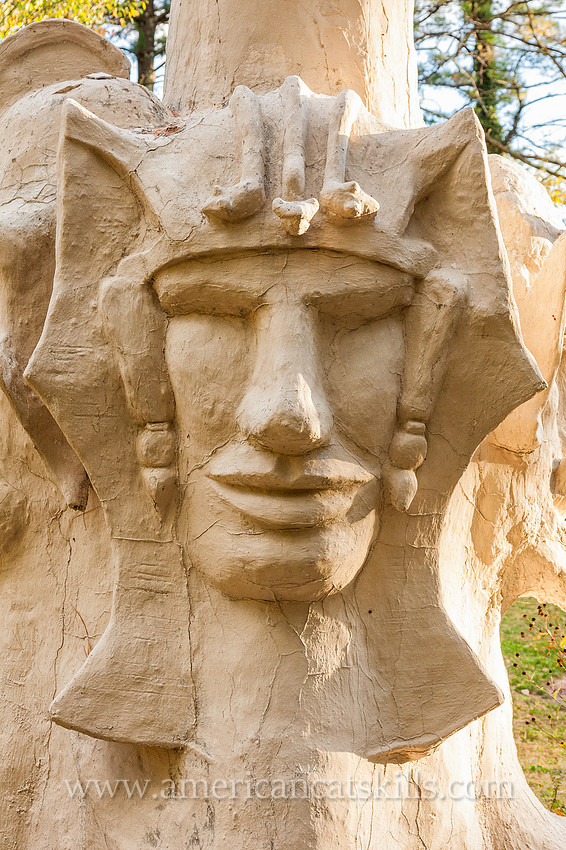 The Faces of Vice (2014)Emile Brunel Studio and Sculpture Garden, also known as Brunel Park, is situated just off Route 28 in the hamlet of Boiceville, New York on a section of what was Brunel’s Chalet Indien resort property.
After Brunel’s death in 1944, and with the redesign and realignment of Route 28 through the hotel property in 1947, the hotel closed and the sculptures were moved to their current location and much of the remaining property was sold. Brunel’s wife and later his daughter would operate a trading post and museum on the property until the 1980s.
Brunel Park contains his Brunel’s studio, three large scale sculptures, two sculpted totem poles and several small-scale sculptures.
The Emile Brunel Studio and Sculpture Garden is listed on the National Register of Historic Places as “an unusual and unique regional collection of folk-art dating from the early twentieth century” and “is a rare surviving example of roadside art and architecture in the upper Hudson Valley.”
Today, Brunel Park is operated by the non-profit organization Friends of Brunel Park, which was founded in 2018. The organization seeks to preserve the unique landmark in perpetuity and celebrate the legacy of Emile Brunel.
The park is open daily year-round for self-guided tours from 1pm to 5pm from March to November and from 12pm to 4pm from December to February. The address is 4008 State Route 28, at Desilva Road, in Boiceville, New York. Visit their website at www.brunelpark.org for more information.
The Big Frog
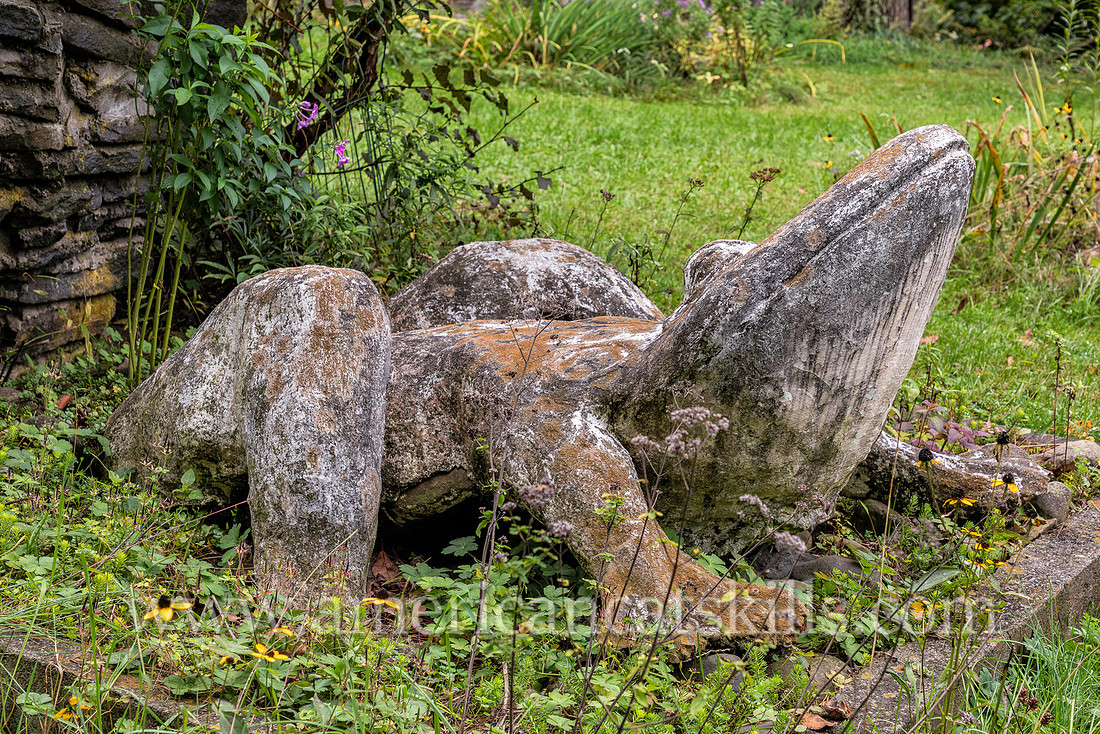 The Big FrogEmile Brunel Studio and Sculpture Garden, also known as Brunel Park, is situated just off Route 28 in the hamlet of Boiceville, New York on a section of what was Brunel’s Chalet Indien resort property.
After Brunel’s death in 1944, and with the redesign and realignment of Route 28 through the hotel property in 1947, the hotel closed and the sculptures were moved to their current location and much of the remaining property was sold. Brunel’s wife and later his daughter would operate a trading post and museum on the property until the 1980s.
Brunel Park contains his Brunel’s studio, three large scale sculptures, two sculpted totem poles and several small-scale sculptures.
The Emile Brunel Studio and Sculpture Garden is listed on the National Register of Historic Places as “an unusual and unique regional collection of folk-art dating from the early twentieth century” and “is a rare surviving example of roadside art and architecture in the upper Hudson Valley.”
Today, Brunel Park is operated by the non-profit organization Friends of Brunel Park, which was founded in 2018. The organization seeks to preserve the unique landmark in perpetuity and celebrate the legacy of Emile Brunel.
The park is open daily year-round for self-guided tours from 1pm to 5pm from March to November and from 12pm to 4pm from December to February. The address is 4008 State Route 28, at Desilva Road, in Boiceville, New York. Visit their website at www.brunelpark.org for more information.
The Little Gargoyle
The Little Gargoyle represents the gargoyles from Brunel’s beloved St. Nicolas Cathedral in his hometown of Chateau-Neuf, France.
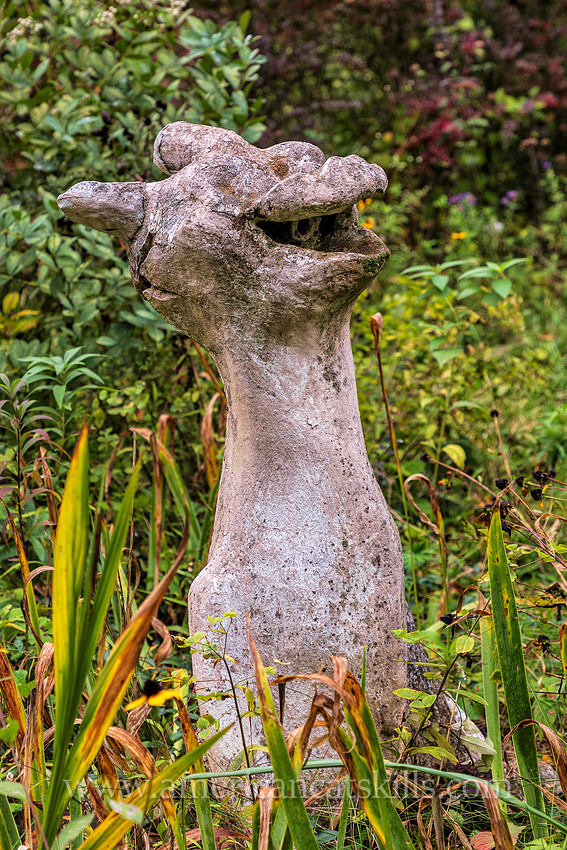 The Little GargoyleEmile Brunel Studio and Sculpture Garden, also known as Brunel Park, is situated just off Route 28 in the hamlet of Boiceville, New York on a section of what was Brunel’s Chalet Indien resort property.
After Brunel’s death in 1944, and with the redesign and realignment of Route 28 through the hotel property in 1947, the hotel closed and the sculptures were moved to their current location and much of the remaining property was sold. Brunel’s wife and later his daughter would operate a trading post and museum on the property until the 1980s.
Brunel Park contains his Brunel’s studio, three large scale sculptures, two sculpted totem poles and several small-scale sculptures.
The Emile Brunel Studio and Sculpture Garden is listed on the National Register of Historic Places as “an unusual and unique regional collection of folk-art dating from the early twentieth century” and “is a rare surviving example of roadside art and architecture in the upper Hudson Valley.”
Today, Brunel Park is operated by the non-profit organization Friends of Brunel Park, which was founded in 2018. The organization seeks to preserve the unique landmark in perpetuity and celebrate the legacy of Emile Brunel.
The park is open daily year-round for self-guided tours from 1pm to 5pm from March to November and from 12pm to 4pm from December to February. The address is 4008 State Route 28, at Desilva Road, in Boiceville, New York. Visit their website at www.brunelpark.org for more information.

