
North Lake-South Lake: A Photographic Study
Thomas Cole at North-South Lake
“Shut in by stupendous mountains which rest on crags which tower more than a thousand feet above the water, whose rugged brows and shadowy peaks are clotted by dark and tangled wood, they [North and South Lakes] have an august aspect of deep seclusion, of utter and unbroken solitude, that when standing on their brink a lonely traveler, I was overwhelmed with an emotion of the sublime, such as I have rarely felt.”
So said Thomas Cole, the renowned American painter who first became famous for his portrayals of the Catskills and was later attributed as founder of the Hudson River School, upon his first encounter with the lakes in 1825.
A decade later, in the summer of 1835, Thomas Cole again described in his journals his experiences on the lake, this time in the company of a friend who had never seen the lake before. “After breakfast, we strolled down to the small lake, a few hundred yards from the house. It has beautiful as well as grand features – rich forests and mountains. The lower lake is much larger and more beautiful than the other. I point out a view which I once painted, which was, I think, the first picture ever painted of the lake, which will hereafter be the subject of a thousand pencils. Several years since I explored its shores for some distance, but thick woods and swampy grounds impeded me. I enriched my sketchbook with studies of fine dead trees, which stand like specters on the shores.
As we made our way to an opening through the woods, which disclosed the lake in a charming manner, we perceived a rude boat among the bushes, which was exactly what we wanted. We pushed off and leaped into it, as if the genius of the deep had placed it there for our special use. Before us spread the virgin waters which the prow of the sketcher had never yet curled enfolded by the green woods, whose venerable masses had never yet figured in annuals, and overlooked by the stern mountain peaks never beheld by Claude or Salvador, nor subjected to the canvas by the innumerable dabblers in paint of all past time . . .
A little promontory, forming a fine foreground to a charming view down the lake, invited us. We had some fine perspective lines of forest on our right, with many dead trees standing near the shore, as if stripped for the elements. These dead trees are a striking feature in the scenery of this lake, and exceedingly picturesque. Their pale forms rise from the margin of the lake, stretching out their contorted branches, and looking like so many genii set to protect their sacred waters. On the left was another reach of forest of various hues, and in the center of the picture rose the distant Round Top, blue and well defined, and cast its reflection on the lake, out to the point where our boat swing like a think in air. The headland was picturesque in the extreme. Apart from the dense wood, a few birches and pines were grouped together in a rich mass, and one giant pine rose far above the rest. On the extreme cape a few bushes of light green grew directly from the water. In the midst of their sparkling foliage stood two of the bare spectral trees, with limbs decorated with moss of silvery hue, and waving like gray locks in the wind. We remained here long enough to finish a sketch, and returned to our harbor to refit.
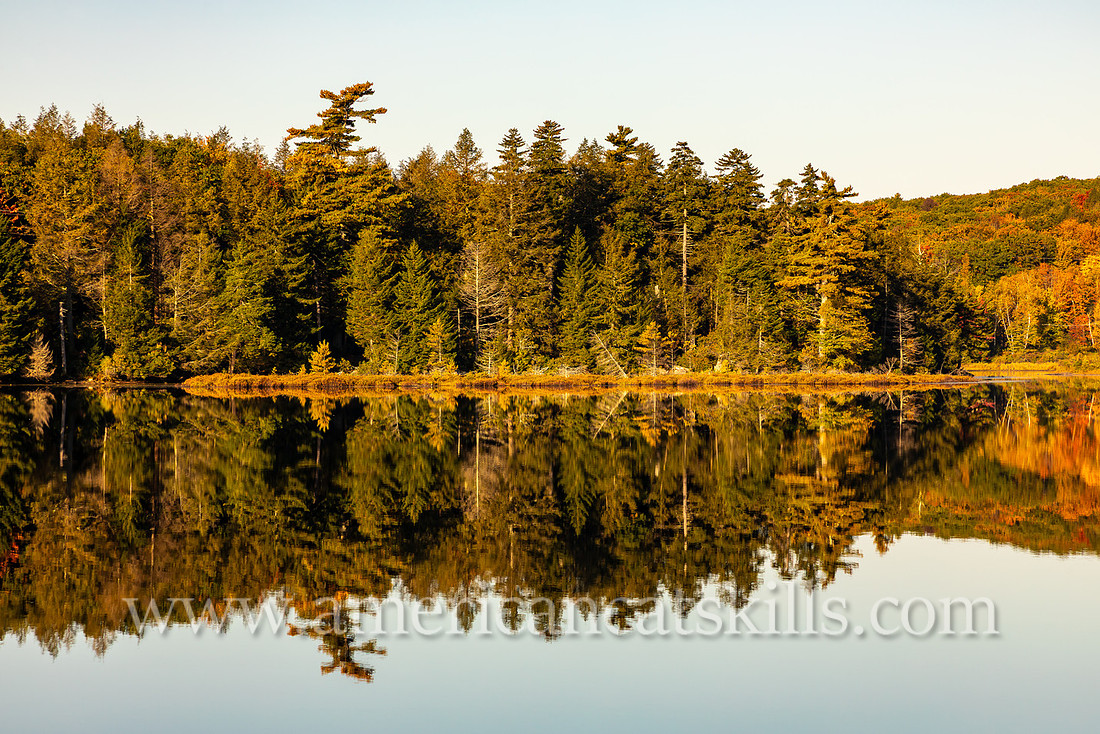
After dinner we again launched our vessel for a longer voyage of discovery. We now crossed the lake, paddling, after the manner of the Indians. Our boat glided beautifully over the tranquil waters, and swept aside the yellow water-lilies. In a straight between the mainland and a low islet, where the water was very still, the woods were reflected beautifully. I never saw such depth and brilliancy in the reflections. The dead trees on the margin added by their silvery tints to the harmony of color, and their images in the waters, which had a gentle undulation, appeared like immense glittering serpents playing in the deep. At every stroke of the oar some fresh object of beauty would break upon us. We made several sketches, and about sunset turned our prow. As we returned, we struck up the ‘Canadian Boat Song,’ and though our music was rude, the woods answered in melodious echoes. What a place for music by moonlight! It would be romance itself! This may be, and I may enjoy it.”1
Famous Paintings of North-South Lake
The beauty of the twin lakes, less than a half mile distant from Pine Orchard and the former site of the Catskill Mountain House, were esteemed not only by Thomas Cole but by all who visited, including many of the great 19th century painters of the Hudson River School for whom they were a frequent subject. The most famous painting of the lake, perhaps, is Thomas Cole’s Lake with Dead Trees (1825), which was one of a series of three paintings that launched his career and made him famous.
Other great paintings of the lakes include A View of the Two Lakes and Mountain House (1844) by Thomas Cole and North Lake (1847) by Frederic Church. W. H. Bartlett’s picture Winter Scene on the Catterskills beautifully depicts the frozen lake in wintertime.

Experience North-South Lake
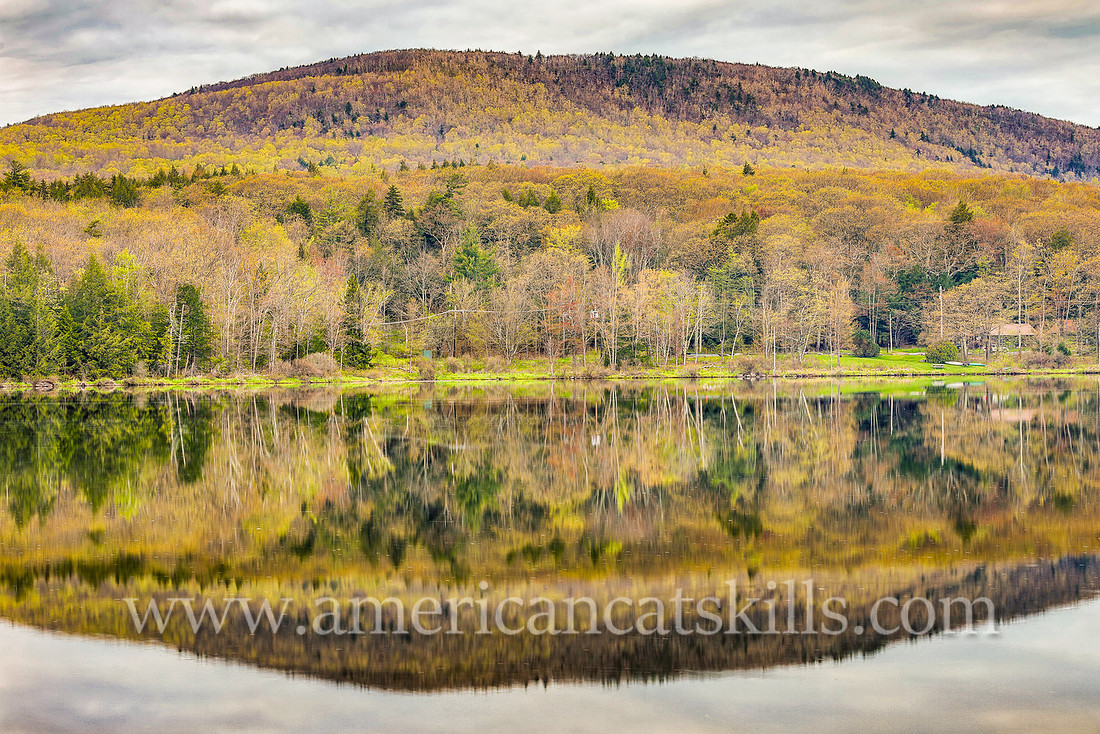
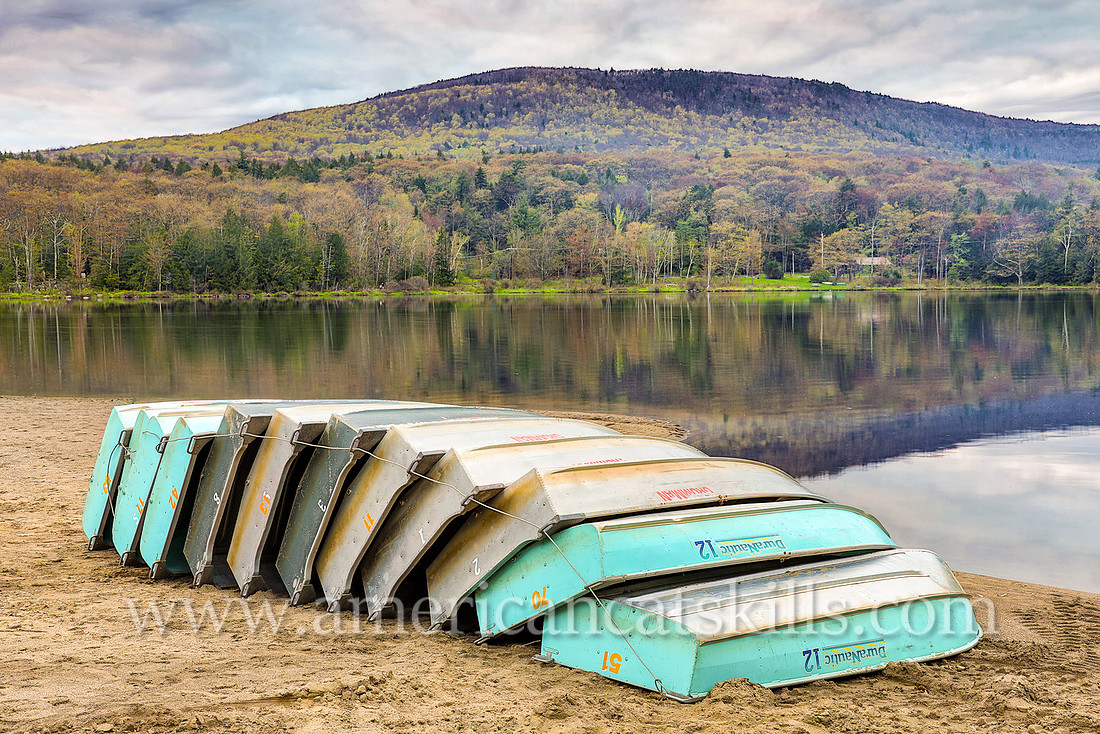
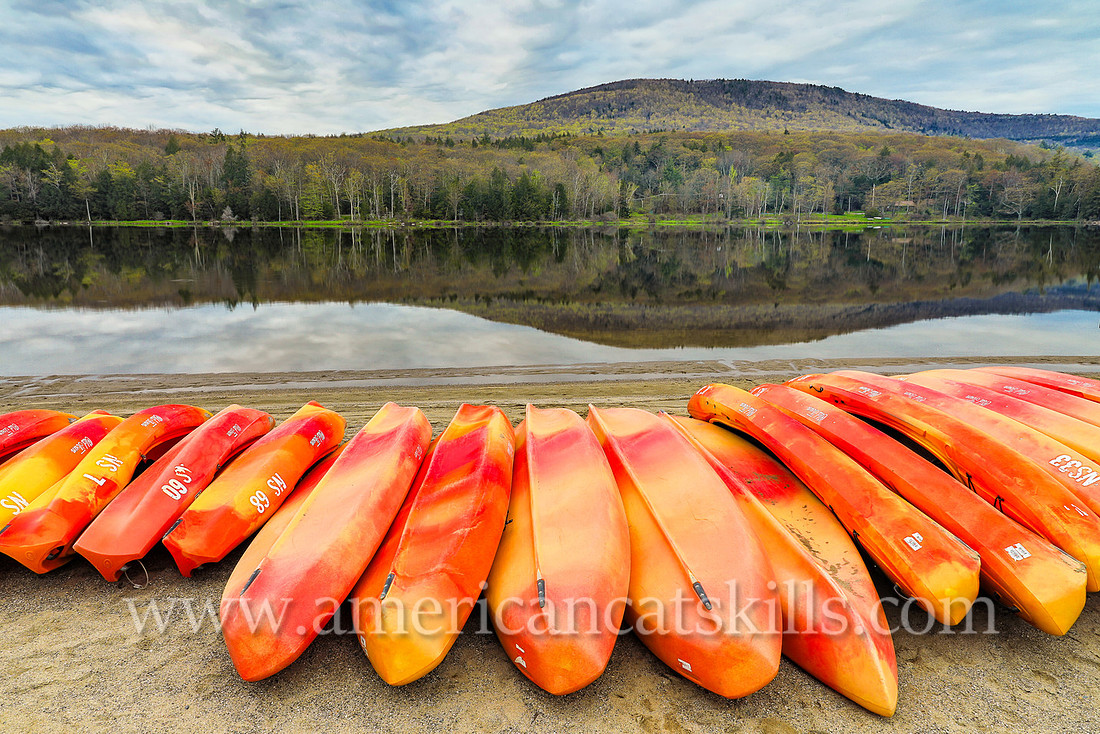
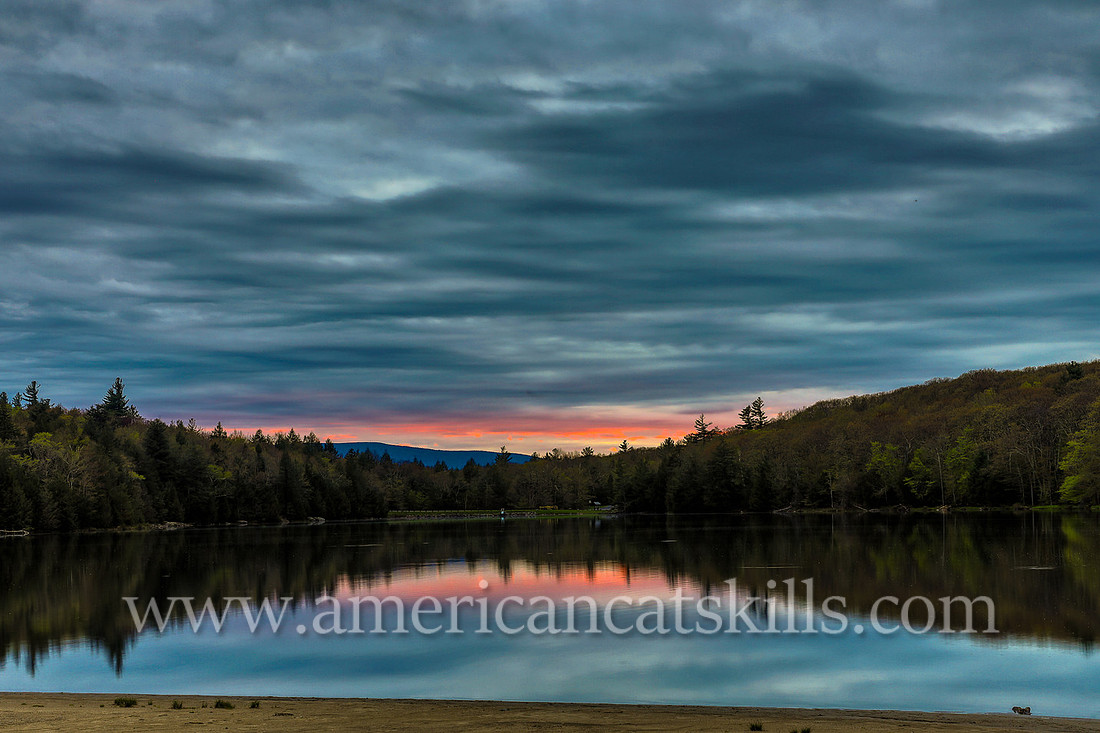
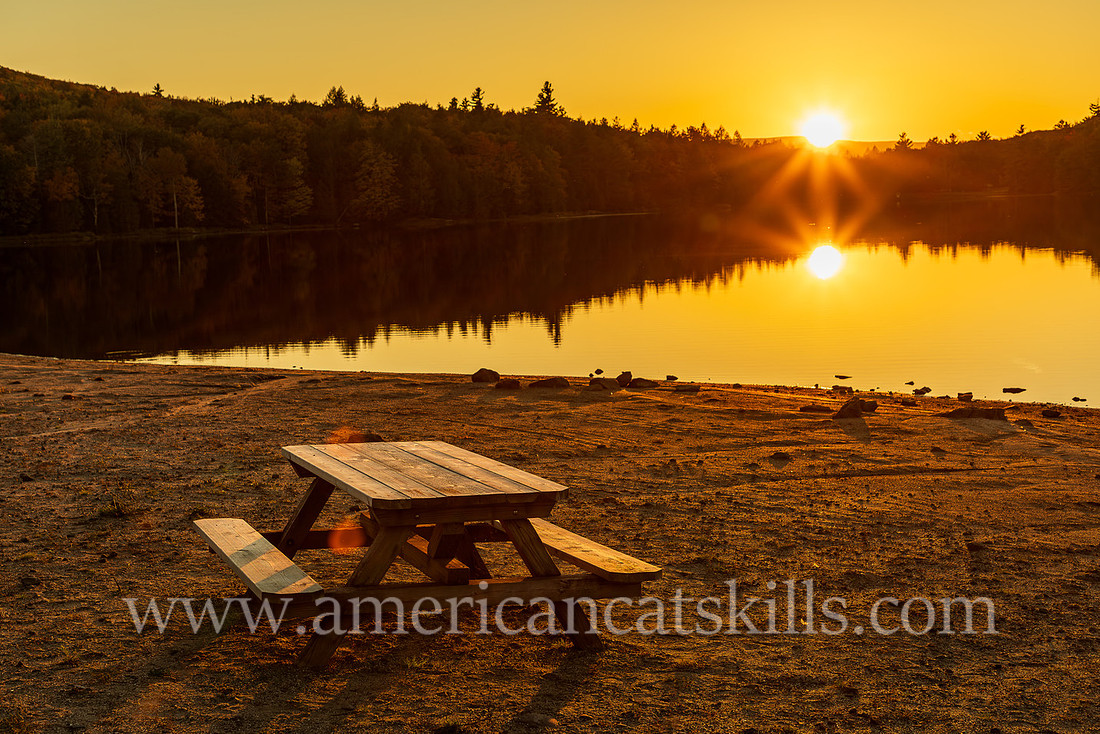
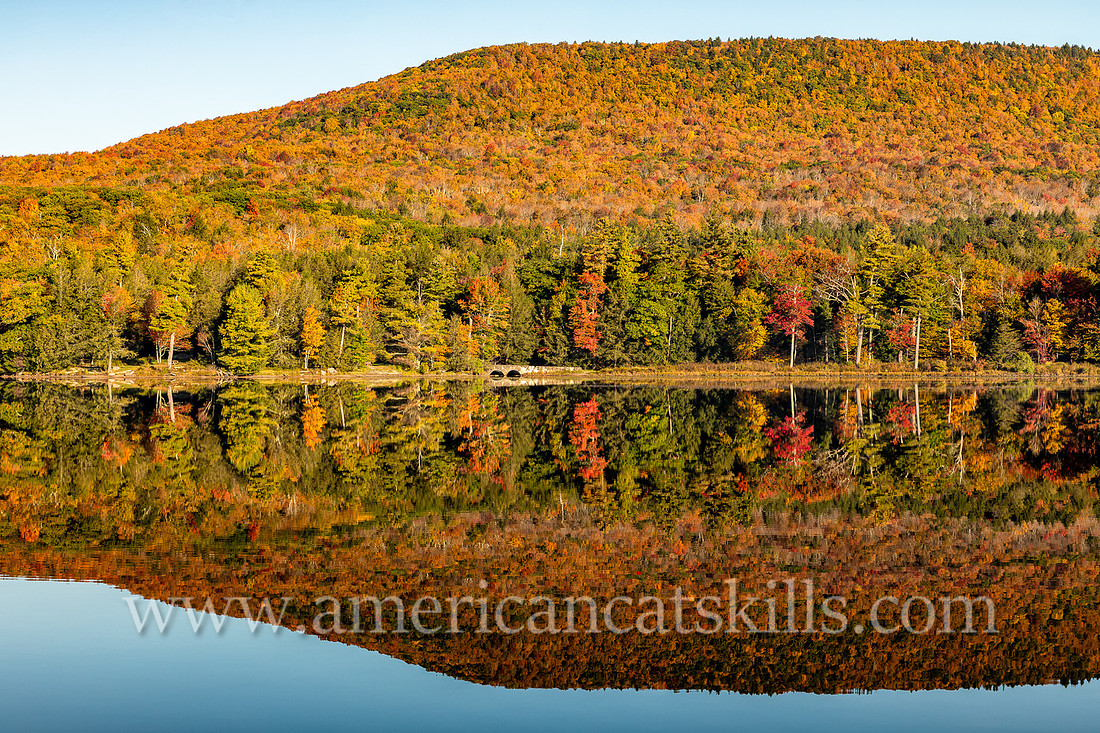
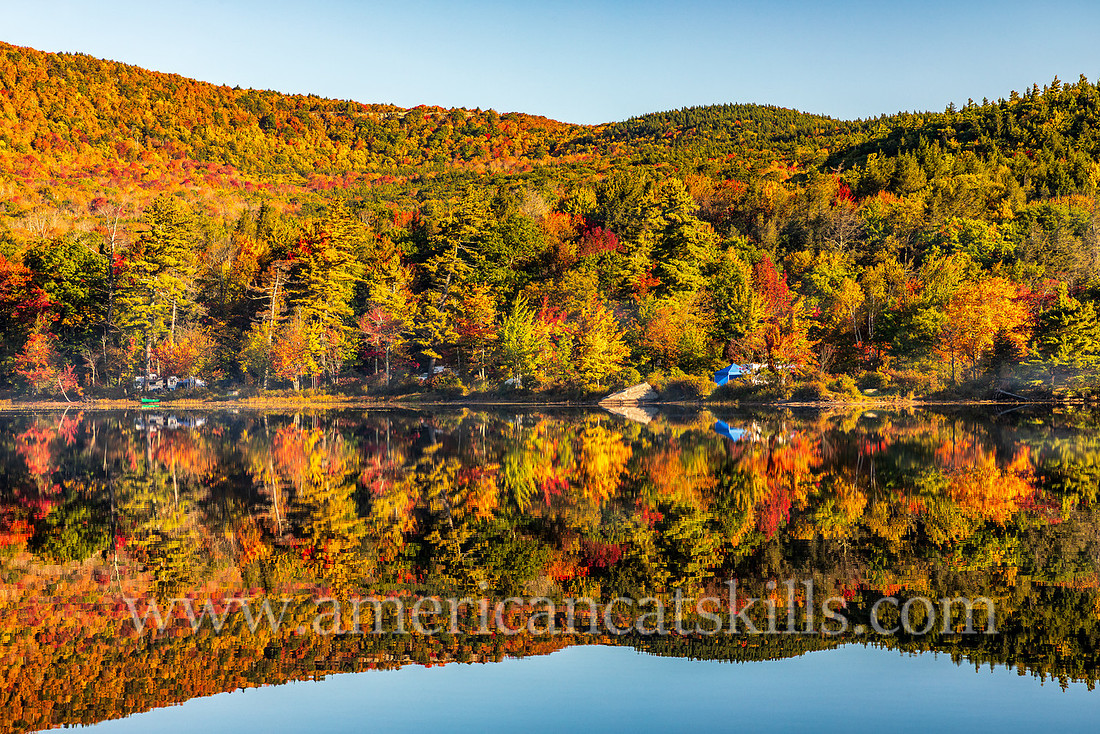
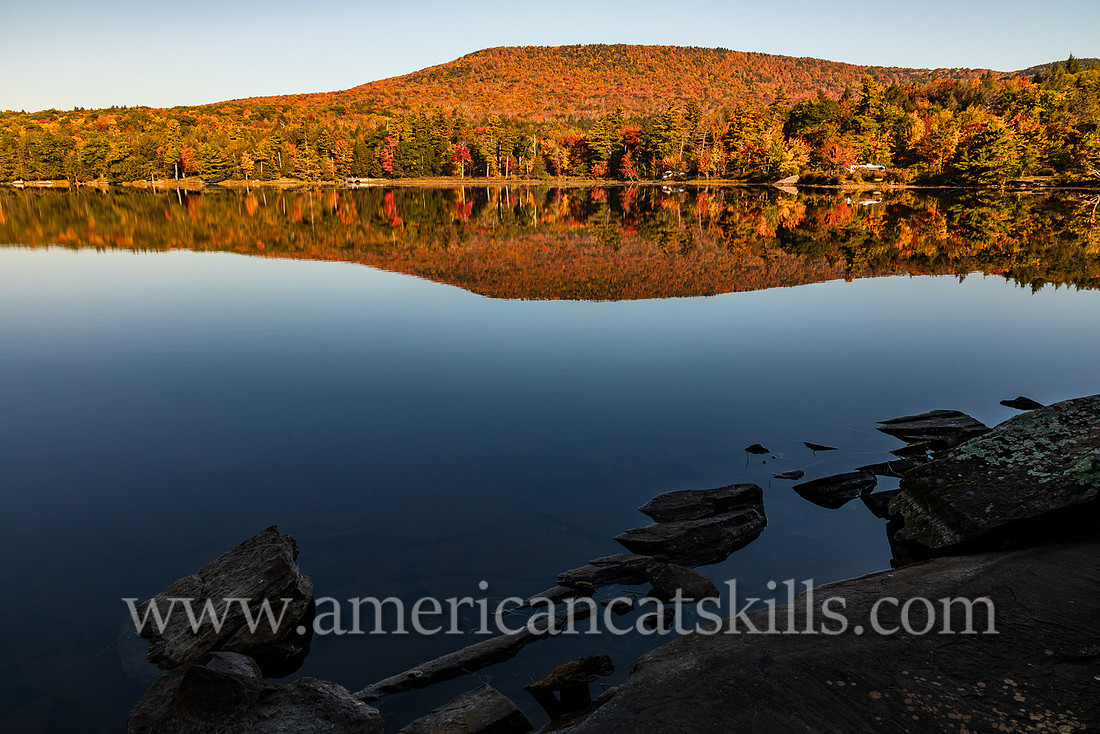
The experiences of Thomas Cole are as much available to the visitor today as they were nearly two centuries ago, albeit with much improved accessibility and with larger crowds. Explore the North and South Lake beach areas as well as the shoreline for different views over the 84-acre lake. There is a 2.8 mile yellow-marked trail that circles both lakes.
Hike 2.4 miles roundtrip to Sunset Rock, which offers an open ledge area with a fantastic, bird’s eye view of North and South Lakes, along with South Mountain (2,460 feet), with Kaaterskill High Peak (3,655 feet) and Roundtop Mountain (3,440 feet) hovering in the background to the southwest.
Visitors can enjoy many other scenic locations in the North-South Lake area including Alligator Rock, Inspiration Point, Pine Orchard, Kaaterskill Falls, Ashley Falls and North Point.
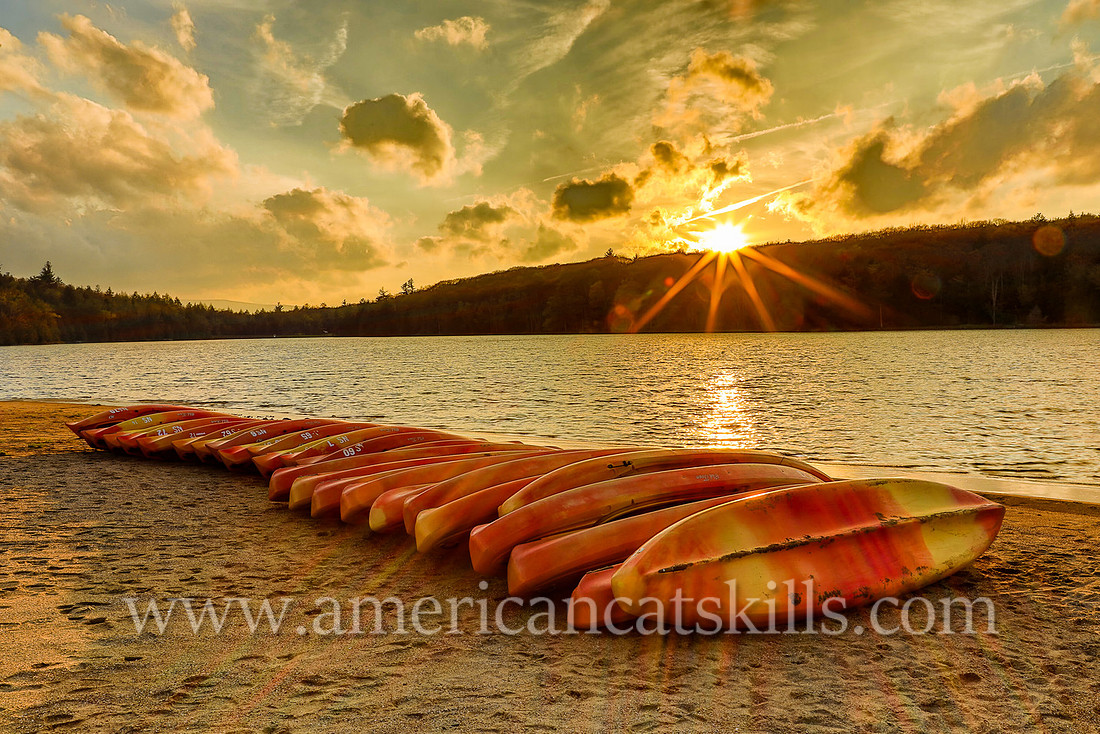
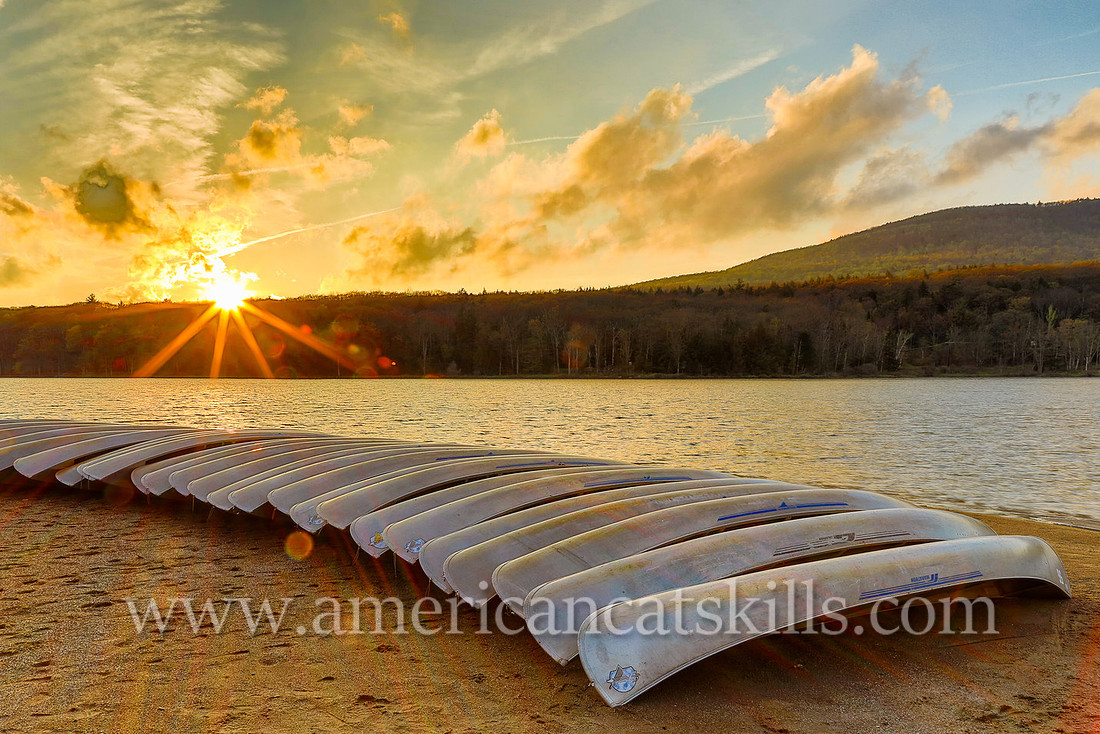
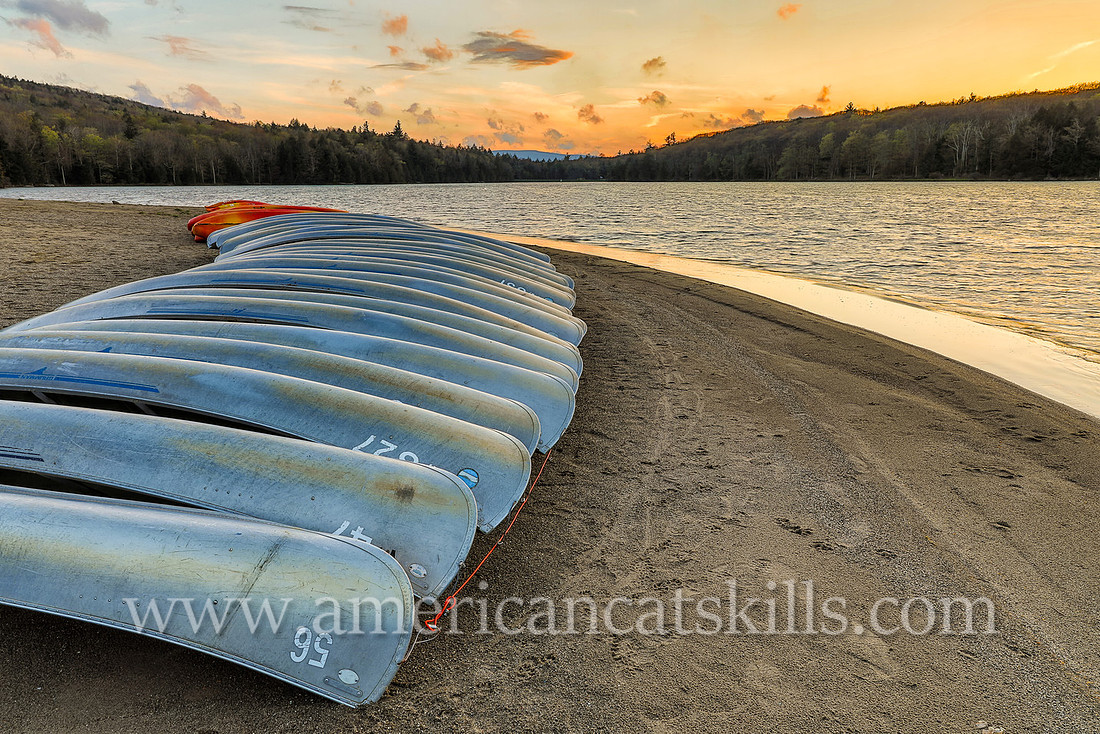
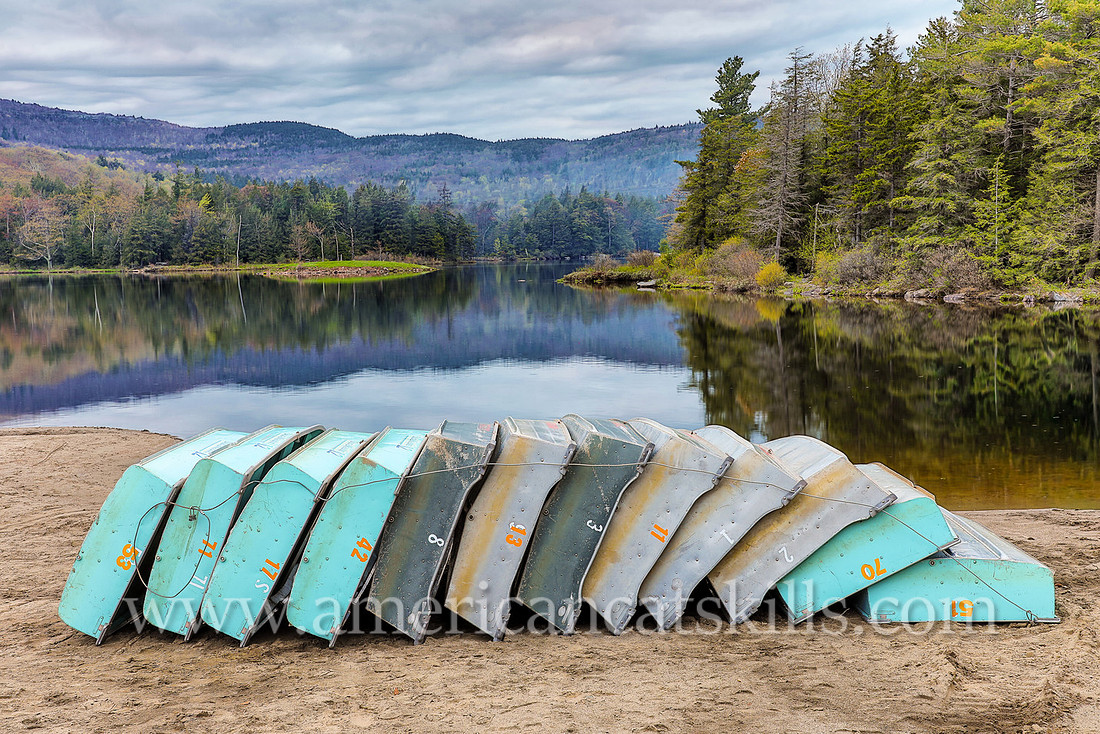
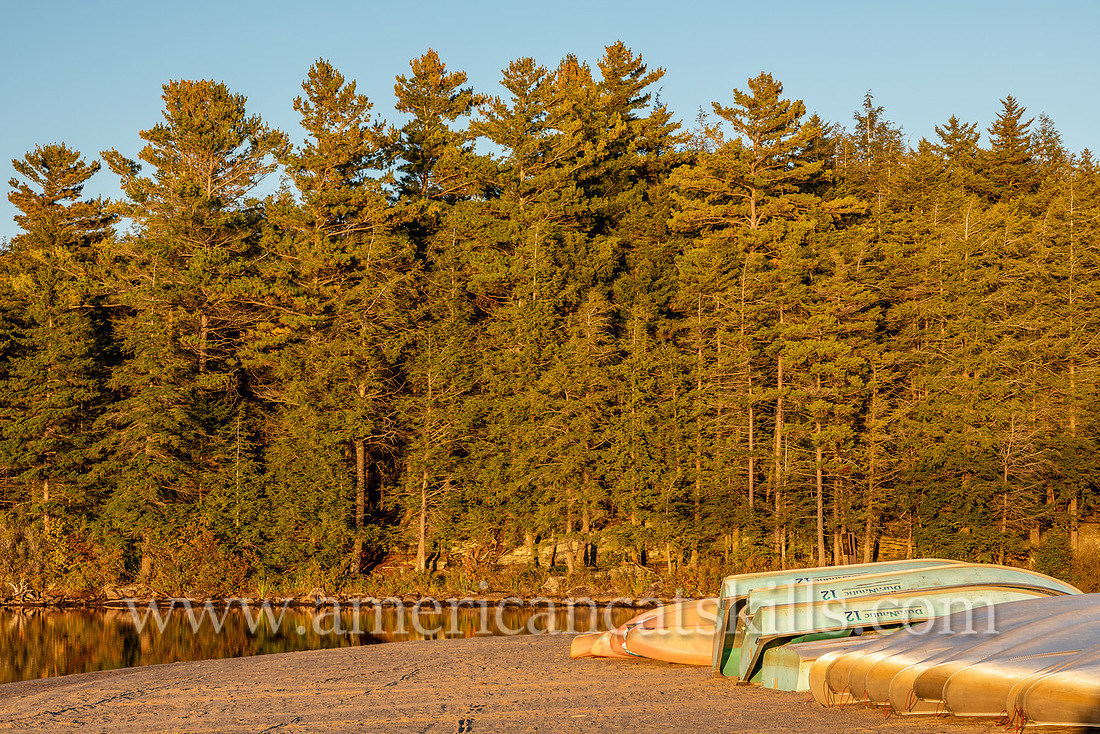
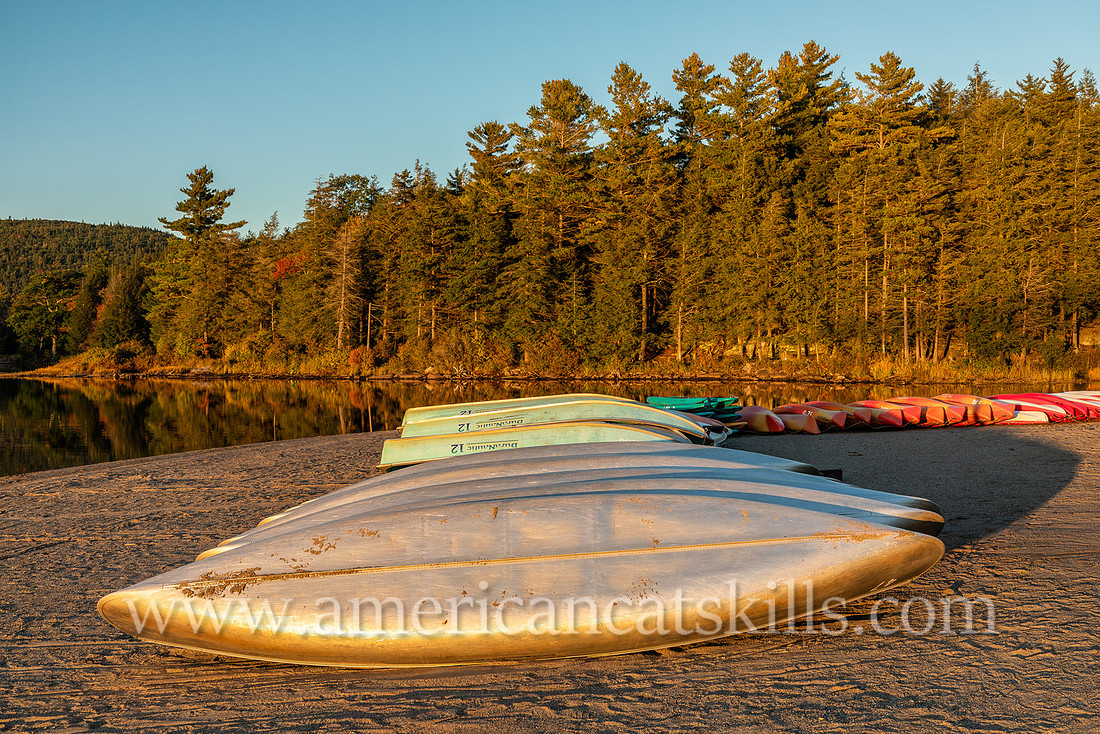
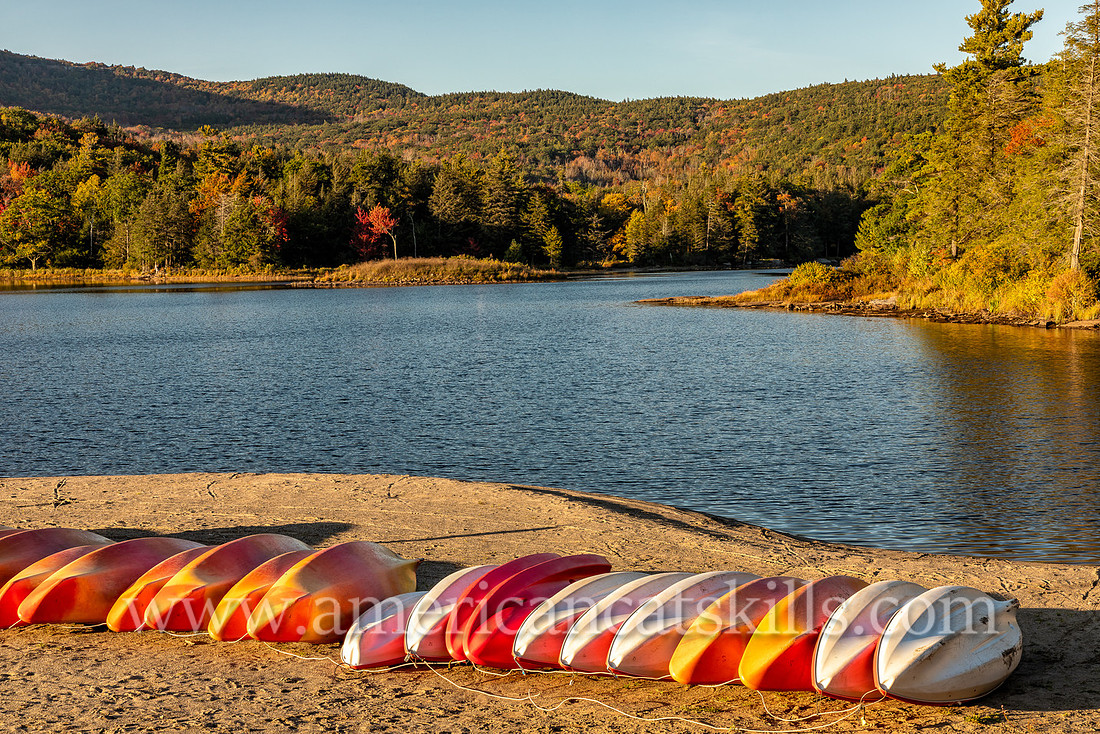
Visitors can rent a kayak, canoe or rowboat in season to further experience the lake and gain some unique views.
North-South Lake Details
North-South Lake, now one, was once two distinct lakes. The earthen dam that separated them was removed in the 1980s.
The water from South Lake exits to the southwest, joins Spruce Creek, drops over Kaaterskill Falls and then joins Kaaterskill Creek for its trip down Kaaterskill Clove, ultimately finding its way to the Hudson River and beyond.
North-South Lake has an average depth of 5.6 feet. The deepest part of North Lake is 12 feet deep, while the deepest part of South Lake is 8 feet. Fish living in the lakes here include Brown Bullhead, Largemouth Bass, Chain Pickerel, Pumpkinseed and Yellow Perch.
North-South Lake was often referred to as Sylvan Lake in the 19th century.
North-South Lake Campground
The 1,100-acre North-South Lake area is described on the NY state Department of Environmental Conservation (DEC) website as the most popular state property in the Catskills and includes its largest campground. In addition to 219 tent and trailer sites, the area also offers charcoal grills, a small beach area for swimming, volleyball, horseshoes, a boat launch (for non-motorized vehicles) and several day-use picnic areas.
How to Get There
From Route 23A, turn on to County Road 18 (North Lake Road) in Haines Falls, which you will follow for 2.3 miles until you reach the North-South Lake gatehouse.
For the North Lake Beach area, after the gatehouse, go left at the fork, following signs for the North Lake Beach area, about 1.6 miles further on.
For the South Lake Beach area, after the gatehouse, go right at the fork, following signs for the South Lake Beach area, about 1.2 miles further on.
In the non-camping off-season from late-October to early-May, most of the roads around the North-South Lake campground area are usually closed to vehicle traffic. In this case, park at the gatehouse and walk the 1.6 miles to the North Lake Beach area or the 1.2 miles to the South Lake Beach area. The road to the South Lake Beach area is sometimes open for the first 0.5 miles to a small parking area near the shore of South Lake, which leaves you a walk of 0.7 miles.
Selected Sources
(1) Rockwell, Rev. Charles. The Catskill Mountains and the Region Around. New York: Taintor, 1867. Rev. ed. 1873. pp. 281-283.
