
Dr. Richard Ten Eyck House at Hurley, New York
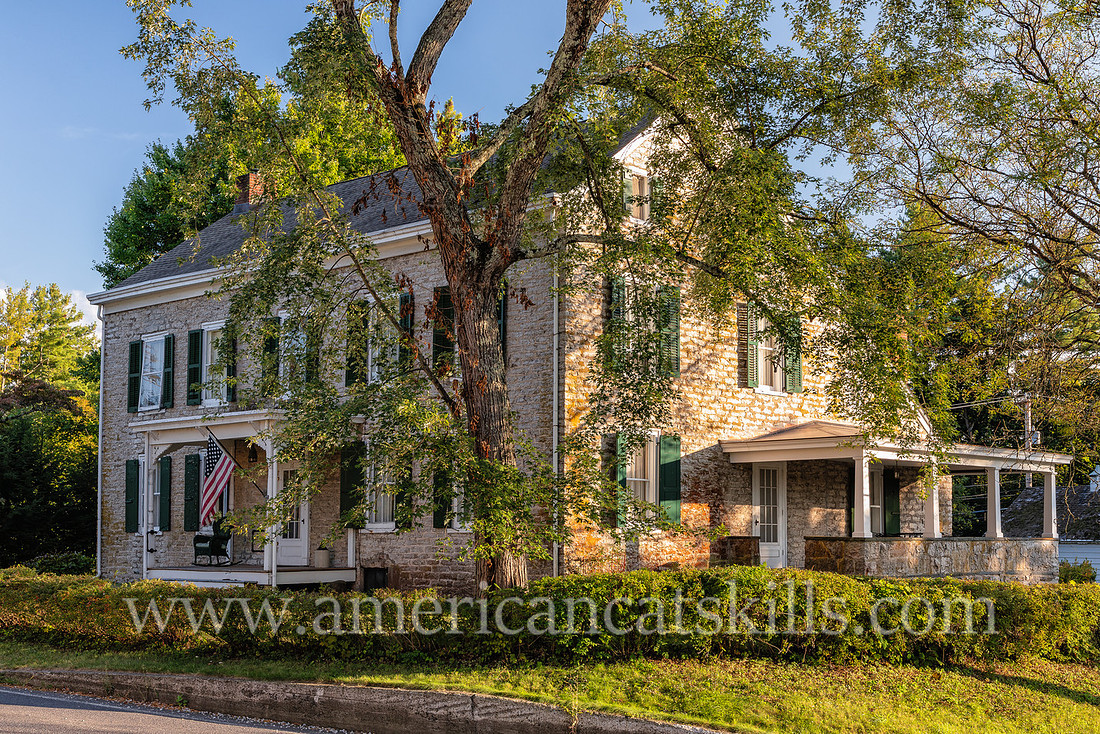 Dr. Richard Ten Eyck House, Hurley, New YorkThe Dr. Richard Ten Eyck House is located on Main Street in the historic hamlet of Hurley, New York. The house was built circa 1790 by Richard Ten Eyck as a wedding gift to his English wife Janet Baker.
The Dr. Richard Ten Eyck House is located on Main Street in the historic hamlet of Hurley, New York. The house was built circa 1790 by Richard Ten Eyck as a wedding gift to his English wife Janet Baker.
Dr. Richard Ten Eyck was the son of Matthew and Cornelia (Wynkoop) Ten Eyck. In addition to his work as a physician, Richard Ten Eyck operated a mill, a brewery and a distillery on his extensive property, and grew grains, had large orchards and raised sheep.
Matthew Ten Eyck (1728-1809), Richard’s father, was a patriot of the American Revolution, having served as one of the committee from Hurley, New York to meet at New Paltz to elect delegates from Ulster County to the Provincial Congress. He served at New Paltz as a member of the committee from Hurley, May 11, 1775, to elect deputies to the Provincial Congress from Ulster County. He signed the “Articles of Association” in Hurley on July 6, 1775. He was president of the Board of Trustees of the village of Hurley, and was selected to deliver the address of welcome to General George Washington when he passed through the village in the autumn of 1782.
Dr. Richard Ten Eyck passed away at 89 years of age in 1851 and is buried at the Old Hurley Burial Ground in Hurley, New York.
The Dr. Richard Ten Eyck House is listed on the National Register of Historic Places as part of the Hurley Historic District. It was described as “a 2 1/2 story, 5-bay Georgian house. It represents the taste of the generation following that responsible for most of Hurley’s stone houses. The shed-roofed addition at the rear is though to date c. 1850. The small portico at the front door probably dates from the third quarter of the 19th century. Other alterations dating from the 20th century include a large shed dormer at the rear and an open porch along the north side.”
The house was reportedly used as a stop on the underground railroad in pre-Civil War days when slave from the south were fleeing to freedom in Canada.
