
John Burroughs Nature Sanctuary: A History and Photographic Study
“Living in the woods is a real satisfaction to me. When I reach Slabsides there is always a sense of relief, as if I’d got away from something that harassed me. The place attracts me, and I feel very much at home, with the great rock that I can see from my window reaching around my house like a protecting arm.” – John Burroughs.
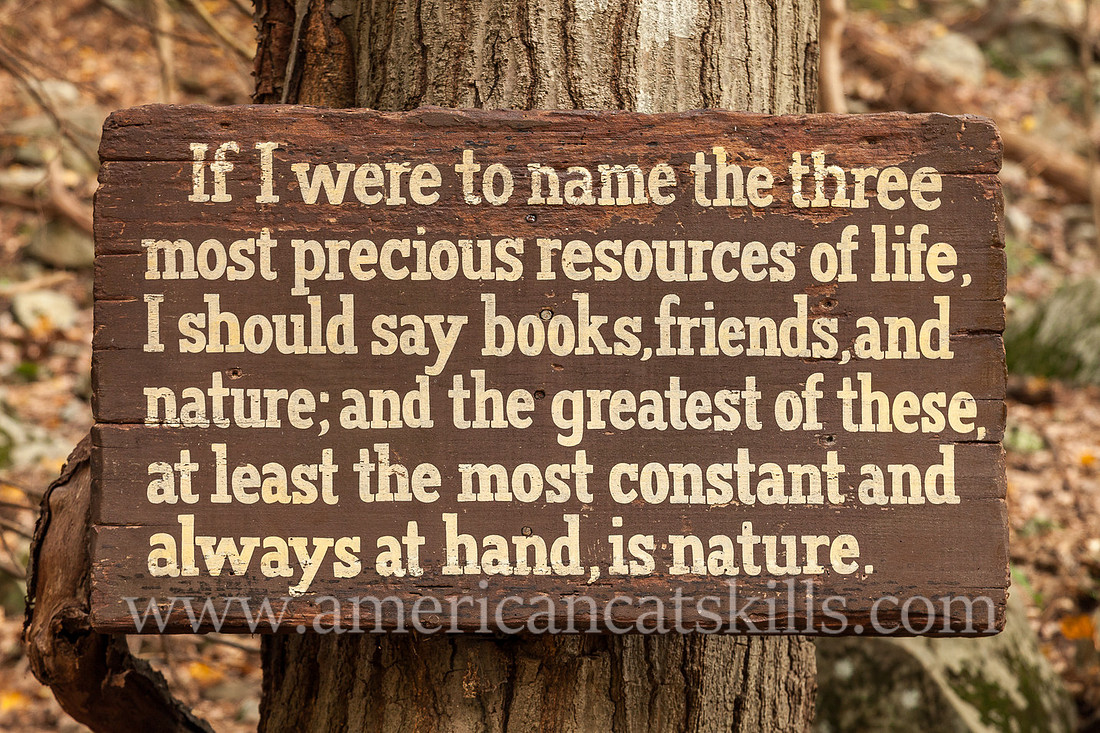
“If I were to name the three most precious resources of life, I should say books, friends, and nature; and the greatest of these, at least the most constant and always at hand, is nature.” – John Burroughs
“To find the universal elements enough; to find the air and the water exhilarating; to be refreshed by a morning walk or an evening saunter . . . to be thrilled by the stars at night; to be elated over a bird’s nest, or over a wild flower in spring – these are some of the rewards of the simple life.” – John Burroughs
Born and raised in Roxbury, New York, John Burroughs (1837-1921) would grow from his humble roots to become a famous author and naturalist. He authored 27 books that sold over 1 ½ million copies as well as numerous magazine essays.
Burroughs’ most popular writings became generally known as the nature essay. The nature essay relied on Burroughs’ astute observation of his natural surroundings. He took long walks in the woods, collected plant and animal specimens and read voraciously about nature. He would often write not about faraway places that few readers would ever see but about his immediate surroundings. Subjects would include flowers, trees, birds, country living, open fields, barns and barnyards and farm animals. He would write about long hiking trips and fly-fishing. Readers could individually relate to the subjects and his essays resonated with wide audiences.
His literary prominence brought him the audience and friendship of John Muir, Walt Whitman, Thomas Edison, Henry Ford and even President Theodore Roosevelt. While his fame has diminished over the past century since his death, his contribution to the literary arts and environmental conservation has ensured that his legacy will not be forgotten.
Located 1 ½ miles from his primary home on the Hudson River, known as Riverby, is the 200-acre John Burroughs Nature Sanctuary. The Sanctuary is home to Slabsides, a one-room, rustic cabin that Burroughs used as a retreat for quiet, to write and to study nature.
"I was offered a tract of land, barely a mile from my home, that contained a secluded nook and a few acres of level, fertile land shut off from the vain, and noisy world of railroads, steamboats, and yachts by a wooded, precipitous mountain, I quickly closed the bargain, and built me a rustic house there, which I called "Slabsides" because its outer walls are covered with slabs. I might have given it a prettier name, but not one more fit, or more in keeping with the mood that brought me thither.
A slab is the first cut from the log, and the bark goes with it. It is like the first cut from the leaf, which we call the crust, and which the children reject, but which we older ones prefer. I wanted to take a fresh cut of life, something that had the bark on, or, if you please, that was like a well-browned and hardened crust.
After three years I am satisfied with the experiment. Life has a different flavor here. It is reduced to simpler terms; its complex equations all disappear." From "Wildlife About My Cabin," Far and Near
Slabsides was built in 1895 and was used primarily during the summers. The cabin sits on a rocky ledge, at the foot of a cliff in a marshy area that was once a lake bottom. As for the name of the cabin, Burroughs at first considered other options, including Crag Foot, Rock Haven and Echo Lodge, but when a neighbor suggested “Slabsides,” Burroughs was immediately taken with the name.
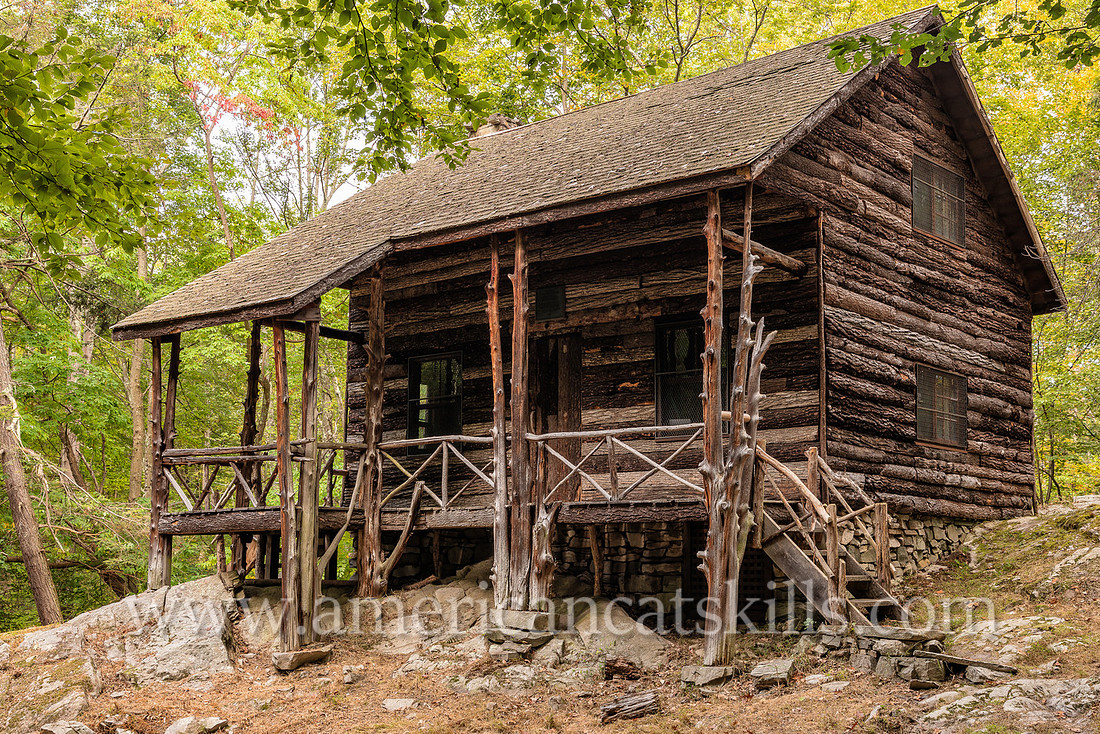

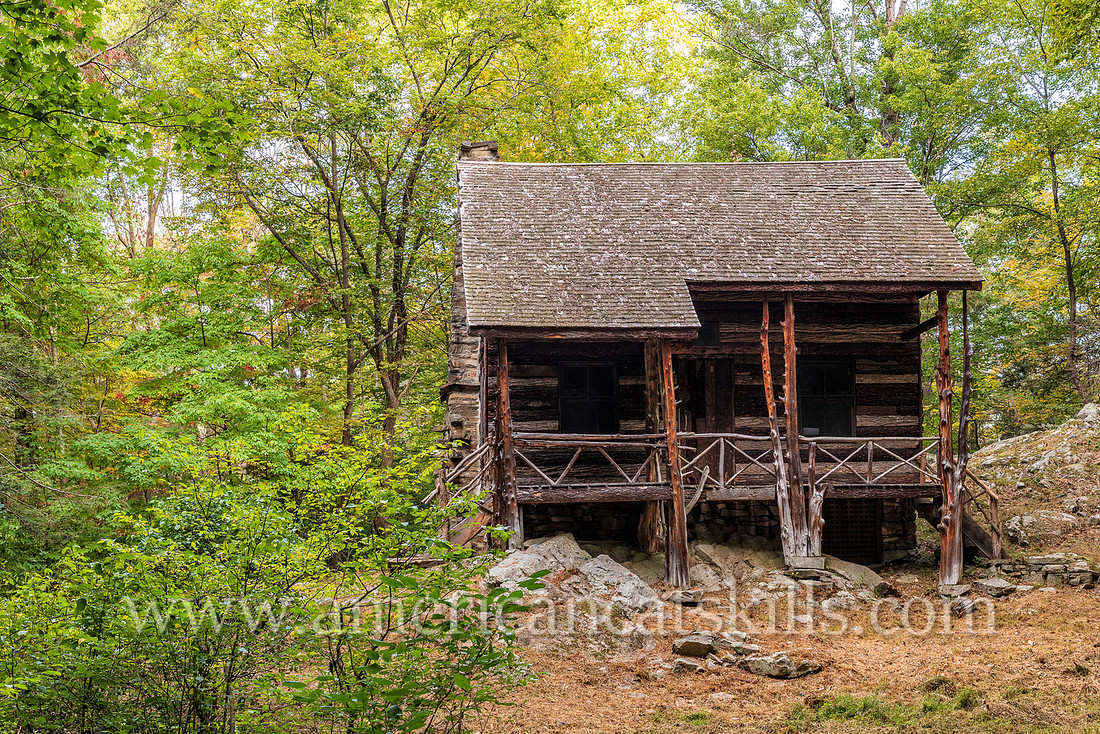
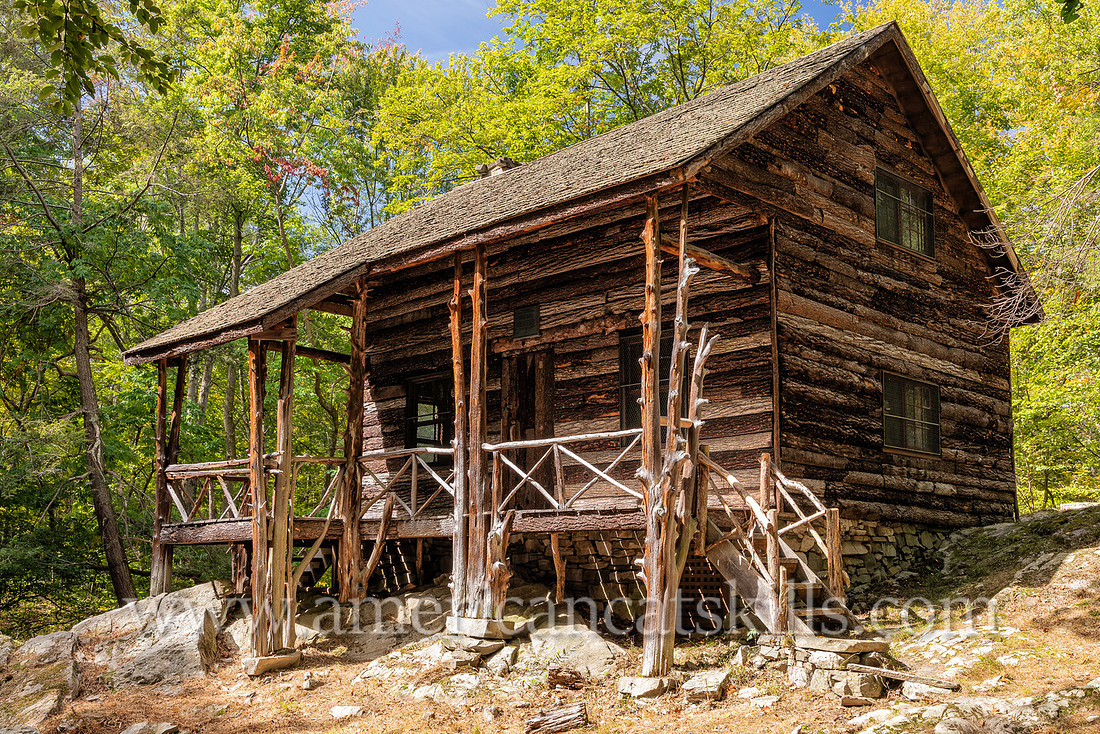
Slabsides was described on its application for inclusion on the National Register of Historic Places.
“Burroughs built the cabin with the help of a local carpenter on a rocky ledge at the north end of his newly acquired property. "Slabsides" had only one story, but the attic was commodious. A stone chimney stood at one gabled end, and a rustic porch extended across the face of the cottage. Exposed beams were logs with the bark on them. Burroughs covered inside seams with split birch saplings and also used yellow birch for some of the trim. The ground floor was a single room that functioned as a study, parlor, kitchen, dining room, and bedroom. Upstairs were a partitioned bedroom and an open dormitory for guests.
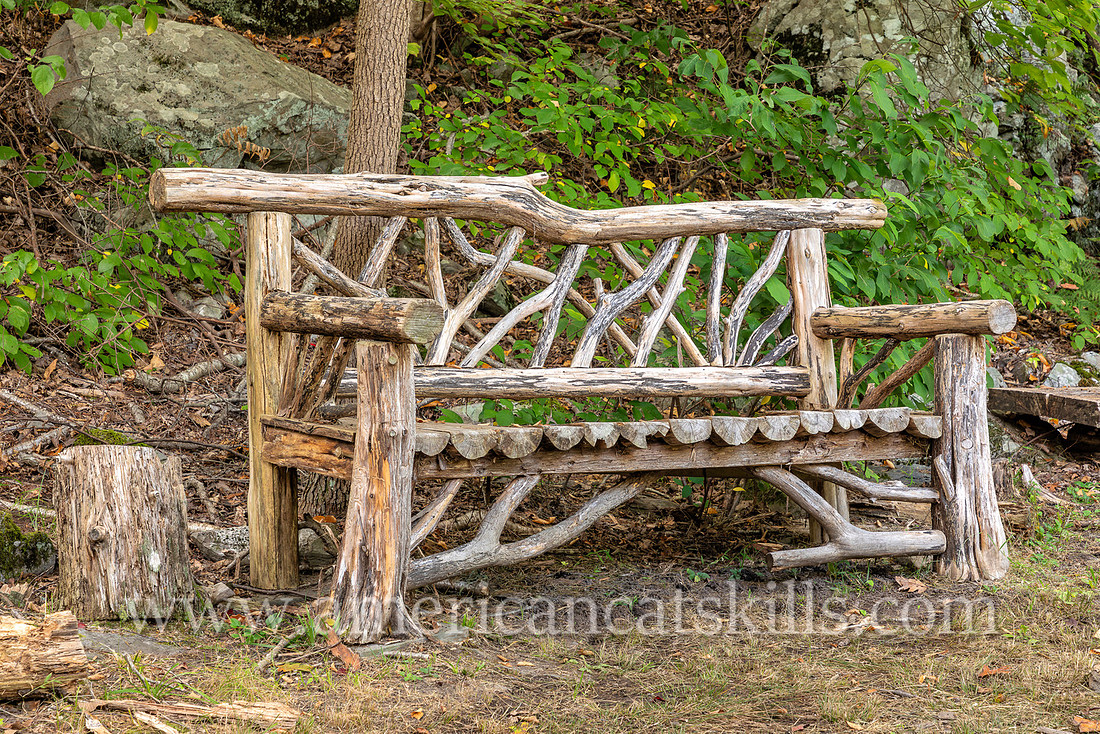
Burroughs made most of the furniture for "Slabsides" with his own hands. He searched the woods for sticks of odd shapes that might be used for a doorknob, an arm of a settee, a hatrack, or the like. He used a variety of woods in his work; staghorn sumac, yellow birch, hickory, and hornbeam gave his furniture distinctiveness and his cabin character.
Burroughs built the retreat so that he could observe nature and write in quiet. But he also wanted a place where he could entertain visitors who enjoyed the out-of-doors. The first overnight guest arrived on March 21, 1896, and for years afterwards the list grew and multiplied as Burroughs' fame widened and heightened. Many of those who came recorded their experience in print, and the cabin soon became as well known as its builder.”
Clara Barrus, in her noted biography of the famed naturalist titled John Burroughs – Boy and Man, further described the history, construction and setting of Slabsides.
“For years Julian and his father had roamed the woods and swamps in a wild, picturesque region back in the hills, more than a mile from home. The Old Silurian rocks, the primitive forest, the waterfalls, the Black Pond held many a lure for boy and man. Finally there came a time when, wearied with the noise of steamboat and railway, the broad expanse of the Hudson, and the routine and exactions of domestic life, the dweller by the river craved something more primitive and homely than Riverby offered – “something with the bark on” – so decided to build a retreat in that secluded place.
His farmer’s eye saw that if that rich swamp land, once an old lake bottom, were drained and cultivated, the wilderness would blossom into garden produce. Amassa, a young farmer, eagerly undertook the task, Mr. Burroughs advancing the money for the hundred acres and taking a portion of them in part payment, the twenty acres he reserved forming the now well-known Slabsides region.
In 1895 the land was bought. Then they made a road over the mountain, prepared the land, and built the cabin. They blasted through the rim of rock, drained the land, dug up stumps and roots, cut off the undergrowth, pulled out weeds and vines, and burned the rubbish. Skinning the swamp, as it were, they took off more than a foot of it, getting down to the rich black muck. A pine log, sound and hard, was found deeply buried in the muck, having lain there probably since Columbus discovered America. Sticks cut by beavers, some cord wood, a stone bottle, and a wooden mallet were found many feet below the surface. After it was cleared and drained, and ploughed and harrowed, the soil looked like velvet, and in due time long green lines of celery and lettuce gave a touch of the domestic to the wild, untamed region. With the help of a good carpenter, Mr. Burroughs hewed the trees and built his homely cabin, building it on a rock on the edge of the swamp, the rugged, verdure-clad cliffs partly encircling it.
The cabin looks much like a log cabin. It is built of slabs, or the first cut off the logs, the bark being left on. The roomy veranda with rustic railing, shaggy cedar posts, and sloping roof, and the great stone chimney add to the picturesqueness, while the clambering woodbine lends beauty to the rugged exterior. On the wide rustic door is a latch-spring, and a curiously twisted knob for a handle.
The bark was also left on the beams and rafters of the interior, but the little wood-borers have since removed most of it, leaving their delicate traceries instead.
The cabin is a two-storied structure. The planed boards of its inner walls have the seams covered with split birch saplings. A satiny yellow birch partition partly divides the one room below into living-room and bedroom; stairs lead to the loft where there is a comfortable bedroom and a roomy attic. In one corner of the living-room is a window-seat with books and writing table; in a niche under the stairs the dining table is placed; in another corner is the culinary department – cupboard, wash bench, a table with the oil stove, and an array of kitchen utensils.
The bedsteads are built of birch limbs with the bark on, and most of the furniture is home-made, the legs to tables, stands, and window-seats have a curiously twisted effect due to the climbing bitter sweet winding about the sumac limbs.
In looking about the sparsely furnished cabin the visitor sees that his host is untrammeled by things. Old blue coverlids, which grew on the backs of the Roxbury sheep, are on the beds, patch-work quilts, pieced by his mother, upon the cots, the carpet rag rugs upon the floor. From a swinging crane in the wide fireplace hangs a smoky iron tea-kettle, and on the wide stone hearth are old-time andirons and tongs. Some clever maiden has appropriately embroidered an oven bird on a mahogany-colored holder that hangs close by. Trophies from the woods, birds’ nests, and other natural history specimens are on the stone mantel, and the rustic book shelves are overflowing with books.”
Despite the constant flow of visitors, Burroughs would write several books at Slabsides, including Whitman: A Study (1896), Far and Near (1904) and The Way Nature (1905), as well as many articles and essays.
However, “because of the increasing number of sightseers who invaded his privacy and made it difficult for him to work, Burroughs spent his summers after 1908 at "Woodchuck Lodge" in a less traveled region of New York [Roxbury]. He still returned to "Slabsides," however, and the rustic cabin continued to be a favorite subject for journalists and writers. Burroughs entertained friends there for the last time on November 7, 1920, four months before his death.” (National Register of Historic Places.)
Today, the Slabsides cabin remains preserved, both inside and out, much as Burroughs left it when he died in 1921. Slabsides is listed on the National Register of Historic Places.
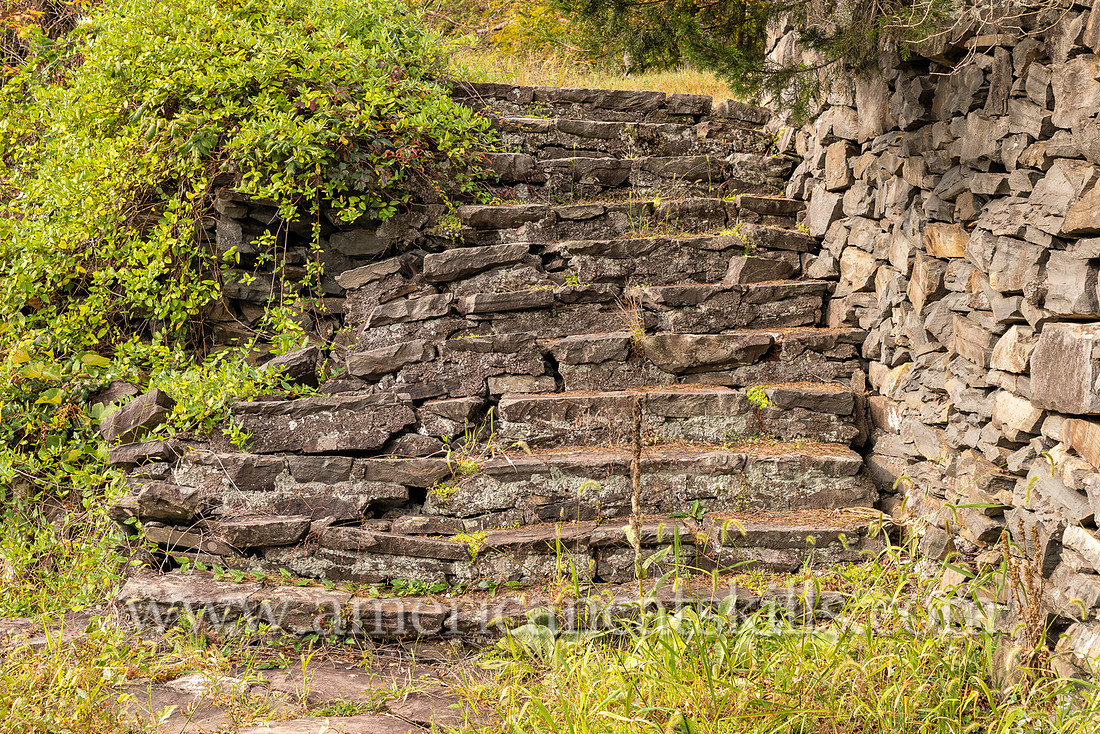
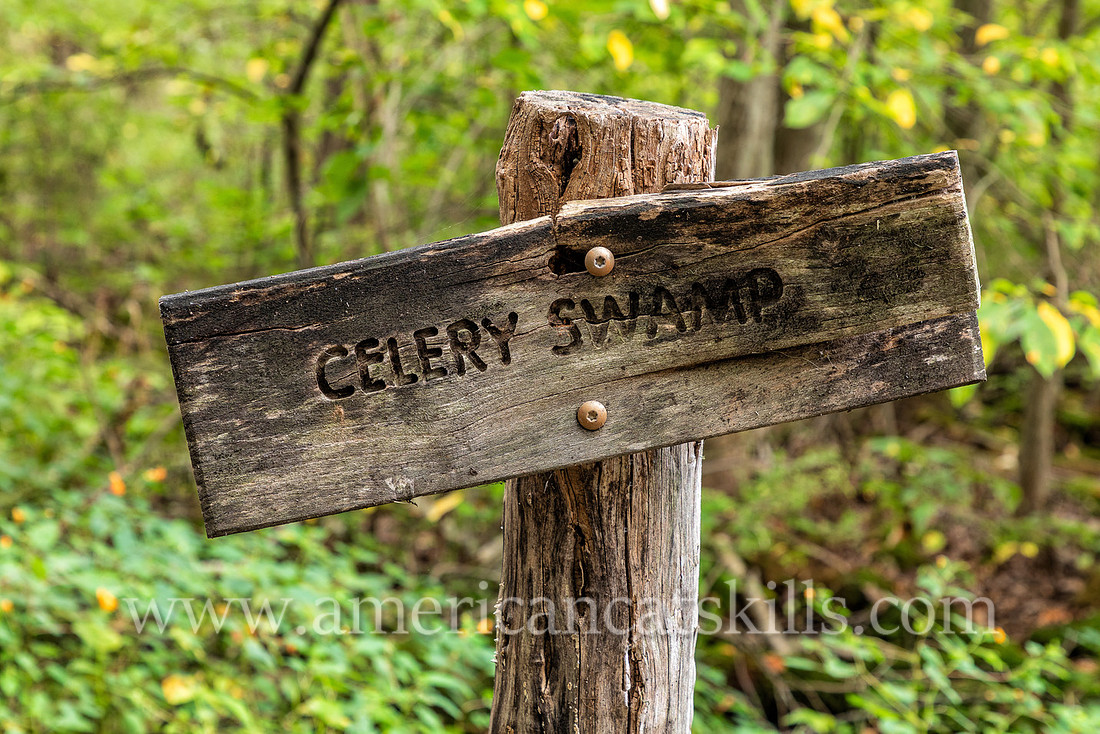
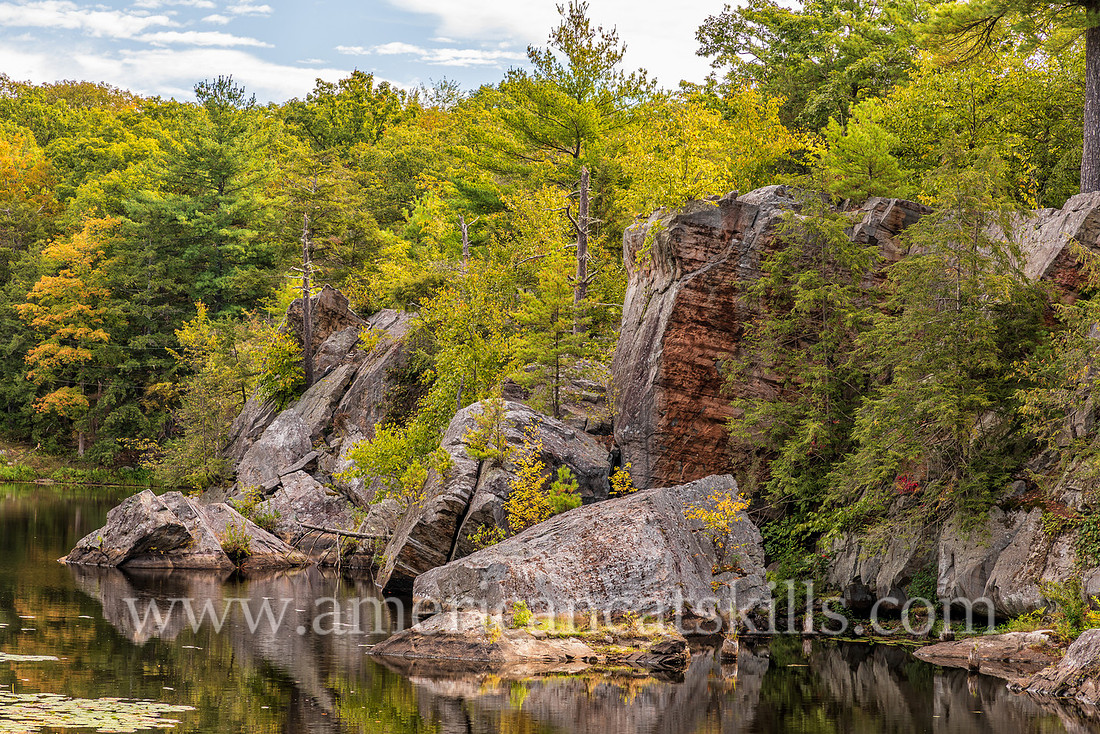
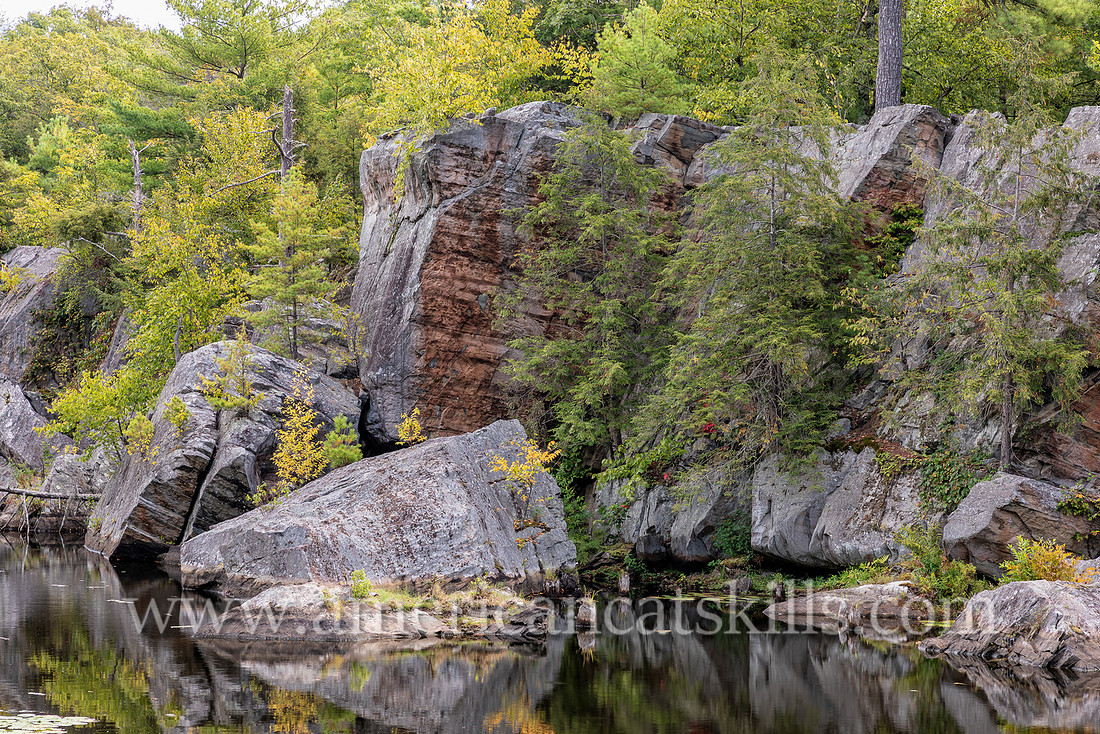
In addition to Slabsides, the John Burroughs Nature Sanctuary offers miles of quiet, scenic hiking trails. The trails offer access to open ridgelines, secluded forests, wetlands, waterfalls, interesting rock formations and a scenic peninsula within a stunning eight-acre pond. There is a 55-step stone stairway, a boardwalk through a former celery swamp and even a ladder up a cliff.
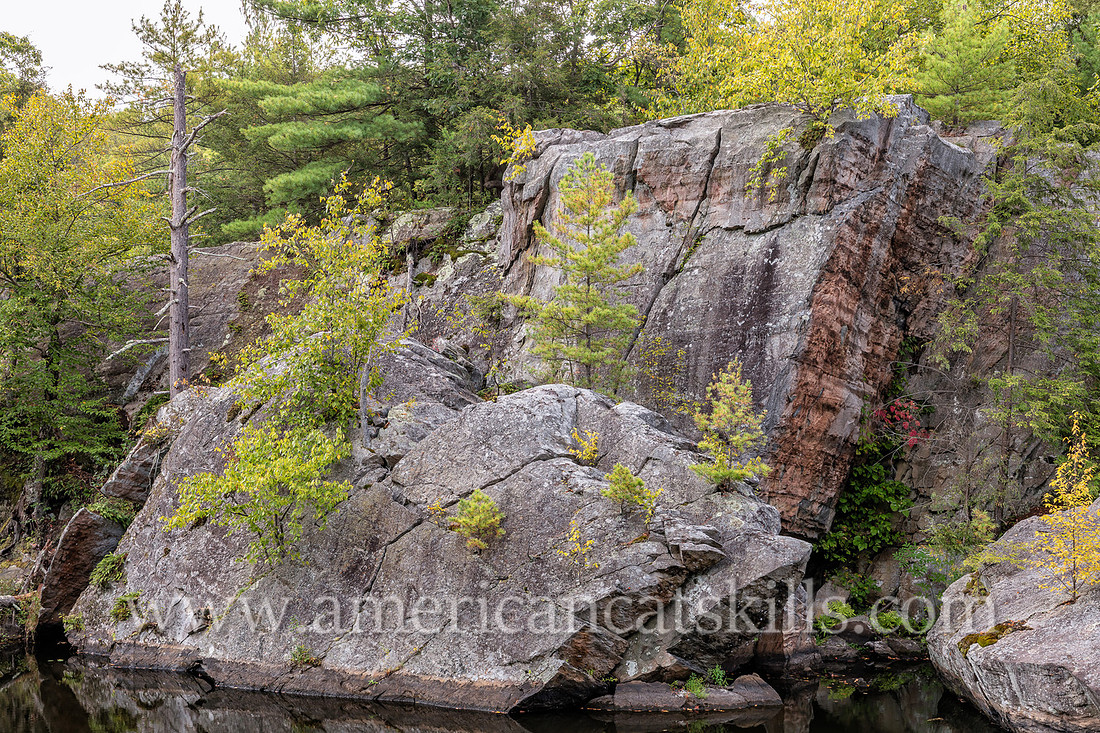
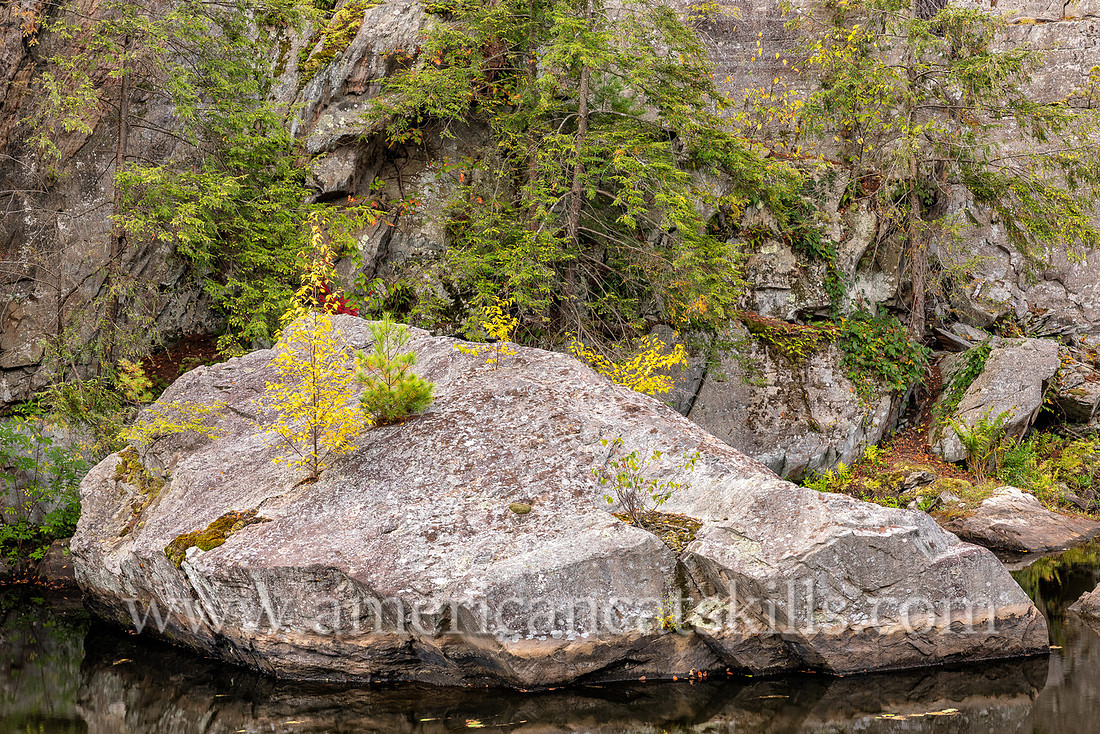
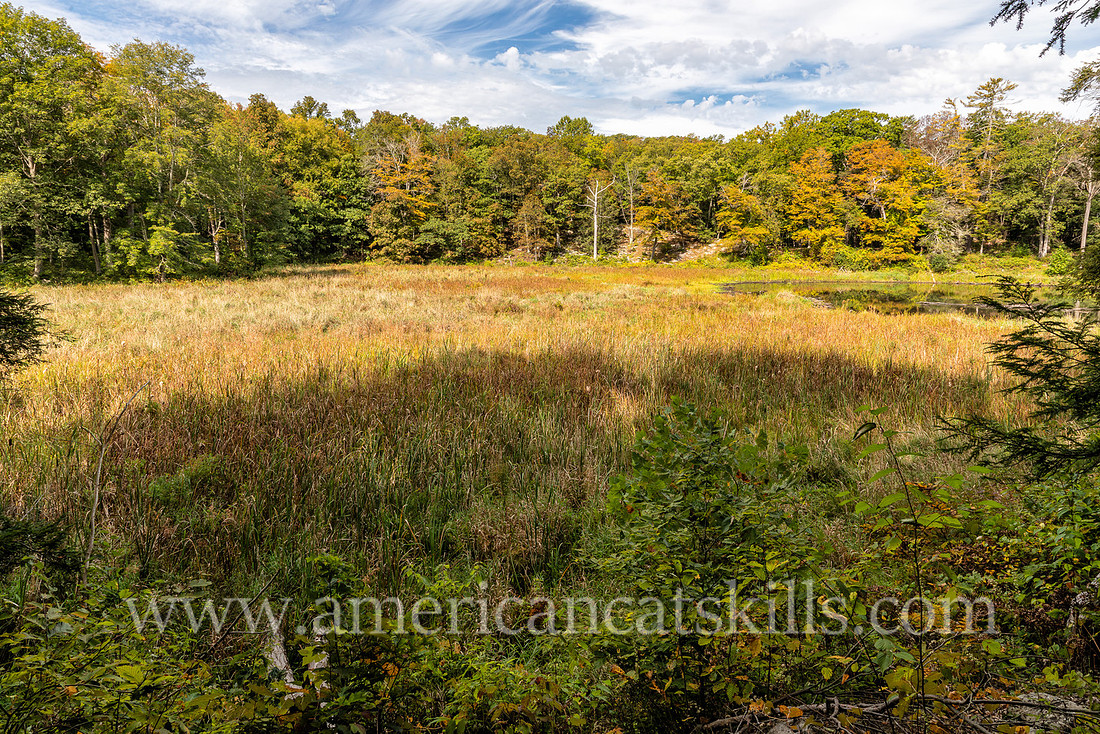
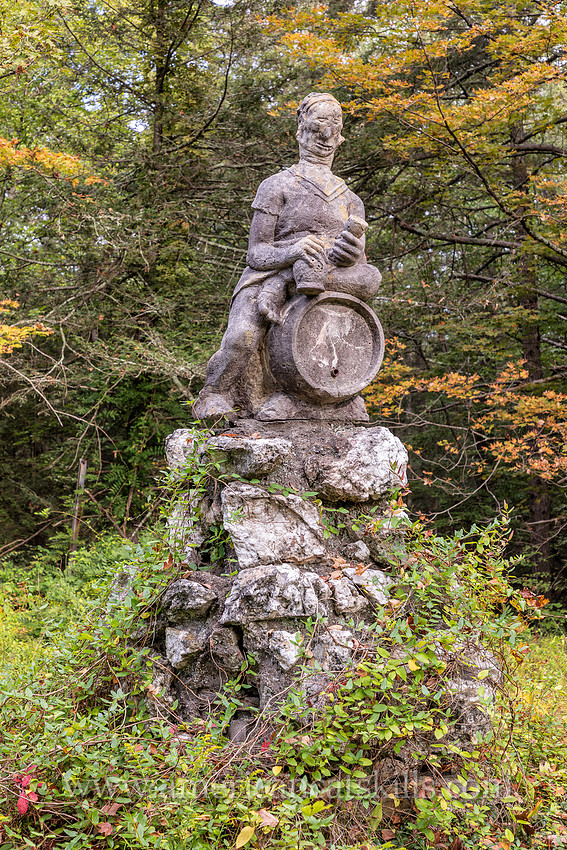
Trails at the John Burroughs Nature Sanctuary include:
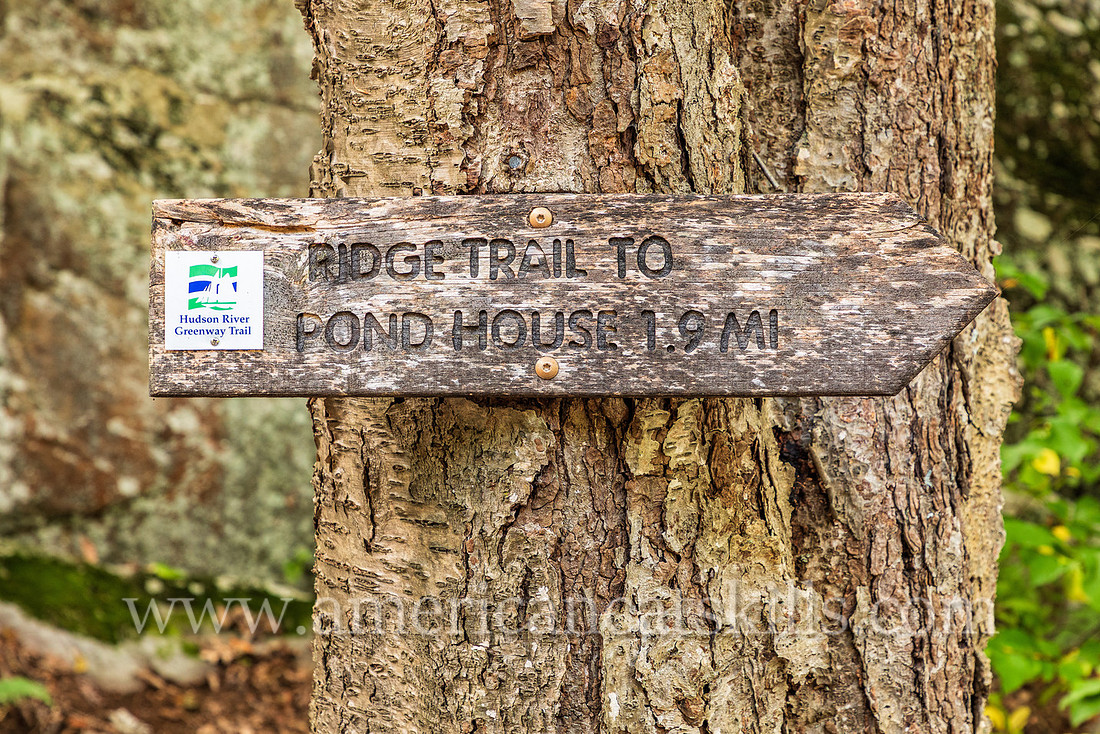
Ridge Trail (0.9 miles). Explores the southern area of the Nature Sanctuary following the contours of broad, wooded ridges. It passes the spring Burroughs used, crosses over his former celery swamp on a boardwalk and also features a steep stone stairway along a dramatic cliff.
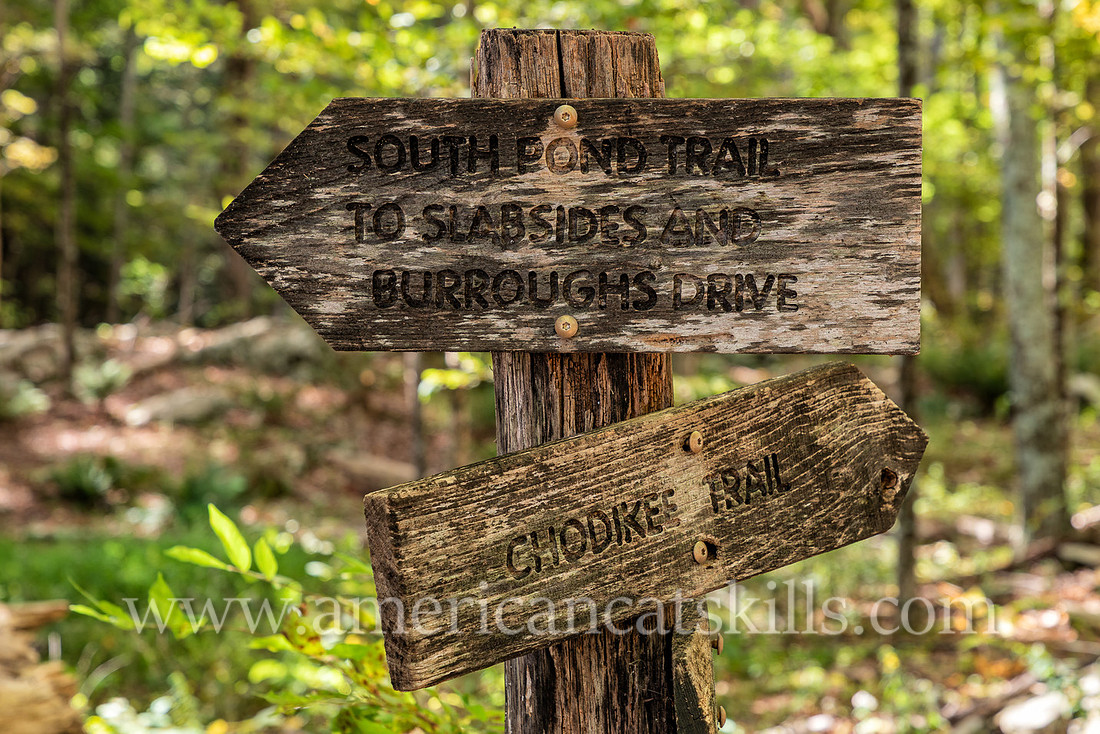
Chodikee Trail (0.7 miles). Winds through dense hemlock woods and rock cliffs. Follow it into the Black Creek State Forest and to Black Creek, skirting a waterfall that once powered a barley grist mill. Burroughs called this area Shattega. It is rich in wildlife.
Ladder Trail (0.2 miles). Traverses two cliffs that lie between the Ridge Trail and the Chodikee Trail in deep woods.
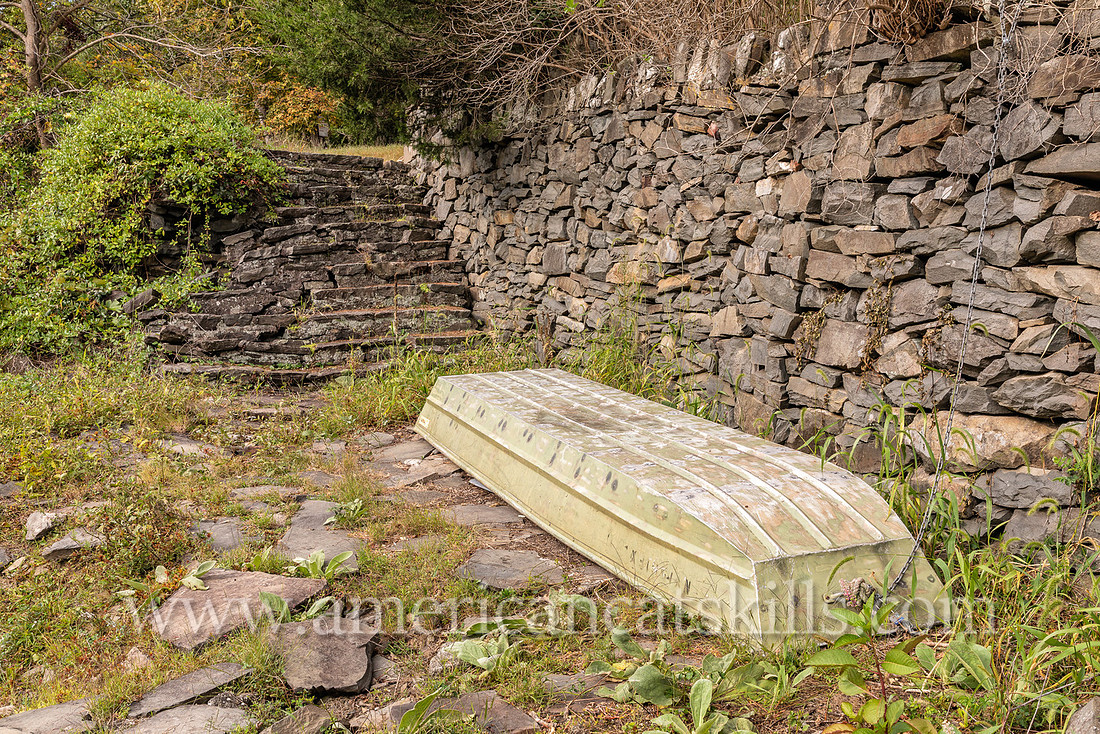
Amasa Martin Trail (0.4 miles). Loops around the former homestead of Amasa Martin, who worked in Burroughs’ celery swamp. His stone walls from the late 1800s still stand.
Peninsula Trail (0.1 miles). Follows the narrow rock ledge that extends into the pond. A favorite picnic destination.
South Pond Trail (0.3 miles). Connects the Slabsides area with the Pond and takes you along a stone pathway past several cascading waterfalls, vernal pools and beaver habitat. Enjoy it after a heavy rain or as the winter snow melts. You may hear the plink of frogs seeking cover as you cross over two streams.
North Pond Trail (0.3 miles). Traces the often sunny northern end of the Pond where stone boulders invite you to linger. It connects Pond Lane with Burroughs Drive.
East Overlook Trail (0.3 miles). From Burroughs Drive the trail loops through mixed woods and offers an eastern view toward the Hudson River.
Julian’s Rock Trail (pending). Ascends the cliff face in front of Slabsides. This trail is abandoned but plans to restore it are pending.
Pond Lane Trail (0.6 miles). Delightful walk from Floyd Ackert Road through hemlock forest to and along the eight-acre Pond. Don’t miss stunning colors of the maples turning in falls.
After Burroughs' death in 1921, friends formed the John Burroughs Memorial Association and acquired Slabsides, his 1895 cabin, to preserve and promote the legacy of the literary naturalist. The name was changed in the 1960's to the John Burroughs Association (JBA) as the mission expanded beyond that of a memorial organization.
Today, Slabsides and the Nature Sanctuary are owned and maintained by the John Burroughs Association. Visit their website at www.johnburroughsassociation.org for more information.
The grounds of the John Burroughs Nature Sanctuary are open to the public year-round from dawn to dusk, while the inside of Slabsides is opened twice a year for Slabsides Day.
Slabsides and the John Burroughs Nature Sanctuary are located at 261 Floyd Ackert Road in West Park, New York, just 90 miles north of New York City and ten miles south of Kingston.
